
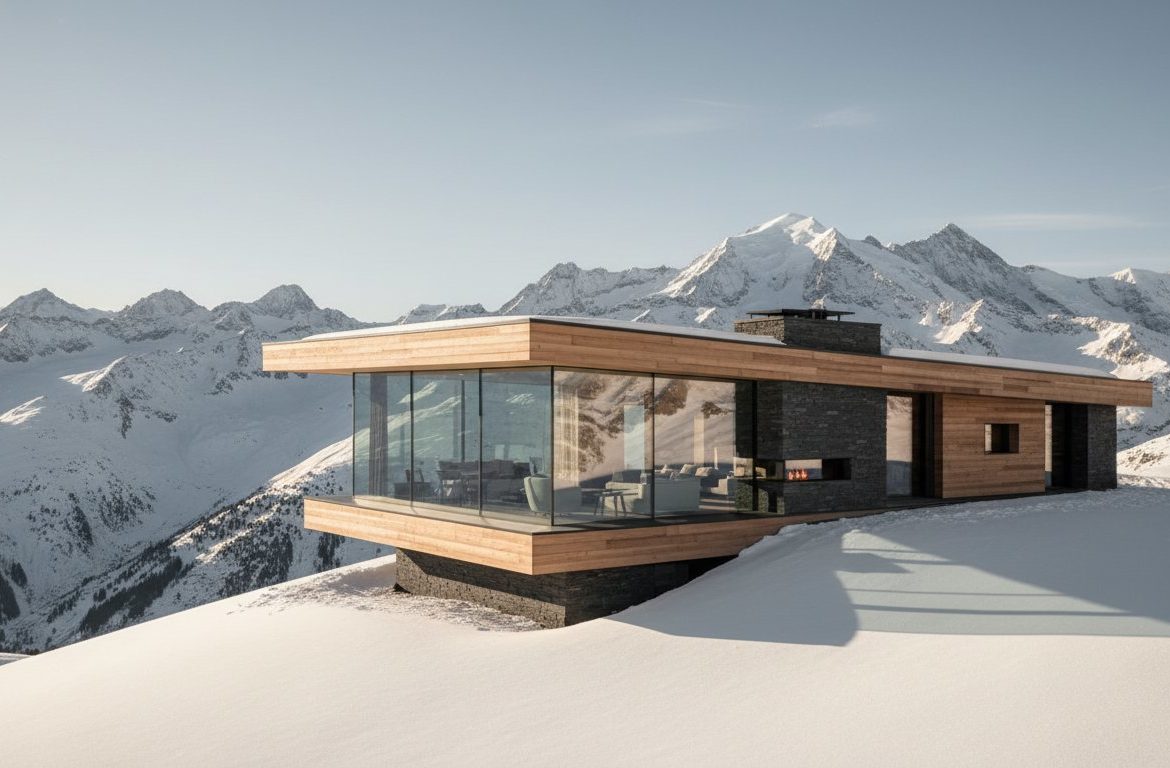
How to Buy a Chalet in the Swiss Alps: The 2026 Investor’s Guide
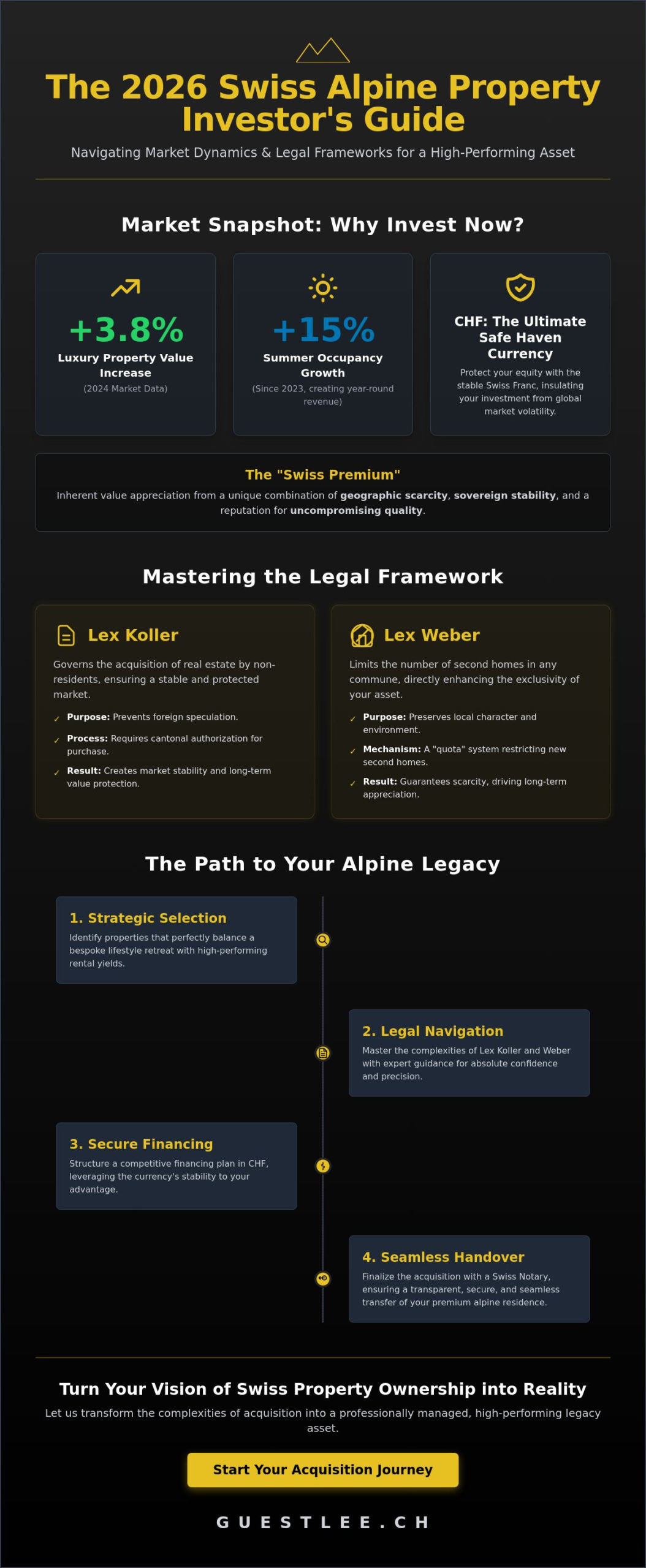
What if the very regulations that seem to limit international buyers are actually the primary reason your Swiss property remains a resilient, appreciating asset? With the 2024 Swiss real estate market showing a 3.8% increase in luxury property values, the choice to buy chalet swiss alps property remains a pursuit of both passion and precision. You likely recognize that the intersection of Lex Koller restrictions and Lex Weber quotas creates a complex entry point. It’s understandable to feel hesitant. Facing the meticulous requirements of Swiss property law or the logistical weight of managing a home from thousands of kilometers away can be taxing.
This 2026 investor’s guide provides the essential framework to transform these complexities into a seamless acquisition. You’ll discover how to secure a premium alpine legacy while ensuring your investment yields professional-grade returns through optimized management. We’ll break down the legal landscape, explore the financial benefits of the CHF as a safe-haven currency, and reveal the bespoke concierge strategies that turn a holiday home into a high-performing asset.
Key Takeaways
- Master the complexities of the Lex Koller and Weber Law to navigate the legal landscape of Swiss property ownership with absolute confidence and precision.
- Identify the specific strategic criteria required to buy chalet swiss alps properties that perfectly balance a bespoke lifestyle retreat with high-performing rental yields.
- Navigate the structured acquisition journey, from securing competitive financing in CHF to the final, seamless handover of your premium alpine residence.
- Discover how a professional management model provides meticulous care for your asset while optimizing long-term appreciation through a curated guest experience.
The Timeless Allure of Investing in a Swiss Alpine Chalet
As we move through 2026, the global financial climate has reinforced the Swiss Alps’ reputation as the ultimate safe haven for capital. Investors are no longer just looking for a holiday home; they’re seeking a resilient, managed asset that offers both security and sophisticated pleasure. When you decide to buy chalet swiss alps property, you’re entering a market where precision meets prestige. These residences have evolved into high-performance assets that benefit from a unique intersection of scarcity and global demand.
The modern luxury chalet is a far cry from the rustic cabins of the past. Today, they’re curated environments designed for optimization and yield. Swiss hospitality standards, which remain the gold standard worldwide, ensure that these properties retain their value through meticulous upkeep and world-class service. We’re seeing a distinct shift toward dual-season mountain properties. Resorts that were once winter-centric now report that summer occupancy rates have climbed by 15 percent since 2023, making the alpine investment a year-round revenue driver.
To better understand the nuances of selecting the right location for your investment, watch this expert analysis:
The 2026 Swiss Real Estate Landscape
Current demand for premium alpine residences continues to outpace supply, particularly in high-altitude resorts like Zermatt and Verbier. The Swiss Franc remains a pillar of strength for international portfolios. In the last 12 months, the CHF has maintained its purchasing power while other currencies faced volatility, effectively protecting the equity of property owners. This financial bedrock is why the “Swiss Premium” is so coveted by those who prioritize long-term stability.
The Swiss Premium is the inherent appreciation in value derived from a unique combination of geographic scarcity, sovereign stability, and a global reputation for uncompromising quality.
Why Investors Choose the Alps for Legacy Assets
The primary driver of value in the Swiss market is the absolute scarcity of land. Strict building regulations, coupled with the Lex Koller legislation, ensure that the market isn’t flooded with new developments. This regulatory environment creates a natural floor for prices, protecting your investment from the boom-and-bust cycles seen in other luxury markets. It’s a strategy rooted in the idea of exclusive discovery, where owners enjoy a bespoke lifestyle in a world-class environment.
Integrating luxury real estate switzerland into your broader portfolio provides a core pillar of security. It isn’t just about the rental yield, though that remains strong; it’s about owning a piece of a finite landscape. When you buy chalet swiss alps residences, you’re securing a legacy for future generations. The combination of private sanctuary and professional asset management ensures that the property remains a source of pride and profit for decades to come.
Navigating the Legal Framework: Lex Koller and Weber Laws
Securing a premium property in the Swiss peaks requires a level of precision that mirrors the craftsmanship of a luxury timepiece. To buy chalet swiss alps properties in 2026, you must first understand the Lex Koller. This federal legislation governs the acquisition of real estate by non-residents, ensuring the market remains stable and protected from excessive speculation. You can review the specific Swiss government rules for foreign property buyers to see how these authorizations are applied across different cantons. In Switzerland, the acquisition process is anchored by the Notary, a neutral public official who ensures every detail of the deed is transparent and legally sound. This structural rigour provides the “peace of mind” that international investors demand.
Tax implications are equally structured and vary by canton. Annual property taxes typically range from 0.1% to 0.5% of the property’s estimated fiscal value. If you choose to generate a yield through seasonal rentals, this income is subject to Swiss taxation, though double taxation treaties often provide relief for international owners. Managing these fiscal responsibilities is part of the “bespoke” journey of owning a piece of the Alps. It’s a system designed for longevity, rewarding those who value meticulous planning over hurried acquisitions.
Permissions and Quotas for Foreign Buyers
Your residency status dictates your buying power. Investors holding a B permit for residency or a C permit for permanent settlement enjoy rights similar to Swiss citizens, often bypassing the strictest Lex Koller limitations. For those living abroad, the market is governed by a quota system. Each year, the Swiss Confederation allocates approximately 1,500 permits for holiday homes across the country, distributed among tourist-heavy cantons like Valais, Vaud, and Graubünden. Navigating this landscape requires a partner who understands the local rhythm of these allocations. If you seek a seamless transition into ownership, Guestlee provides the local expertise and curated management services to handle the complexities of your new investment.
The Impact of the 20% Rule on New Builds
The 2012 Weber Law, or Lex Weber, remains the most influential factor for investors in 2026. This law prohibits the construction of new secondary residences in municipalities where they already account for more than 20% of the total housing stock. Consequently, existing chalets built before 2012 have become significantly more valuable. These “grandfathered” properties carry the rare right to be used as second homes or holiday rentals, a status that is increasingly difficult to obtain for new projects.
For the modern investor, the focus has shifted from ground-up construction to high-end renovation. Updating a classic chalet with premium amenities often yields a better return than attempting to navigate the restrictive permits of a new build. Meticulous due diligence is essential here. You must verify the property’s specific classification in the local land registry to ensure it meets your long term goals. This careful approach ensures your asset remains a protected sanctuary of value in an increasingly restricted market.
Strategic Selection: Balancing High Rental Yields with Lifestyle
To successfully buy chalet swiss alps assets in the current market, you must first define your primary objective. Are you seeking a pure financial vehicle, a private holiday retreat, or a hybrid model that captures the best of both? Most sophisticated investors in 2026 opt for the hybrid approach. This strategy requires the “Invisible Expert” mindset; it’s a way of looking at real estate through a lens of meticulous optimization and local data. You aren’t just buying a view. You’re buying a revenue stream that requires specific logistical advantages.
Location remains the ultimate filter for yield. Properties situated within 90 minutes of major hubs like Geneva or Zurich airports consistently outperform remote villages. Proximity to infrastructure is vital. A chalet located within 500 meters of a main ski lift or a Michelin-starred restaurant commands a significant premium. Beyond winter, summer tourism in the Alps is surging. Data from 2024 showed a 6% increase in summer occupancy across the Valais and Grisons regions. Investors now look for properties with expansive terraces and easy access to hiking trails to ensure year-round appeal.
Analyzing Rental Potential and Occupancy Rates
Professional management transforms a simple home into a high-yield villa. The difference lies in the details that guests cannot find in a standard hotel. Amenity-rich properties are essential for capturing the top tier of the market. Features like private saunas, dedicated cinema rooms, and genuine ski-in access are no longer luxuries; they’re expectations. These elements can boost occupancy rates by 20% during the mid-season. For a deeper look at what defines a top-tier property, review the current standards for luxury villa rentals Switzerland.
The Dual-Focus Narrative: Investor vs. Traveler
When you buy chalet swiss alps properties, you’re designing for the ultra-high-net-worth (UHNW) traveler. This demographic values space and privacy above all else. Smart investors optimize their layouts for short-term rental flexibility by including multiple primary suites. This allows for multi-generational families or groups of friends to share the space without compromising on comfort. Curated interiors drive higher booking rates because they signal a level of bespoke quality that justifies a premium nightly rate. It’s this combination of Swiss precision and warm hospitality that ensures your asset remains competitive in a crowded market.
The Acquisition Journey: From Viewing to Key Handover
The path to own a piece of the Valais or Vaud peaks is a journey of meticulous precision. It begins long before the first snow falls. When you decide to buy chalet swiss alps, understanding the fiscal and legal framework is your first step toward a successful acquisition. This process is defined by Swiss efficiency; it’s a structured sequence designed to protect both the investor and the heritage of the mountains.
Financing Your Alpine Investment
In 2026, Swiss lenders typically offer loan-to-value (LTV) ratios between 60% and 70% for non-resident investors. While the Swiss National Bank maintains a disciplined approach to monetary policy, interest rates for 10-year fixed mortgages currently hover near 2.2%. To ensure a seamless approval, you’ll need a bespoke financial dossier. This package must include three years of certified tax returns and clear evidence of the origin of funds to satisfy stringent Swiss anti-money laundering regulations. Banks prioritize stability, so showing a consistent history of liquidity is essential for securing premium rates.
The transaction moves into a formal phase with the Reservation Agreement. This document secures your intent and typically requires a deposit ranging from 20,000 CHF to 50,000 CHF. This sum is held in a protected escrow account, ensuring the property is removed from the market while the notary prepares the necessary paperwork. In Switzerland, the Notary is the central, neutral figure who represents the law rather than a specific party. They’re responsible for verifying that the sale complies with local cantonal quotas and the Lex Koller legislation.
The journey culminates in the signing of the public deed of sale. However, ownership officially transitions only when the local Land Registry office, known as the Grundbuch, records the entry. This final administrative step can take up to 30 days after the notarized signing. During this window, the notary ensures all property gains taxes and transfer fees are settled, providing you with total peace of mind as the new owner.
The Role of an Exclusive Real Estate Partner
Standard property portals often lack the nuanced local insight required for a high-end transaction. A boutique agency provides a curated experience that mirrors the high standards of Swiss hospitality. These experts manage the complex interplay between cantonal regulations and property management requirements behind the scenes. They act as the invisible expert, ensuring that every detail is handled with quiet confidence. By partnering with a dedicated specialist like GuestLee, you ensure that your investment is optimized for both personal enjoyment and long-term yield. We handle the logistical complexities so you can focus on the exclusive discovery of your new mountain home.
Ready to secure your legacy in the mountains? Contact GuestLee today to begin your bespoke acquisition journey.
Ensuring Long-Term Appreciation with Swiss Property Management
The decision to buy chalet swiss alps real estate represents a commitment to one of the world’s most stable markets. However, the transaction is just the starting point of your investment’s lifecycle. Successful owners recognize that appreciation isn’t a passive process; it’s earned through meticulous stewardship and strategic positioning. To unlock the full potential of your asset, you need a management partner who understands that a luxury home requires constant technical and emotional attention.
At GuestLee, we bridge the gap between traditional real estate and high-end hospitality. Our model focuses on two distinct pillars: preserving the physical integrity of the home and delivering an unparalleled guest experience. This dual approach ensures your property remains a sought-after destination while its market value appreciates. We apply Swiss precision to every detail to ensure the home remains in peak condition. Our maintenance protocols include:
- Weekly technical walk-throughs to monitor climate systems and prevent frost damage during the winter months.
- Professional landscape management to maintain curb appeal and structural integrity throughout the summer season.
- Meticulous deep-cleaning protocols that meet five-star hospitality standards after every guest departure.
- Preventative maintenance schedules for high-end appliances and smart home systems to avoid costly emergency repairs.
Bespoke Management for Peace of Mind
Managing a high-value property from abroad can be a source of stress. Our team acts as your on-the-ground eyes and ears, offering property management services Switzerland that redefine luxury. We don’t just list your home; we market it to a curated circle of affluent travelers who value discretion and quality. Our comprehensive service handles guest vetting, professional cleaning, and 24/7 concierge support. We focus on the logistics so you can enjoy the rewards of ownership without the operational burden. It’s about creating a seamless transition from owner-use to guest-stay while maximizing your annual yield.
The Future of Swiss Alpine Property
As we move through 2026, the definition of luxury is shifting toward sustainability and technological integration. Modern investors are prioritizing eco-efficient chalets that utilize geothermal heating and smart energy systems. These “Smart Chalets” allow for remote climate control and security, often reducing energy overheads by up to 25%. When you buy chalet swiss alps assets, you’re investing in a legacy that balances heritage with innovation. Swiss real estate remains the ultimate “quiet confidence” investment because it’s a tangible asset that offers security in a volatile world. By choosing the right management strategy, you ensure your chalet remains a crown jewel in your portfolio for decades to come.
Secure Your Future in the High Alps
Navigating the complex legalities of Lex Koller and the Weber Law is the first step toward a successful investment. By 2026, the Swiss market continues to reward those who prioritize a strategic balance between rental optimization and personal enjoyment. Securing a premium asset requires a meticulous acquisition process that protects your capital while delivering the lifestyle you desire. When you choose to buy chalet swiss alps property, you’re investing in a legacy of stability and refined taste.
Founded in 2016, GuestLee serves as the invisible expert for homeowners who demand perfection. We specialize in high-end, bespoke property management that bridges the gap between real estate sales and luxury hospitality. Our team handles every detail with Swiss precision, ensuring your home remains a sanctuary of comfort and a high-performing asset. This commitment to excellence guarantees that your property value is protected through meticulous care and professional oversight.
Discover how GuestLee optimizes your Swiss property investment and experience the seamless service that defines our brand. Your journey toward an effortless mountain lifestyle starts here.
Frequently Asked Questions
Can a foreigner buy a chalet in the Swiss Alps?
Yes, non-residents can buy a chalet in the Swiss Alps, provided the property is located within designated tourist zones. These quotas are managed at the cantonal level, with approximately 1,500 permits issued annually across Switzerland for holiday homes. While restrictions apply to the size of the plot, typically limited to 1,000 square meters, the process remains a structured and reliable path for international investors seeking a premium mountain retreat.
What is the Lex Koller and how does it affect my purchase?
Lex Koller is the primary federal legislation that limits the acquisition of Swiss real estate by non-residents to prevent property speculation. It requires most foreign buyers to obtain a specific permit before they can successfully buy a chalet in the Swiss Alps. For those looking to invest, this means focusing on “holiday home” designations. It ensures the market remains stable and protects the local landscape from over-development, maintaining the region’s exclusive appeal.
What are the typical closing costs when buying a house in Switzerland?
Closing costs in Switzerland generally range between 2.5% and 5% of the total purchase price. These fees encompass the notary’s commission, land registry entries, and cantonal transfer taxes. In Valais, for example, the transfer tax is set at 2.2% of the property value. It’s essential to budget for these expenses upfront. They’re typically paid in cash at the time of the deed’s execution to ensure a seamless transition of ownership.
Is a Swiss chalet a good investment for rental yield?
A Swiss chalet offers compelling investment potential, with net rental yields typically ranging from 2% to 4% in high-demand resorts like Verbier or Zermatt. Beyond the annual returns, the historical capital appreciation of Swiss property has averaged 3.5% annually over the last decade. By leveraging bespoke management services, owners optimize their occupancy rates during both the winter ski season and the increasingly popular Alpine summer months, securing a resilient and prestigious asset.
How much of a down payment is required for a Swiss mortgage?
Non-resident buyers are usually required to provide a minimum down payment of 40% of the property’s appraised value. While residents might secure financing with 20% down, Swiss banks maintain conservative lending standards for international investors to mitigate risk. This capital requirement reflects the stability of the Swiss financial system. Interest rates remain among the lowest globally, often sitting below 2.5% for fixed-term mortgages based on 2024 market data.
Do I need to live in Switzerland to own property there?
You don’t need to be a Swiss resident or hold a residency permit to own a holiday home in the Alps. Many owners enjoy their chalets for a maximum of six months per year, typically split into 90-day periods within the Schengen zone regulations. This flexibility allows international investors to maintain a global lifestyle while benefiting from a secure, high-quality asset in one of the world’s most stable economies without the need for full-time relocation.
What is the Lex Weber rule regarding second homes?
The Lex Weber legislation, enacted in 2012, prohibits the construction of new second homes in municipalities where they already exceed 20% of the total housing stock. This law has significantly limited the supply of new-build chalets in popular resorts, naturally driving up the value of existing properties. For investors, this creates a meticulous balance of supply and demand. It ensures that your mountain home remains a rare and sought-after piece of the Swiss landscape.
How can I manage my Swiss property if I live abroad?
Managing a property from afar is handled through bespoke local management firms that provide a seamless, end-to-end service. These professionals oversee everything from meticulous maintenance and cleaning to guest relations and yield optimization. By partnering with a dedicated concierge-style manager, you ensure your home is kept to the highest Swiss standards. This “Invisible Expert” approach provides total peace of mind, allowing you to enjoy the benefits of ownership without any logistical burdens.

Article by
Giacomo Esposito