
Compare luxury Swiss holiday costs, winter views and city stays
January and February are peak months for ski-resort demand in Switzerland, while January is typically the most affordable month for city hotels. The best time of year for a luxury Swiss holiday depends on whether you prioritise winter sports, mountain views or a quieter city stay. Christmas and New Year bring especially strong demand, so your dates can affect costs as much as your destination.
A winter visit does not guarantee clear mountain panoramas, just as a quieter city does not mean every attraction will be open as usual. Alpine visibility can change quickly, and some city sights operate on limited schedules during ski season. This guide explains how winter weather, ski-season timing and seasonal demand shape the experience and budget, then compares resort and city stays. Use it to decide when to travel for snowy scenery, when to favour urban exploration and which trade-offs matter most when planning a refined Swiss escape.
Key Takeaways
- Match your travel dates to the experience you value most, from autumn landscapes and outdoor pursuits to alpine excursions.
- Plan mountain visits around altitude and seasonal access, since the best route to a view can vary with the time of year.
- Build your holiday budget around the season, destination and activities you choose; resort and city stays can follow different price patterns.
- Compare the trade-offs between scenery, seasonal events and a quieter pace to shape a Swiss stay that feels right for you.
1. Will I actually see the mountains, or just fog, in winter?
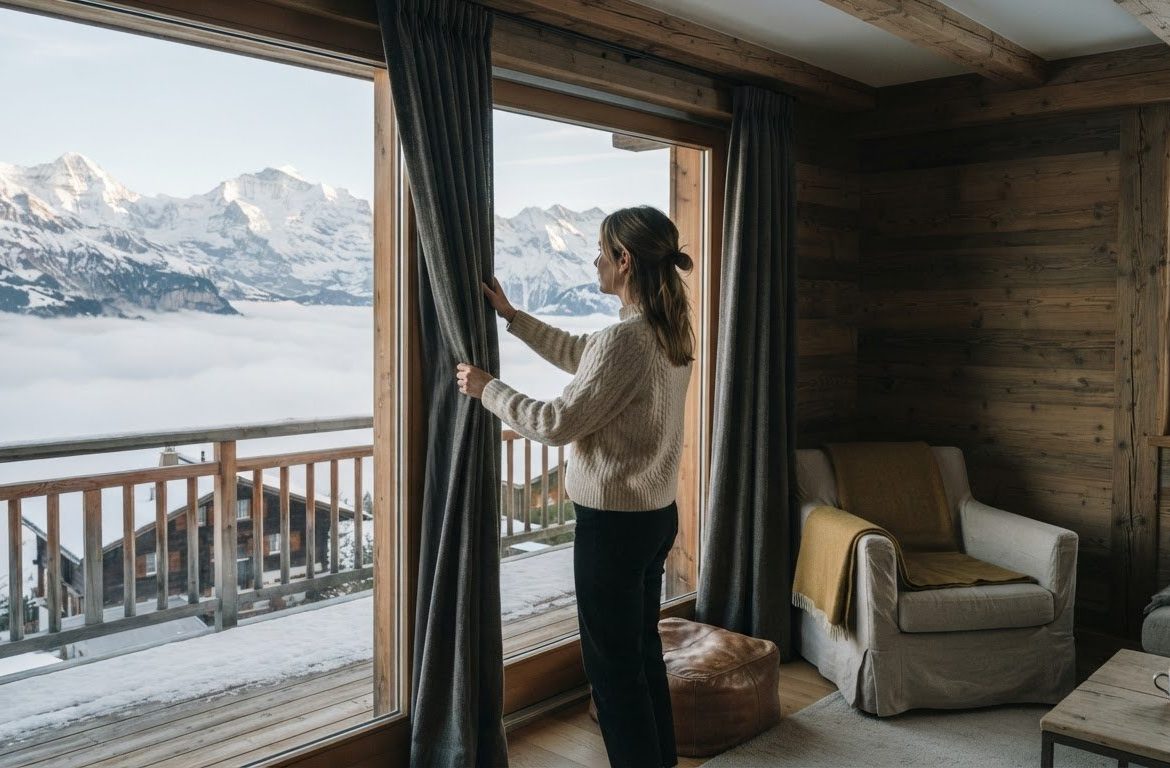
Winter mountain views in Switzerland depend on altitude and local weather, not simply the month. Mountain resorts above roughly 1,000 metres are usually above the fog in winter, while alpine microclimates can change visibility and temperature within minutes. For a clearer outlook, plan a flexible day around the forecast and choose a higher-elevation viewpoint reached by cable car. Even at altitude, conditions can shift quickly.
Autumn offers a different landscape and a gentler pace for outdoor activities. Early autumn runs from mid-September to mid-October, bringing alpine descent festivals known as désalpe or Alpabzug, alongside chestnut and wine harvest traditions. Switzerland’s 65,000 kilometres of way-marked hiking trails offer routes through changing valley scenery. A private guide can help shape a walk around the day’s conditions, the terrain and the kind of mountain experience you want, from a leisurely viewpoint outing to a more active hike.
Winter travel isn’t only about skiing. December suits visitors drawn to festive markets, and a Swiss Christmas market circuit can be covered by train in 5–7 days. In January, Château-d’Oex hosts its International Hot Air Balloon Festival, offering a distinctive reason to plan a winter visit beyond the ski slopes. Geneva can also anchor a city stay, with mountain excursions added when conditions are favourable.
Swiss festivals can affect travel dates and accommodation availability, especially when an event draws visitors to a particular region. Swiss National Day falls on August 1, while early-autumn désalpe celebrations, December markets and the January balloon festival in Château-d’Oex each create seasonal reasons to visit. If an event is central to your plans, build your dates around it; otherwise, choosing a quieter period can leave more room to adapt your itinerary.
2. January peak ski season and quieter city stays
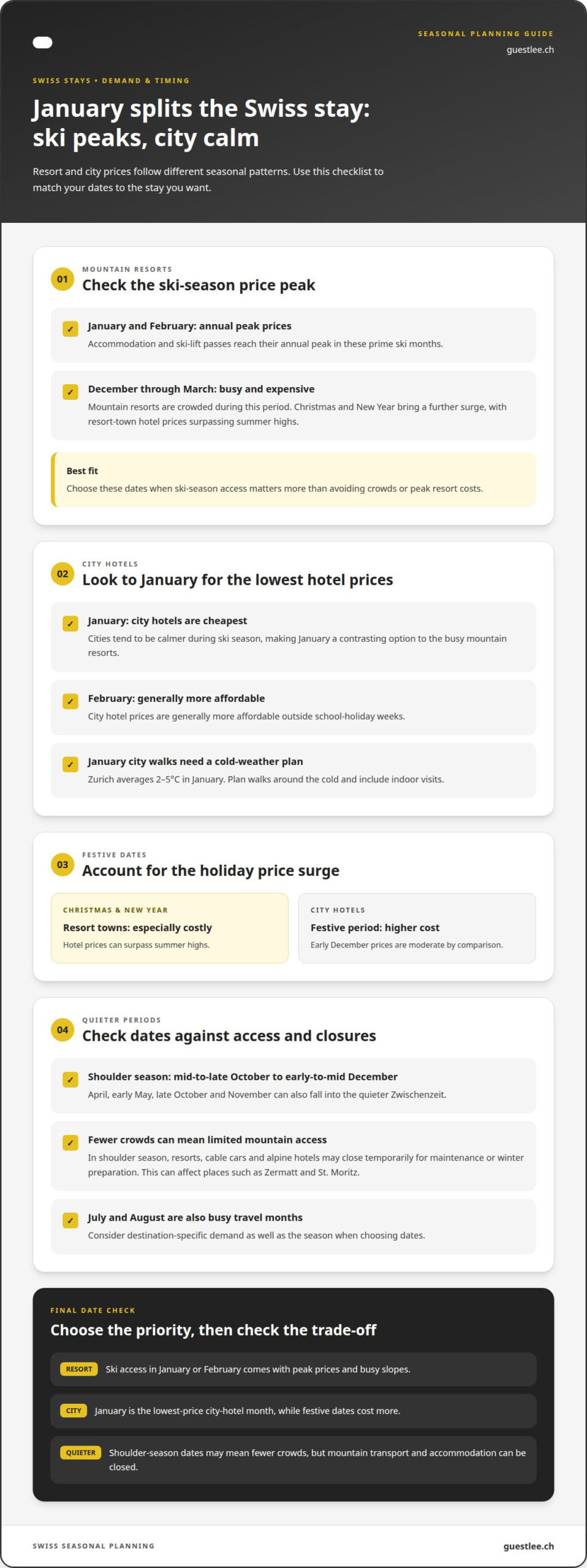
Switzerland’s busiest travel periods include July and August, as well as January and February for skiing. Mountain resorts are crowded and expensive from December through March, with accommodation and ski-lift passes reaching annual peak prices in January and February. By contrast, Swiss city hotels are cheapest in January and generally more affordable in February outside school-holiday weeks. The right itinerary depends on whether resort access or a calmer city stay matters more.
Christmas and New Year bring a further price surge in resort towns, with hotel prices surpassing summer highs. City hotels also cost more over the festive period, while early December prices are moderate. For January travel, Zurich averages 2–5°C, so plan city walks around cold weather and indoor visits. In the Alps, sudden weather changes make warm layers useful, especially when moving between altitudes.
Peak and quieter seasons vary by destination. January and February are prime ski months, while cities tend to be calmer during ski season. Switzerland’s shoulder season typically runs from mid-to-late October until early-to-mid December; April, early May, late October and November can also fall into the quieter Zwischenzeit. These periods may bring fewer crowds, but access to mountain resorts can be limited.
In Zermatt and St. Moritz, shoulder-season dates can coincide with closures of mountain resorts, cable cars and alpine hotels for maintenance or winter preparation. Around Lake Geneva, a city-and-lakeside itinerary offers a different experience from a high-altitude resort stay. For shoulder-season day trips, Lucerne, Zurich and Lausanne can serve as useful bases. Plan around the experience you want, then account for seasonal closures and holiday-week demand when selecting dates.
3. Luxury ski resorts and mountain destinations
The best time for luxury ski resorts in Switzerland is the winter-sports season, from early December through Easter. Most major resorts are at full operation by mid-December, making this a strong window for skiing and alpine stays. For a landmark panorama, the Matterhorn Glacier Paradise viewing platform stands at 3,883 metres above sea level. Jungfraujoch, at 3,454 metres, offers another high-altitude excursion. These elevations reward careful planning, since conditions can differ sharply between resort villages and summit viewpoints.
Choose a lakeside base for a gentler contrast to the slopes. Lucerne pairs lake scenery with excursions towards Mount Titlis and Mount Pilatus, both described as summits reaching 3,000 metres. In summer, these can be part of a day trip from the lakeside. Zurich offers a city base for alpine outings, while the Gornergrat railway from Zermatt makes the journey to mountain views in 35 minutes. A private guide can shape an excursion around the region, preferred pace and weather conditions.
Scenic driving is better suited to summer than winter. Swiss high mountain passes, including the Furka and Grimsel, are fully open to traffic only in summer, making the warmer season a better fit for a route linking dramatic passes and alpine villages. Higher elevations can still feel cool, so bring a jacket even in summer. Allow time for changing conditions rather than treating a pass drive as a fixed transfer.
Seasonal closures matter, too. During Switzerland’s shoulder season, mountain resorts, cable cars and alpine hotels may close temporarily for maintenance or winter preparation. Factor this in when choosing a base, especially if a cable-car ascent or mountain-view dining is central to your stay. In winter, favour destinations operating for ski season; in summer, pair a lakeside outing with a high-altitude excursion. Matching your plans to the region and season makes each mountain day more rewarding.
4. Luxury holiday prices
In Switzerland, timing can change the cost of a luxury holiday as much as the destination. Standard excursion tickets, including Jungfraujoch, are approximately 10–15% higher in peak summer. That matters for itineraries built around several mountain outings. Compare the cost of planned excursions alongside accommodation and transport, rather than judging a season by one headline price.
Summer brings long days for alpine trails, lake visits and outdoor adventures, but July and August are high-season months. Zermatt and other resort destinations draw visitors seeking mountain scenery and excursions. If these activities define your trip, peak-season prices may be worth it for the experience you want. If your dates are flexible, consider shoulder-season travel, while allowing for possible closures in mountain areas.
Winter costs follow a different pattern. Mountain resort accommodation and ski lift passes reach annual peak prices in January and February. Christmas and New Year can be particularly costly for winter-sports travel. Early December offers moderate city-hotel prices, but festive dates bring higher demand. Separating a city stay from resort nights can help you see which part of the itinerary drives the budget.
For a clearer comparison, list your fixed priorities first: travel dates, resort nights, lift access and excursions. Then compare the same itinerary across seasons. A summer festival or trail-focused stay may justify peak-season spending, while a quieter city break can shift the balance. The best time of year for a luxury Swiss holiday is therefore the season whose costs match its value to you. For a stay in Switzerland, explore luxury villa stays as you shape your seasonal plans.
GuestLee: Luxury Villa Rentals
GuestLee offers luxury villa rentals for travellers seeking a private base for a Swiss holiday. A villa can suit plans that combine mountain excursions, city visits and slower days at home, with the season and destination shaping the stay. Once you’ve chosen between winter scenery, summer trails or a quieter urban itinerary, consider which accommodation best supports your plans.
For property owners, GuestLee also provides property management services. Its real estate sales service may be relevant if you’re considering buying or selling a property. These services address different needs, so the right next step depends on whether you’re planning a stay or making a property decision.
Contact GuestLee to discuss your Swiss holiday or property plans.
Shape a Swiss stay around what matters most
Choosing the best time of year for a luxury Swiss holiday starts with your priorities: a slower city rhythm, days outdoors or time in a private retreat. Decide which experience should anchor your stay, then let the other choices support it. A thoughtful itinerary leaves room for discovery without making every day feel scheduled.
Consider how you want each day to begin and end. A leisurely breakfast, a scenic excursion and an unhurried evening call for a different pace than a holiday built around ambitious activities. Once you have that picture in mind, choosing a base and travel dates becomes more intentional.
GuestLee can help you take the next step towards a stay that reflects your plans. Plan your trip with GuestLee, and begin shaping a Swiss escape that feels distinctly yours.
Frequently Asked Questions
How much does a luxury Switzerland holiday cost?
There is no single total for a luxury holiday in Switzerland. Your budget depends on your dates, accommodation, trip length and plans. Build an estimate in CHF by separating accommodation, transport, dining and activities. Then compare the same itinerary across alternative dates, as seasonal demand and the number of excursions can change the overall spend. A city-focused stay and a mountain adventure have different cost drivers.
When is summer in Switzerland?
Summer in Switzerland generally runs from June to mid-September. Average summer temperatures are around 20°C, but local conditions vary with altitude and region. Geneva, for example, has a different temperature profile from higher-elevation Zermatt. For a trip combining lakeside time and mountain outings, pack layers so you can adapt as the day and elevation change.
When is the best time to visit Switzerland?
The best time of year for a luxury Swiss holiday depends on your preferred pace and activities. June or September can suit travellers seeking a balance of scenery and solitude. Late May and early October may bring fewer crowds, with mild but less dependable weather. Choose dates around your main plans, then leave flexibility for outdoor activities and changing mountain conditions.
Will I actually see the mountains, or just fog, in winter?
Winter mountain visibility varies by location and changing alpine conditions. St. Moritz averages over 300 sunny days per year, making it a notable choice for visitors drawn to bright mountain scenery. Swiss microclimates can shift visibility within minutes, so keep your day’s plans adaptable. A clear view depends on local conditions, not simply on choosing a winter travel date.
What is the best month for a luxury holiday in Switzerland?
September is a strong choice for a balanced holiday focused on scenery and a quieter atmosphere. It can suit travellers who want time outdoors without making peak summer the centre of their plans. For a ski-focused escape, January or February is a better fit. Choose the month that matches your priority, then shape your destination and daily itinerary around it.
How do Swiss Alps weather and temperatures vary by season?
Swiss weather changes with both season and altitude, so a city forecast won’t describe conditions on a mountain excursion. Summer temperatures in Geneva are listed at 11–27°C, compared with 7–20°C in Zermatt. In January, Zurich averages 2–5°C. For alpine outings, bring layers that work across changing temperatures, especially when your itinerary moves between valleys and higher viewpoints.

Article by
Giacomo Esposito