Etiquette for meals, drinks and hosts in a catered chalet
Good chalet manners are less about formality than respecting the rhythm of a shared home. Etiquette for staying in a catered chalet means following the arrangements for staff days off, asking the host before serving personal wine at dinner, and arriving on time. Dinner is commonly scheduled for 7.30, with 8 o’clock available by special dispensation.
It’s natural to wonder how much of your stay follows a set schedule and where you can make yourself at home. A little consideration helps you enjoy catered hospitality while keeping things comfortable for fellow guests and the team looking after the chalet.
This guide covers breakfast on staff days off, house drinks, dinner timings, host availability and communal meals. You’ll learn what to ask, when to give the team space and how to settle in comfortably.
Key Takeaways
- On staff days off, follow the chalet’s breakfast arrangements and keep kitchen use to the appliances guests are permitted to use.
- Treat the kitchen fridge as the team’s workspace; ask where to find house drinks and avoid repeated trips through food-preparation areas.
- Give the host notice if plans change, so dinner service can run smoothly and your privacy is respected.
- Before bringing personal wine to a hosted meal, ask whether it can be served; communal dining is part of the shared chalet experience.
- Keep snacks in your room or a communal area rather than taking up kitchen space.
1. Breakfast arrangements on staff days off
On a staff day off, breakfast may be simpler than on a catered day. One former chalet guest reported being allowed to use the microwave and toaster, but not the hob. Follow the chalet’s instructions rather than assuming every appliance is available. If breakfast items are laid out, use only what’s intended for guests and leave the preparation area tidy.
Timing matters, too. Chalet kitchens are generally in use in the mornings and again from around 3 or 4 p.m. A considerate approach is to prepare breakfast promptly, then clear your dishes and make room for the team’s work. Store biscuits and ski snacks in your room or a communal area, rather than in the kitchen.
For a practical visual guide to dining manners, watch Myka Meier’s table etiquette advice:
Guests are advised to leave the chalet after breakfast and not return before 5pm daily. Plan travel and mountain activities around that window. If you need something from inside, take it with you before leaving, rather than expecting access while the team is away or preparing for the evening.
Is tipping chalet hosts or staff expected in Switzerland, and how much? There’s no universal amount: tipping is a personal gesture, not a required payment. If you choose to leave a tip, consider the service and your group’s experience, and offer it discreetly.
What is the etiquette for using hot tubs, saunas and shared facilities in a chalet? Follow posted instructions, leave each facility clean and keep noise low while others relax. Take used towels with you, for example, and don’t occupy a shared space when other guests are waiting.
What should guests do if they break something or cause damage in a chalet? Tell the host promptly and explain what happened rather than hiding the damage or waiting until departure. Reporting it early gives the team a chance to address the issue.
What are typical check-in, check-out and cleaning expectations for catered chalets in Switzerland? Follow the arrival and departure instructions for your accommodation, since timings and cleaning tasks vary by stay. Before leaving, gather your belongings, clear used dishes and complete any listed departure steps.
Good etiquette for staying in a catered chalet means respecting shared spaces and the team’s working rhythm. At breakfast, use only permitted appliances, keep the kitchen clear and plan your day around the staff’s schedule.
One chalet guest reported tipping €100 per person at a chalet with a dedicated staff of five. That account is an individual choice, not a universal amount or an expectation for other guests. Chalet staff can learn to prepare supper for 10 people and clean the house in under two hours, and chalet staff can clean the house in under two hours. Guests can keep any contribution thoughtful and discreet, while recognizing the work involved without assuming that a particular tip is standard.
2. House wine, beer and soft drinks
A chalet’s drinks arrangement may differ from ordering at a restaurant. Ask the host which wine, beer and soft drinks are for guests and whether they’re included in your stay. Don’t assume every bottle in the kitchen or fridge is part of the house selection. A quick question can prevent confusion before someone opens a bottle reserved for meal preparation.
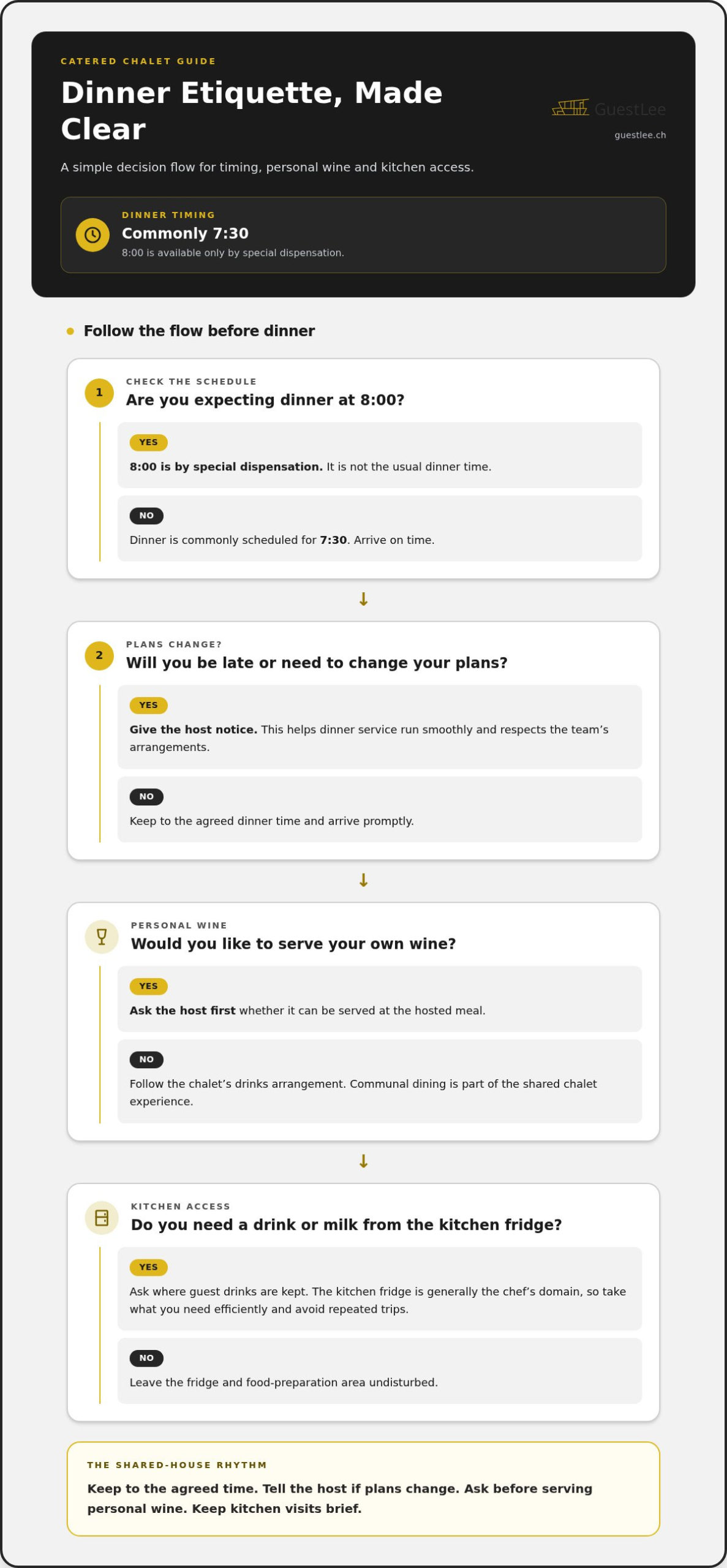
The kitchen fridge is generally the chef’s domain. Avoid going in and out of it, except to get milk or drinks. Take what you need efficiently, close the door and leave other ingredients undisturbed. Searching the shelves repeatedly can interrupt the team, especially during dinner preparation.
Be considerate about kitchen access. Ask where guest drinks are stored, then use that area rather than moving food or supplies. If soft drinks are in a separate refrigerator or on a counter, take what you need from there. Return shared bottles to their designated place and leave the kitchen ready for service.
How should guests handle food, drinks and kitchen access between catered meals? Ask what’s available and where it belongs, then use designated guest drinks without entering food-preparation areas unnecessarily. Keep personal snacks in your room or a communal area, not among the chef’s ingredients.
House drinks may be intended for different occasions, such as a soft drink after skiing or wine with dinner. Ask about the arrangement early instead of relying on assumptions from holidays in hotels or apartments. If you bring a bottle, ask where it can be chilled and whether it may be served at the table. This keeps the host informed and avoids opening the wrong bottle.
Consider the shared experience, too. Taking several bottles for your group without asking can leave other guests unsure about what remains. If you’re hosting friends in the chalet, agree on what everyone plans to drink before the evening begins. Put empty bottles aside neatly, and don’t leave spills, glasses or open containers in shared spaces.
A simple routine works well: identify the guest drinks, take only what you need and leave the kitchen fridge orderly. If a bottle is empty or supplies are running low, tell the host rather than searching through storage. This courtesy helps the team manage service and keeps house drinks enjoyable for everyone.
Stories of heavy consumption are a reminder not to treat house supplies as unlimited or pressure anyone to drink. A chalet chef describes a group of guests drinking 30 bottles of wine a night, while a rugby team staying in a chalet drank 40 bottles of wine in an hour on its first night. These are exceptional accounts, not a measure of what guests should consume.
A former chalet chef said the kitchen fridge is generally the chef’s domain, so guests should avoid going in and out of it except to get milk or drinks. Respecting that boundary keeps drinks arrangements clear without disrupting kitchen work.
3. Arriving on time for dinner
In a catered chalet, dinner commonly begins at 7.30. Arrive on time, rather than treating the meal like a restaurant booking that can shift without notice. The host and kitchen team plan preparation and service around the agreed hour, so lateness can disrupt the meal for everyone at the table.
An 8 o’clock dinner may be available by special dispensation. Don’t assume that later service is automatic: raise the request with the host and agree on the time before making plans. If your group expects a long day on the slopes, discuss the schedule early instead of arriving late without warning.
Meal times follow the chalet’s agreed schedule, so arrive promptly and tell staff about dietary requirements as early as possible. Explain each need clearly, including whether it concerns an adult or a child, and distinguish an allergy from a preference, such as avoiding a particular ingredient.
On a ski holiday, allow some extra time for the return from the slopes. Gather your group, change out of ski clothes and be ready before dinner is called. If a lift queue or travel delay affects your return, message the host as soon as you can. A brief update is more considerate than leaving the team waiting without an explanation.
Children benefit from a clear routine, too. Let them know when dinner starts, help them wash up and settle before the meal, and avoid letting a last-minute game delay everyone. If a child needs an earlier meal or another arrangement, discuss it with the host while planning the evening.
For dietary needs, give practical details rather than a broad label. Say which ingredient must be avoided and mention any concern about cross-contact. Share the information with the host before the first dinner, then repeat it briefly if a new staff member is serving. Clear details help the team understand your request.
Plans can change during a mountain holiday. If you’re delayed, update the host with your expected arrival and whether the rest of your party is back. Don’t ask other guests to wait indefinitely for dinner. The host can explain the practical options and keep service considerate for everyone at the table.
Good etiquette means treating 7.30 as the working dinner time, unless the host agrees otherwise. Arriving prepared, communicating dietary needs clearly and giving notice of delays lets the chalet team serve dinner smoothly, while fellow guests can enjoy the evening together.
4. Balancing host availability with guest privacy
A chalet host helps coordinate your stay, but the house is also your private accommodation. Read the welcome information to learn how to reach the host and where guest areas begin. If you need help with a room, meal or shared facility, approach them at a natural point in service rather than entering staff-only spaces.
Common chalet rules are practical: keep noise considerate, ask before inviting additional guests and leave shared spaces ready for others. Take calls away from the dining table, for example, and clear your belongings from the lounge when you leave.
Respect the host’s workspace as you would your own bedroom. A kitchen counter covered with ski gloves, lift passes and snack wrappers can get in the way of meal preparation. Keep personal items together and ask before placing anything in a cupboard or refrigerator used by the team.
When you need assistance, keep your request clear and simple. First, check the guest information for the right contact method. Then explain briefly, such as by asking for an extra towel or directions to the boot room. If it can wait, ask the host when you next see them instead of interrupting a busy service.
Respect privacy on both sides. Knock before entering a room or area not clearly designated for guests, and don’t assume the host is available to talk whenever they’re nearby. A friendly greeting is welcome, but a long conversation while they’re carrying dishes or preparing the next course can delay their work.
Shared spaces benefit from small acts of consideration. Return board games to the lounge shelf, move wet gloves away from seating and keep the boot room clear for other guests. If your group plans an informal gathering, agree on a suitable space and keep music low enough for nearby bedrooms.
Follow the chalet’s instructions for shoes at the entrance. Removing ski boots in the designated area is considerate. If indoor shoes or slippers are preferred, use them instead of walking through the living areas in wet outdoor footwear.
Mountain days can leave everyone tired, so avoid loud conversations in corridors late in the evening. Keep doors from slamming, lower device volume in shared rooms and take lively conversations away from bedroom doors. If another guest’s noise disturbs your rest, speak politely or raise it with the host rather than escalating the situation.
These gestures make the host approachable without making the chalet feel like a workplace. Clear requests, tidy shared areas and respect for quiet moments help guests and staff enjoy a more comfortable stay.
5. Hosted meals and communal dining
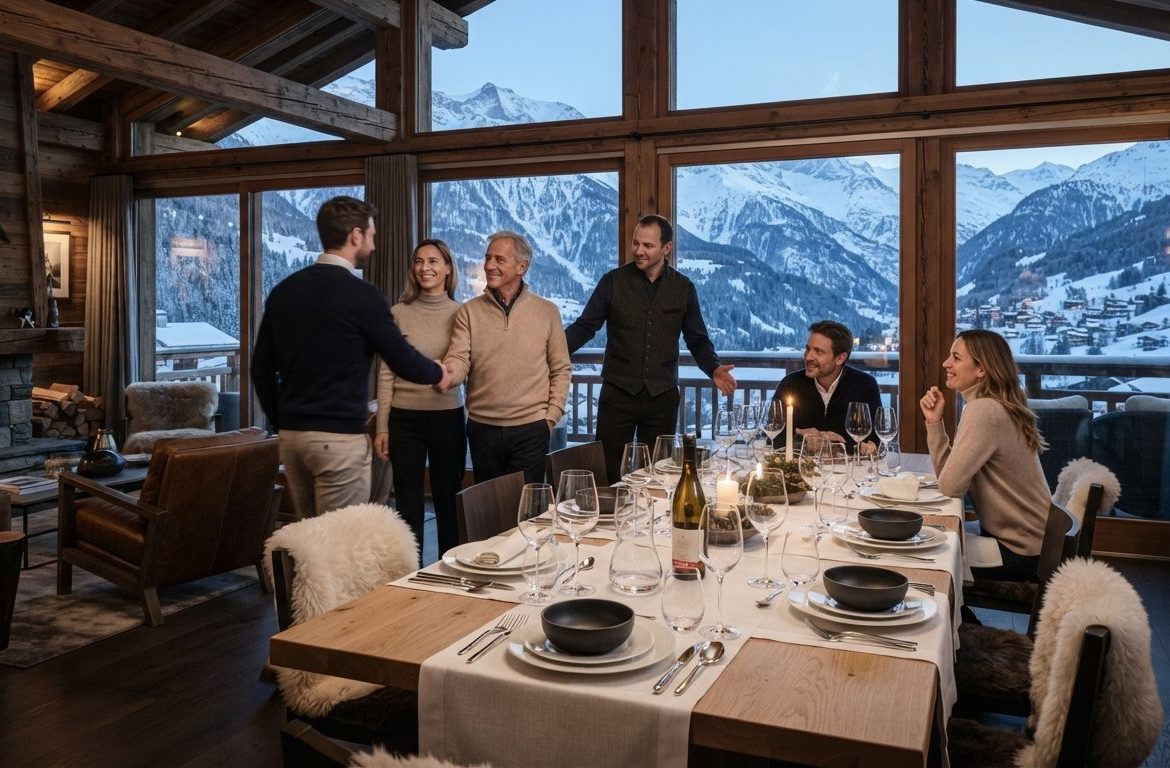
Shared catered chalets offer communal hosted dining, and catered ski chalets include hosted meals. Dinner brings together guests who may have spent the day skiing at different paces, so treat the table as shared space. Greet fellow diners, make room for others and follow the host’s cues as the meal begins.
Conversation needn’t be elaborate. A simple question about someone’s day on the mountain can include a quieter guest without putting them on the spot. Share the conversation beyond your own group, and avoid letting a detailed discussion shut others out.
Small courtesies help a hosted meal feel relaxed. Wait until everyone is seated before starting, pass shared dishes within reach and put phones away during conversation. If you need to step out, excuse yourself quietly. These gestures are especially thoughtful when guests are meeting for the first time on a ski holiday.
Ask the chalet host whether you can have your own wine with dinner. This lets the team coordinate service and avoid confusion about which bottle belongs with the meal. If you bring a bottle, keep it accessible and let the host guide how it’s served.
Should guests help clear the table or wash dishes in a catered chalet? Offer to help, but follow the host’s lead, since service arrangements differ between chalets. If they prefer to handle the dishes, thank them and leave plates and glasses where requested.
Be attentive to the pace of the meal. Pause side conversations as a course is served and make room for the host carrying plates. If a fellow guest is still eating, don’t rush them or ask the team to change the pace for your convenience.
Shared tables bring together different routines and preferences. If you’re travelling with children, help them stay seated during service and use a quiet voice indoors. If someone prefers a calm meal after skiing, respect that instead of pressing them to join a lively conversation.
If your group has different plans, agree on the evening’s expectations before sitting down. Tell the host if someone will miss dinner, and don’t save a seat with personal belongings when other guests need space. Clear communication keeps the dining room comfortable without making a communal meal feel formal.
The best approach is to be welcoming, follow the host’s lead and treat the table as shared space. A brief offer to help, thoughtful conversation and respect for the team’s service make hosted dining a natural part of your chalet stay.
GuestLee: Luxury Villa Rentals
GuestLee offers Luxury Villa Rentals for travellers seeking a private Swiss stay with space to set their own routines. If you prefer independent meals and a more flexible rhythm than communal chalet dining, a private villa may suit your plans better. The right setting depends on how you want to spend your time, who is travelling with you and whether shared hosting is part of the experience you value.
For property owners, GuestLee also provides Property Management Services and Real Estate Sales. These services suit owners seeking professional property support or considering a real estate transaction, rather than travellers looking for advice on chalet dining etiquette.
To explore GuestLee’s services, visit GuestLee’s website.
Shape your next Swiss chalet stay around the way you travel
Your preferred pace can guide your next mountain stay. Some travellers enjoy a shared table and a host-led rhythm; others value greater independence after a day outdoors. Consider what helps your group unwind, how you like to organise evenings and whether communal dining feels like part of the holiday or an added formality. These preferences can help you choose accommodation that suits your expectations from arrival to departure.
Good etiquette for staying in a catered chalet is a useful starting point for more confident travel. Knowing how to respect shared spaces and communicate with hosts helps you make thoughtful choices, whether you return to a catered chalet or explore another style of stay in Switzerland.
For a personal conversation about planning your next stay, contact GuestLee for chalet advice. Take the time to choose the setting that feels right, and look forward to a more considered Alpine escape.
Frequently Asked Questions
What is the usual etiquette for guests staying in a catered chalet?
Good etiquette for staying in a catered chalet means treating it as both a hosted home and a shared space. Read the arrival information, follow the house arrangements and communicate courteously if plans change. For example, agree within your group who will speak to the host about a request, rather than asking several times through different guests. Clear communication helps the whole party settle in smoothly.

Article by
Giacomo Esposito