
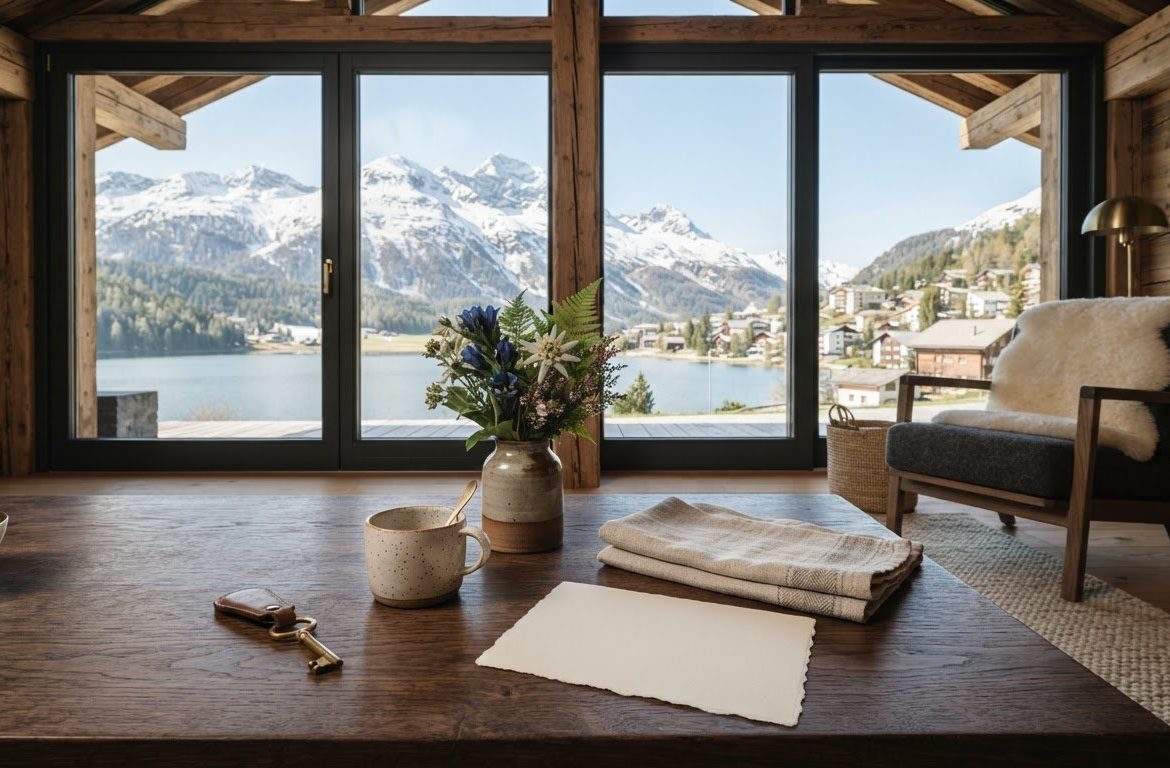
How to Create a Vacation Home Brand Guests Remember
A logo alone won’t make guests remember a vacation home; a coherent experience can. Creating a brand for your vacation home means defining what makes a stay distinctive, then expressing that promise through the property’s name, visuals, listing and guest communications. The brand should feel consistent from the first impression to the post-stay message.
Thoughtful interiors and polished photos help a property stand out. The bigger opportunity is to make every detail tell the same story, so guests understand what makes the stay special and feel confident choosing it.
This guide explains how to shape a clear identity, carry it across booking and communication channels, and assess whether it resonates. Guest feedback, repeat bookings and direct reservations can all help you refine your approach. The result is a practical framework for building recognition and trust while creating a distinctive experience for guests.
Key Takeaways
- Define the guests you want to welcome and the qualities that make your property distinctive before choosing its name, visuals and message.
- Use a simple brand guide to keep your tone, photography and design cohesive across listings, social media and guest communications.
- Track repeat stays, direct reservations and review language to see which parts of your identity resonate and where the experience could improve.
- Build trust through consistent, thoughtful guest interactions, then refine your approach using feedback and booking patterns.
Measuring branding through repeat bookings, direct reservations and guest feedback
In Switzerland, a vacation home brand stands out when it reflects the property’s distinctive character and setting. A clear promise, relevant details and a polished guest experience help travelers understand what makes the stay memorable.
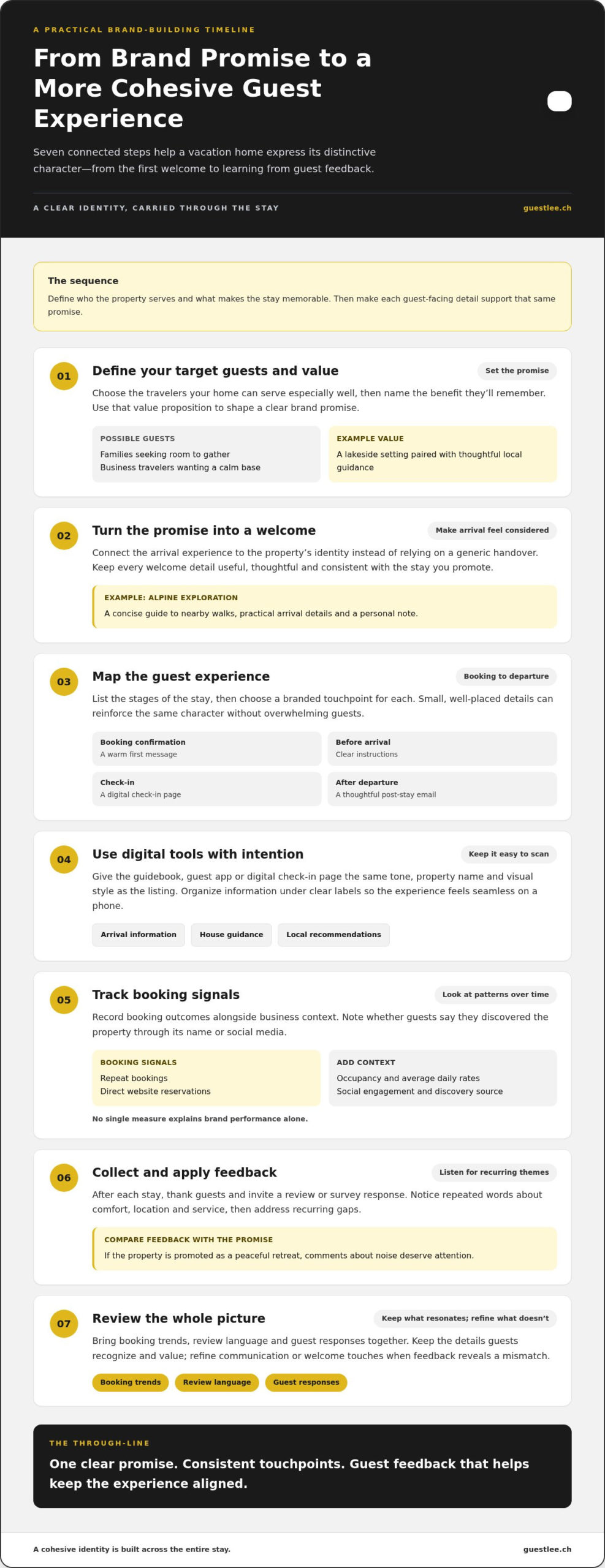
- Define your target guests and value. Choose the travelers your home can serve especially well, such as families seeking room to gather or business travelers wanting a calm base. Then name the benefit they’ll remember, such as a lakeside setting paired with thoughtful local guidance. Use that value proposition to shape your brand promise.
- Turn the promise into a welcome. Make arrival feel connected to your identity, not like a generic handover. For example, a home positioned around alpine exploration could greet guests with a concise guide to nearby walks, practical arrival details and a personal note. Keep every welcome detail useful, considered and consistent with the stay you promote.
- Map the guest experience. List the stages from booking confirmation to departure, then choose one branded touchpoint for each. A warm confirmation, clear pre-arrival instructions, a digital check-in page and a thoughtful post-stay email can all reinforce the same character without overwhelming guests.
- Use digital tools with intention. Give your guidebook, guest app or digital check-in page the same tone, property name and visual style as your listing. Keep instructions easy to scan. For instance, group arrival information, house guidance and local recommendations under clear labels, so the experience feels seamless on a phone.
- Track booking signals. Record repeat bookings and direct website reservations alongside occupancy and average daily rates. Compare these patterns over time with social engagement and note whether guests say they discovered the property through its name or social media. Each signal adds context; no single measure explains brand performance alone.
- Collect and apply feedback. After each stay, thank guests and invite a review or survey response. Note recurring words about comfort, location and service, then address repeated gaps. Compare feedback with your brand promise: if you promote a peaceful retreat, comments about noise deserve attention.
- Review the whole picture. Bring booking trends, review language and guest responses together. Keep what guests recognise and value; refine communication or welcome details where feedback reveals a mismatch.
But how do you go about creating an effective branding strategy?
Build your strategy around the property’s distinctive character, then express it through design, language and guest-facing details. Creating a brand for your vacation home works best when every choice reinforces the same clear impression.
-
Define Brand Identity, Values, and Tone
Write a short statement describing the stay you want guests to remember, then choose four or five values to guide your decisions. For example, a Swiss chalet might centre its identity on quiet comfort, local character and considered design. Translate those values into a tone of voice, such as warm and precise, and avoid promises the property cannot deliver.
-
Choose Names, Logos, Fonts, and Colors
Choose a memorable property name that reflects its setting or character, then pair it with a clear logo, a restrained colour palette and readable type. Limit website design to two to four font styles and sizes, and use the same colours in listing graphics, welcome materials and social posts. Make sure the name is easy to pronounce and distinguish from nearby properties.
Choose photos that capture the home’s real atmosphere, from architectural details to the view beyond the windows. Let the interior design support the same identity: natural textures and calm colours may suit a retreat, while refined contemporary furnishings may better express an urban residence. Avoid visuals that promise an experience the property does not provide.
-
Maintain Consistent Visual and Verbal Identity
Create a one-page guide with your logo, colours, fonts, photo style, core message and tone. Use it when updating booking listings, your direct-booking website, social media and guest emails. As you continue creating a brand for your vacation home, make sure each channel expresses the same character in a format suited to its audience.
Review each guest-facing touchpoint against the guide before publishing. Consistent details help owners present a cohesive identity, while accurate descriptions keep the visual story aligned with the stay guests receive.
Keeping branding consistent across booking and communication channels
Give each channel a clear role, then carry the same identity from discovery to departure. A repeatable process helps travelers recognise the property, find booking details and enjoy a cohesive experience.
- Adapt one core message to each channel. Use the same property name, promise and tone across online travel agency listings, your website, social media and guest emails. Tailor the format, not the identity: a listing can describe the stay, while an Instagram post highlights a local view. Keep details such as amenities and arrival instructions aligned everywhere.
- Build a direct-booking website around the guest’s next step. Present useful property information, destination recommendations and a visible availability search. Keep navigation simple, pages responsive on mobile and booking calls to action clear. Guests should be able to find the booking form within about 30 seconds, rather than searching through several menus.
- Make booking actions unmistakable. Place a button such as “Check availability” near the property description and repeat it where visitors compare dates. Keep the booking process focused: show the essential steps, explain what happens after submission and make contact details easy to find. Test the flow on a phone, from landing page to confirmation.
- Use social media to make the identity tangible. Share property photos, behind-the-scenes details, local highlights and guest stories that suit your audience. For example, a home near a Swiss hiking area could feature a trail view alongside a practical seasonal recommendation. Respond to comments in the same voice guests encounter in booking messages.
- Review performance signals together. Track occupancy, average daily rates, repeat bookings and direct website reservations alongside review language and social engagement. Compare patterns over time, then note whether reviews reflect the experience your brand promises. If guests repeatedly praise the setting but mention unclear arrival guidance, improve that touchpoint before changing the wider identity.
Benefits of branding a vacation rental
Branding costs in Switzerland depend on the scope of work, which may include naming, design, photography, website development and content. Local identity can also shape the brand: reflect architecture, languages, landscapes and recommendations rather than relying on a generic alpine look. Common pitfalls include overpromising, copying a standard vacation-rental template and presenting the rental differently from the actual stay.
- Make your distinctive value easy to recognise. A clear vacation rental brand helps travelers understand why your property suits them, whether its appeal is a lakeside setting, historic architecture or a carefully designed retreat. Carry that distinction through the listing title, photos and description, so the rental can stand out for its real qualities instead of competing through generic luxury claims.
- Connect the identity to its Swiss setting. Choose details that reflect the specific region, such as local materials, neighbourhood character or useful recommendations for nearby experiences. A home in a city should not borrow the same visual language as a secluded mountain property. That regional fit gives guests a more memorable impression and makes the rental brand feel grounded rather than interchangeable.
- Build trust by matching the promise to the stay. Keep descriptions, photographs and arrival information accurate. If the brand promises quiet, explain the setting clearly; if it highlights local exploration, offer practical recommendations. Avoid inflated claims or borrowed Airbnb clichés that could attract the wrong audience. When the real guest experience supports the message, positive feedback can reinforce recognition and encourage repeat bookings.
- Use the brand as a practical decision filter. Before changing furnishings, copy or guest communications, ask whether the change fits the identity and improves the stay. This helps owners make coherent choices instead of adding disconnected luxury touches. For Swiss property opportunities, explore real estate opportunities as part of a considered investment decision.
GuestLee: Luxury Villa Rentals
GuestLee offers luxury villa rentals for travelers seeking a distinctive Swiss stay, along with property management services for owners who want professional support. A coherent brand depends on more than visual identity: the property, guest communications and stay should all reflect the promise made to travelers. Property management can help owners align the rental process with the experience they want to provide. Owners considering a purchase or sale can also explore GuestLee’s real estate services.
Explore GuestLee’s services and contact GuestLee to discuss your property or stay.
Shape the Next Chapter of Your Property
A memorable property identity can evolve as the home, its surroundings and guest expectations change. Regularly consider whether the story still reflects the stay you want to offer. When making updates, strengthen the property’s character rather than follow a passing design trend. This keeps the experience distinctive while allowing the brand to grow naturally.
Creating a brand for your vacation home is an ongoing expression of what makes the property meaningful to guests. Decide which part of the experience deserves attention first, whether that means refining the property’s presentation or aligning its management more closely with its character. A deliberate choice can create a more coherent foundation for future seasons.
For support with your vacation rental, contact GuestLee about your vacation rental. A considered approach can help your property’s identity feel more assured, distinctive and true to the experience you want to create.
Frequently Asked Questions
What is vacation rental branding?
Vacation-rental branding is the deliberate identity and reputation a property builds with travelers before, during and after a stay. It connects the home’s character to practical expectations, such as privacy, ease of arrival and local discovery. For example, a Swiss home positioned around quiet design should make that quality evident in its description, furnishings and guest guidance. Guests can then recognise the same promise at every touchpoint.
Does niche branding actually increase occupancy rates?
Niche branding can help a vacation home attract travelers whose needs match its features. A family-focused property might highlight a practical kitchen, comfortable shared spaces and nearby activities, while a work-oriented stay could foreground a quiet workspace and clear arrival details. Track bookings and guest comments alongside seasonal demand to see whether the chosen audience is responding and where the positioning needs adjustment.
What exactly is a brand?
A brand is the set of expectations and associations people connect with your vacation home, not just its logo. It takes shape through the listing, the property’s condition, communication and the stories guests share afterward. For owners, it can also guide decisions: a proposed renovation or amenity should strengthen the experience the property aims to be known for.
What are the steps to create a brand for a vacation home?
Start by auditing the property’s strongest real advantages, then decide which travelers would value them most. Write a promise that connects those strengths to a guest benefit, and translate it into the name, presentation and service choices. Test the promise against guest questions and review comments. If inquiries do not fit the home, sharpen the positioning before investing in further promotion.
How do you choose a name and logo for a vacation rental?
Choose a distinctive name that’s easy to spell and connected to the property, without limiting how it may evolve. Search for similar names and domain availability before committing, and consider a trademark search. Design a logo that remains legible in small listing thumbnails and printed guest materials. Test it against property photos: a complex mark can compete with the home instead of identifying it.
How do you identify the target guests and positioning for a vacation home?
Match the home’s capacity, setting and amenities to travelers’ practical priorities. A spacious layout may suit family groups, while a private, quiet setting may appeal to couples seeking a retreat. Look for recurring needs in past inquiries and guest feedback, then focus on the segment the home can naturally serve. Positioning should express a credible advantage, not simply name a preferred audience.

Article by
Giacomo Esposito