
How to Onboard a New Rental Property and Set Owner Expectations
Clear expectations are the foundation of a well-managed rental. A thorough onboarding process for a new rental property starts by agreeing on responsibilities, communication and reporting. It then moves to gathering property records, preparing the home and setting up payments and guest information. Document each step before the first booking.
It’s sensible to settle the practical details early: what you’ll provide, how decisions will be made and what updates to expect. A clear management agreement aligns expectations on responsibilities, fees, booking policies, cancellations and pricing. Realistic revenue projections give the relationship a grounded starting point.
This guide explains how to set expectations and work through onboarding carefully. You’ll learn which ownership, insurance and permit documents to gather, what to include in guest instructions, how to arrange rent and deposit payments, and how to handle guest data in line with applicable requirements. It also covers property inspection and preparation to support smooth guest arrivals and more predictable management for owners.
Key Takeaways
- Agree responsibilities, communication, reporting and booking terms in writing so owner expectations are clear from the outset.
- Organise ownership, insurance and relevant local compliance documents alongside an inspection record and property inventory.
- Prepare guest instructions that bring together access, Wi-Fi, appliance guidance, house rules and emergency contacts.
- Set out how rent and any bond will be handled, and create a consistent process for collecting and submitting required guest information.
What documents do I need from property owners during onboarding?
Build the property file in sequence: establish authority and responsibilities, record the property’s condition and applicable local requirements, then prepare clear handover information. This order links compliance and documentation with the guest experience.
-
Collect Agreements and Tax Documents
Start with proof of ownership, the property management agreement, insurance documents and the owner’s bank details for disbursements. Before management begins, record responsibilities, fees, reporting routines, booking policies, cancellation terms and the pricing approach in the agreement. Gather relevant tax identification details and keep them with income records for reporting. Avoid relying on informal messages to define responsibilities. A consistent written record clarifies who handles decisions, payments and updates.
-
Record Permits and Property Rules
Next, document the local requirements for short-term rentals and keep copies of any permits or approvals that apply to the property. Record permit details alongside practical rules for guests and operations, such as occupancy limits, noise requirements and rubbish collection times. Add any applicable building or homeowners’ association rules, insurance details and emergency contacts to the property file. Keep this compliance record easy to update as local requirements or property rules change. Assemble these details before preparing the listing.
-
Prepare the Lease and Handover Protocol
For a Swiss rental lease, record the agreed rent terms, relevant house rules, parking arrangements and emergency contacts. At the start of the tenancy, the landlord and tenant should sign an initial inspection report describing fixtures, fittings and existing damage. Add dated photographs and an inventory to make the condition record useful at handover. Missing signatures, undocumented damage, unclear responsibilities and overlooked local requirements can lead to disputes or disrupt guest stays. Complete the records before welcoming guests.
Guest welcome information and check-in instructions
Prepare one clear guest guide and a repeatable turnover checklist. Together, they set expectations before arrival and help keep each property in the portfolio prepared.
-
Prepare Welcome Information and Check-In Instructions
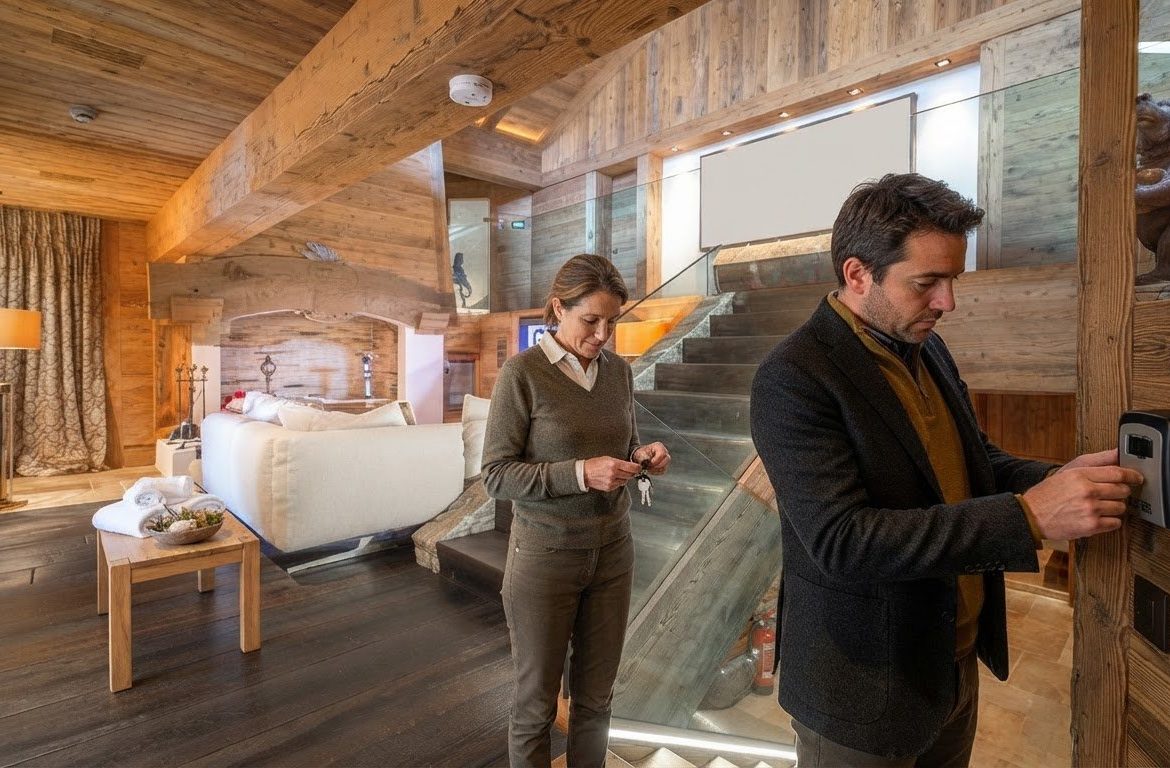
Start with the property address, arrival route, access steps and contact details. Explain how to use lockbox codes or a smart lock, gate remotes, parking, the Wi-Fi network and password, and where to find the router. Add concise instructions for unfamiliar appliances, such as the stovetop, washer or heating controls. Include house rules, rubbish collection, check-out time and emergency contacts. Send essential access details before arrival and repeat them in the arrival message so guests can find them easily. Avoid vague directions such as “key is nearby”; identify the exact entry point and steps.
-
Complete Readiness and Safety Checks
Before check-in, use a property-specific checklist to confirm the home is clean, accessible and functional. Check keys, remotes, appliances, heating and ventilation, and make sure emergency information is visible. Confirm that smoke detectors and fire extinguishers are in place, and include their locations in the guest information. Compare the room setup with the property inventory and signed inspection report. Resolve maintenance issues before guests arrive rather than leaving them to discover a problem.
- Track turnover and explain check-out. Use property management software to assign cleaning and maintenance tasks by departure date, attach the relevant checklist, and record when work starts and finishes. Ask the team to upload completion photos to create a consistent record across the portfolio. Give guests simple check-out instructions, such as where to leave keys, how to dispose of rubbish and whether appliances should be switched off. Keep instructions aligned with the actual setup. A clear handover streamlines each stay and sets expectations for guests and staff.
Bond lodgement and rent payment setup
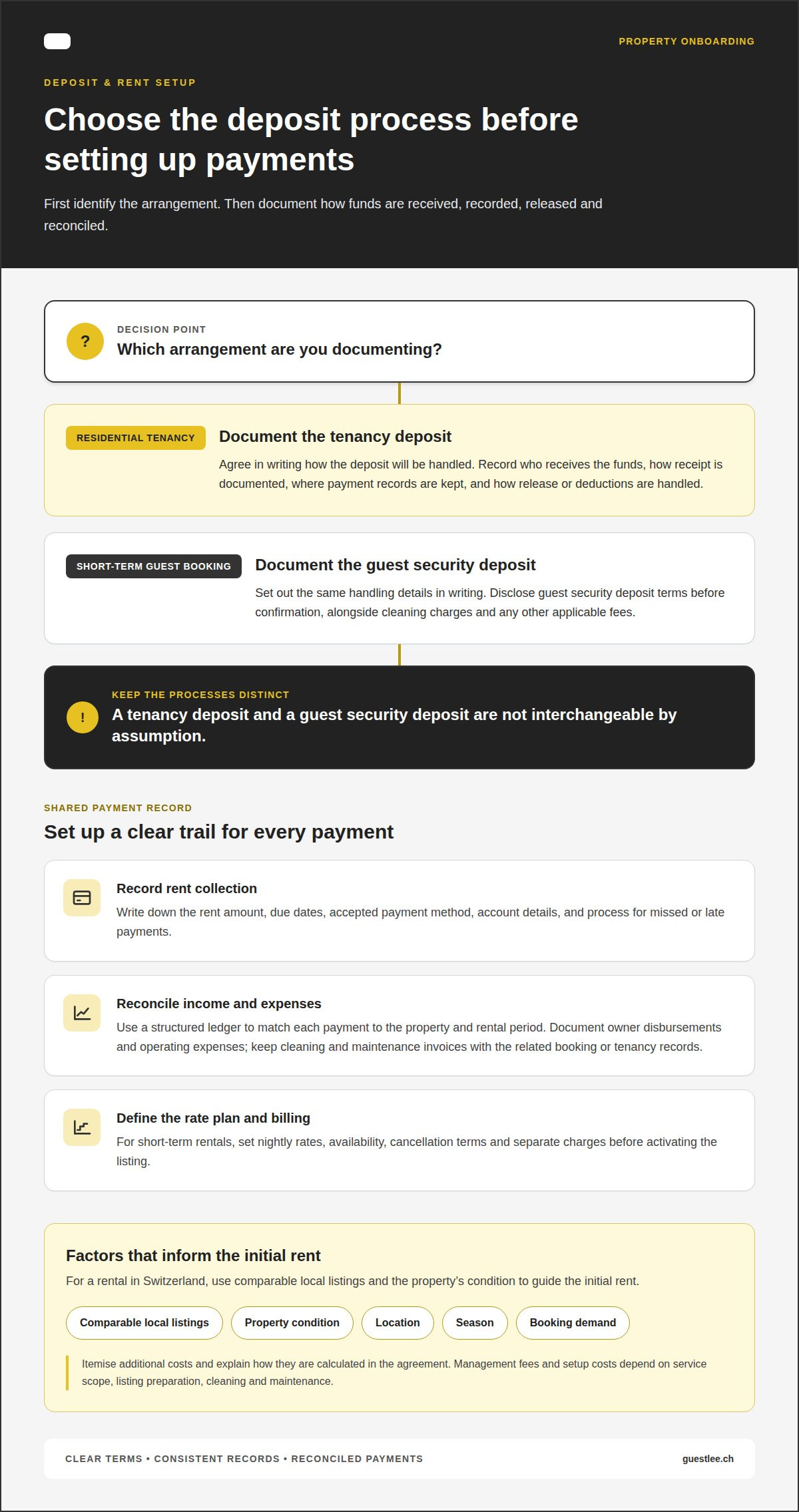
Set out how rent, deposits and property income will be received, recorded and reconciled. In Switzerland, use comparable local listings and the property’s condition to guide the initial rent. Itemise additional costs and explain how they are calculated in the agreement. Management fees and setup costs depend on the scope of service, listing preparation, cleaning and maintenance; pricing is provided after a quote request.
- Document deposit handling. Agree in writing whether the arrangement involves a residential tenancy deposit or a short-term guest security deposit. Record who receives the funds, how receipt is documented, where payment records are kept, and how release or deductions are handled. For guest bookings, disclose security deposit terms before confirmation, alongside cleaning charges and other applicable fees. Don’t assume the two types of deposit follow the same procedures.
- Establish rent collection and owner payments. Record the rent amount, due dates, accepted payment method, account details and process for missed or late payments. Set up a structured ledger that matches each payment to the property and rental period, then document how owner disbursements and operating expenses are reconciled. Keep cleaning and maintenance invoices with the related booking or tenancy records.
- Configure pricing and billing. Use comparable property data, location, condition, season and booking demand to shape the rate plan. For a short-term rental, define nightly rates, availability, cancellation terms and any separate charges before activating each channel. Review pricing and billing settings together so guests see consistent terms and owners can track income and expenses.
- Prepare the listing and assess applicants. Advertise with clear, accurate descriptions and quality property photographs. For a long-term tenant, assess background information, income verification and rental history consistently. For short-term guests, present booking policies and all applicable charges before confirmation. Keep screening practices, listing details and payment terms aligned with the agreement.
Guest data collection and regulatory submission
Make guest data a defined workflow, from collection through secure handling and any required submission. During the onboarding process for a new rental property, assign responsibility for each stage and keep records aligned with guest communication and local requirements.
- Define the information flow. Before opening a booking channel, identify which guest details are needed for reservations, arrival arrangements and applicable reporting. Assign responsibility for collecting each detail and explain its purpose in plain language. Keep emergency contact information separate from routine booking details so staff can find it promptly when needed. Avoid requesting information without a clear operational or reporting purpose.
- Use one consistent collection method. Set up a digital form or controlled platform workflow for each reservation. Use consistent field names across channels and make required entries clear to guests. Digital forms and subsequent data cleanup are estimated to take 1-2 hours during onboarding. Review entries for missing fields, duplicate records and typing errors. This makes the onboarding process for a new rental property easier to manage across bookings.
- Prepare records for submission. Link guest data to the relevant property and booking, with access limited to team members who need it. Document who reviews the information, who submits it, and where completion is recorded. Automated submission within 24 hours is one possible approach, not a universal Swiss deadline. Set the workflow according to reporting requirements that apply to the property’s location.
- Connect the process to guest communication. Explain required information collection before arrival and repeat essential instructions in the welcome message. Keep booking confirmations, submitted records and emergency contact details organised together. Give property owners a clear reporting routine showing what was collected, whether submission is complete, and how exceptions are handled. For support coordinating guest-data workflows with property operations, discuss your property management needs.
GuestLee: Luxury Villa Rentals
GuestLee supports property owners with Property Management Services, linking careful onboarding to the ongoing management of luxury short-term rentals. This can be a natural next step if coordinating property documents, guest preparation, booking operations and owner reporting is more than you want to manage yourself.
GuestLee’s services span property setup through guest departure, bringing the owner’s asset and the guest experience into one considered process. Owners can also explore Luxury Villa Rentals or Real Estate Sales when those services better match their plans. The right fit depends on whether you’re preparing a property for short-term stays, seeking management support or considering a property transaction.
To discuss your property and the support you need, contact GuestLee.
Set Your Property Up for Its Next Chapter
A successful launch is only the beginning. Treat the onboarding process for a new rental property as the start of an ongoing partnership, refining how the home is presented and managed as guest experiences clarify your priorities.
Before moving ahead, consider what you want the property to achieve and which decisions you prefer to retain. Clarifying these priorities turns management conversations into purposeful choices, from the guest experience you want to create to the level of involvement that suits you. The strongest arrangement respects the character of the home while supporting your plans as an owner.
GuestLee can help owners considering a new rental project or broader property plans. If you’re ready to explore the next step, contact GuestLee about onboarding. A considered beginning can make the path ahead feel clearer and more assured.
Frequently Asked Questions
How do I set owner expectations during the onboarding process?
Agree how decisions, updates and exceptions will be handled before the first booking. For example, document who approves urgent repairs, how booking changes are communicated and what information appears in owner reports. Set a review point after the first completed stay to discuss operational adjustments. Clear decision boundaries help prevent routine questions from becoming last-minute disagreements.
What steps are involved in onboarding a new vacation rental property?
Move from agreement to launch through defined stages: property assessment, operational setup, listing preparation, booking configuration and a guest-readiness review. Treat each stage as a checkpoint, so the listing doesn’t go live while essential details remain unresolved. For example, confirm that the calendar reflects existing reservations before opening new dates. After launch, use early guest feedback to identify practical improvements.
What are the steps to onboard a new rental property in Switzerland?
Start by identifying which local requirements apply to the property and its intended rental use, since rules can vary by municipality and canton. Then document owner arrangements, property condition, operating procedures and guest information before advertising. Record the decisions behind the launch, including who will update the file if local requirements or building rules change. This creates a traceable process without assuming one national checklist applies to every property.
What documents and information are needed to set up a rental property?
Alongside ownership and management records, gather practical operating details in one property file. Include appliance manuals, utility provider contacts, meter readings, key and remote inventories, and details of accepted reservations. For example, a note explaining a particular heating control can prevent confusion during a guest’s stay. Organise the file by property and date updates whenever access details, equipment or booking commitments change.
How do you prepare a Swiss rental property for tenants, including inspections and repairs?
Use the inspection to turn visible issues into a prioritised repair plan. Record the location and condition of each issue, then distinguish items affecting safe access or essential functions from cosmetic work. For example, note a leaking tap separately from a scuffed wall, and document repairs with completion dates and photographs. Before a tenant arrives, complete agreed repairs and ensure the handover record reflects the property’s actual condition.
What insurance, utility, and tax arrangements are needed for a new rental property in Switzerland?
Organise these arrangements around the property’s intended use and who is responsible for each cost. Keep the insurance policy and coverage details with the property records, and document which utilities are owner-paid, guest-paid or included in the rental terms. For accounting, keep booking statements, invoices and expense records together. Separating rental income, operating costs and private use supports accurate reporting and makes later reconciliation easier.

Article by
Giacomo Esposito