
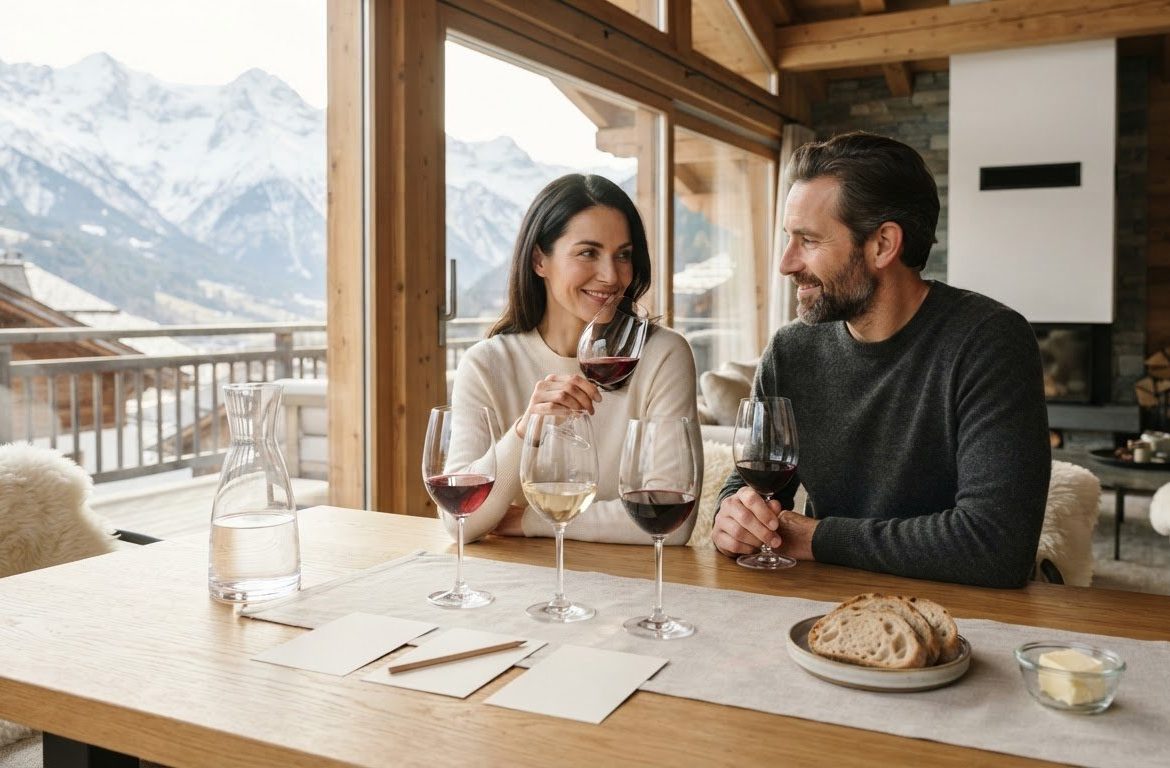
How to Organize a Wine Tasting at Your Chalet
What if the pour itself shaped the whole evening? Organizing a wine tasting at your rental chalet is easier when you choose a clear theme, arrange the wines thoughtfully and let guests explore each glass at their own pace.
A tasting can feel relaxed and sociable while still offering something to discover. Strong scents and rich snacks can distract from the wine, so keep the setting simple and give each pour room to speak.
This guide covers choosing wines, preparing the chalet and picking a format, from a comparative tasting to a blind reveal. You’ll also find practical guidance on pouring, serving temperatures and tasting order.
Key Takeaways
- Choose a clear theme for the tasting, then select wines that make the comparison or discovery easy to follow.
- Prepare transparent glasses, water, a simple palate cleanser and a well-lit, scent-free tasting space.
- Give the evening a distinctive format, such as comparing one vintage across wines or keeping bottles concealed for a blind reveal.
- Guide each pour through sight, aroma and taste, allowing guests to note their impressions before sharing them.
Which wines to choose for a wine tasting?
When organizing a wine tasting at your rental chalet, choose three to six wines and build the selection around one clear theme. A thoughtful sequence makes it easy for friends to compare bottles and share impressions.
For a private tasting in Switzerland, follow the rental agreement and chalet house rules. Make wine optional, offer water and non-alcoholic choices, and serve responsibly.
-
Match wine choices to the objective and budget
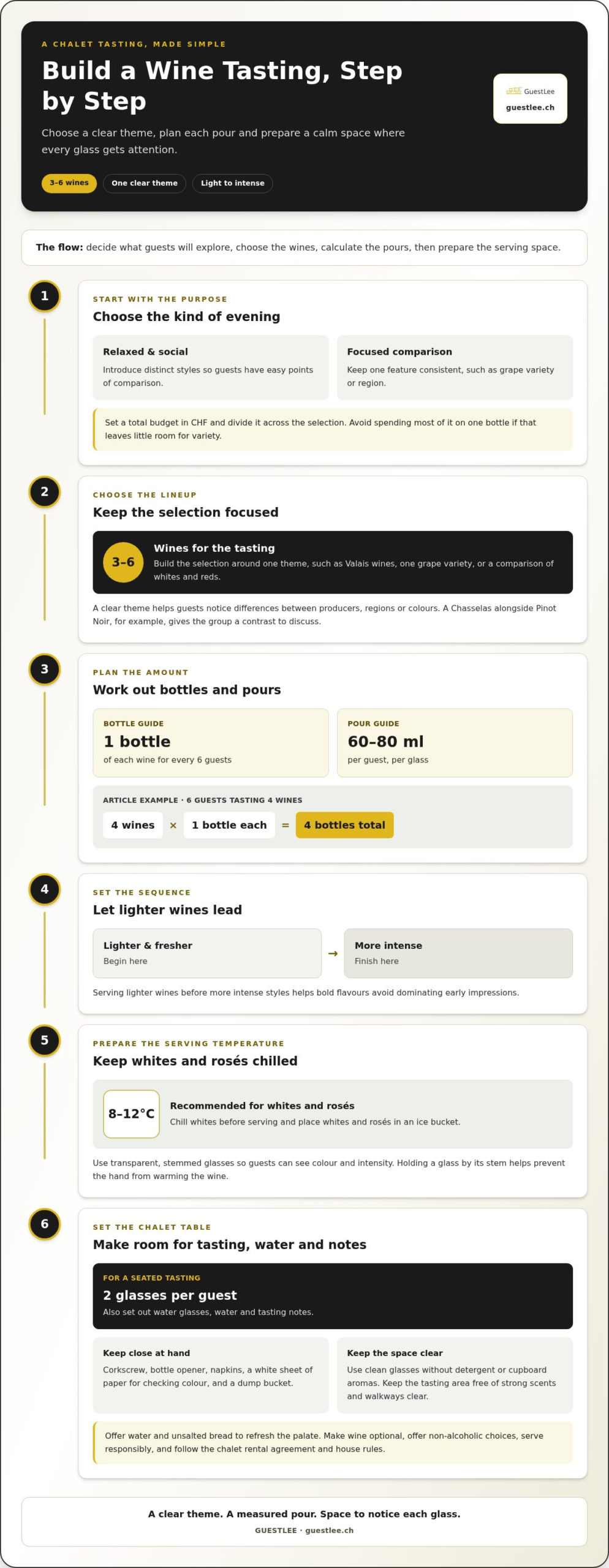
Decide whether the evening will be social or comparative before choosing the wines. For a relaxed gathering, introduce distinct styles; for a focused comparison, keep one feature consistent, such as grape variety or region. Set a total budget in CHF and divide it across the selection. Avoid spending most of it on one bottle if that leaves little room for variety.
-
Set the number and quantity of wines
Choose three to six wines, a suitable range for a Swiss home tasting, then calculate bottles from the guest count. Plan one bottle of each wine for every six guests. For example, six guests tasting four wines need four bottles in total. A pour of around 60-80 ml per guest per glass leaves room to assess each wine without rushing through the evening.
- Choose a focused theme, such as Valais wines, one grape variety, or a comparison of whites and reds. You could serve Chasselas alongside Pinot Noir, then add a contrasting style to prompt discussion. A clear theme helps guests notice differences between producers, regions or colours. Serve lighter wines before more intense styles so bold flavours don’t dominate early impressions.
Set out transparent, stemmed glasses so guests can see each wine’s colour and intensity. Holding a glass by its stem helps prevent the hand from warming the wine. Chill whites before serving, and keep the tasting area free of strong scents.
How to organize a wine tasting party?
Prepare the glasses, serving tools and cleanup points before guests arrive, so each pour has a clear place.
In Switzerland, rules for serving alcohol in a rented chalet depend on the rental agreement and house rules. Serve responsibly, keep walkways clear, and plan for spills and used glassware.
-
Gather glassware and tasting supplies
Set out two glasses per guest for a seated tasting, along with water glasses, water and tasting notes. Use clean, transparent glasses without detergent or cupboard aromas that might interfere with the wines. Add a corkscrew, bottle opener, napkins and a white sheet of paper for checking colour. Keep supplies together on a side table, away from food and personal belongings.
-
Prepare glasses, decanters, and ice buckets
Arrange glasses securely on a stable surface, with enough room for guests to set them down. Use a decanter to aerate young wines or separate older wine from sediment. Place whites and rosés in an ice bucket; keeping them at 8-12°C is recommended. Universal glasses can serve different styles when separate shapes aren’t available, while a narrower opening helps concentrate aromas.
-
Set out dump buckets
Place a dump bucket at the tasting table so guests can discreetly discard unfinished pours. Keep it within reach, but away from bottles, glassware and the main walkway. Offer water and unsalted bread to refresh the palate, with a separate container nearby for corks and empty bottles. Wipe up spills promptly and collect used glasses before they crowd the table.
-
Arrange equipment sourcing
For a chalet tasting in Switzerland, look to local wine retailers for glassware and serving accessories, or tableware and event-hire businesses for rental equipment. Compare the selection with your guest count and tasting format before collecting or arranging delivery. Ask about return and cleaning requirements when renting, and check that the chalet has safe storage space. A well-chosen Swiss chalet for your stay can also provide a comfortable setting for an evening with friends.
Horizontal, vertical, blind, and pairing tastings
Choose a format that suits the group and gives guests a simple way to compare wines. Follow the chalet rental agreement and house rules, which may set conditions for gatherings, noise or extra guests. For Swiss wines, try Comté or sheep’s-milk Tome. Avoid strong-flavoured cheeses that could overpower the wine.
-
Choose a tasting format
Choose the structure before preparing the bottles. A horizontal tasting compares different wines from the same vintage; a vertical tasting compares vintages of the same wine or winery. For a relaxed evening, a blind tasting adds an element of discovery, while a pairing format matches wines with complementary dishes. Keep the focus clear so guests can notice how grape variety, vintage or food changes their impressions.
-
Invite guests to take part in blind tastings
Cover each bottle with an opaque sleeve or foil, then number the wines in serving order. Give guests a tasting card with space to note appearance, aromas and flavours, and to guess the grape variety or region. Invite everyone to describe what they notice before revealing the labels. This keeps the tasting curious and welcoming rather than turning it into a test.
-
Run a blind-label guessing game
Prepare a scorecard with each wine’s number and a simple rating from 1 to 5. Ask guests to score every wine privately, then collect the cards before revealing the labels. Compare the group’s favourite with the bottle guests identified correctly. Treat guesses as conversation starters, not judgments of expertise, and let people explain which aromas or flavours shaped their choices.
-
Choose food pairings for Swiss wines
Pair Swiss wines with simple foods that let their flavours come through. Serve Comté or sheep’s-milk Tome with a suitable wine, and offer bread or breadsticks between pours to refresh the palate. Avoid Époisses, Roquefort, truffle-based cured meats and wild boar, whose strong flavours can mask wine aromas. Serve larger dishes before or after the tasting, or match each course deliberately.
Pouring and tasting wine
Pour with care: the serving order, temperature and tasting sequence all shape how guests perceive each wine.
- Arrange wines from lightest and freshest to fullest-bodied and most complex. Start with sparkling wines, then move to whites, rosés and reds. This progression helps prevent a powerful wine from overwhelming delicate aromas. If the selection focuses on one region, introduce its lighter expressions first and invite guests to notice how the structure and finish develop.
- Serve each wine at a suitable temperature. White wines are generally served at 8°C to 12°C, sparkling wine at 6-8 °C, young red wines at 14/16 °C, and aged or reserve reds at 16/18 °C. Chill whites before guests arrive, and open fuller-bodied reds ahead of serving. Avoid leaving red bottles beside a fireplace, where warmth can flatten their character.
- Pour a small glass about one-third full, or a larger glass about one-quarter full. The remaining space lets guests swirl gently without spilling. Guide them through three stages: look at the wine against a white background, smell it before and after swirling, then sip slowly. You don’t need a sommelier; a thoughtful host can lead the tasting and encourage everyone’s impressions.
- Give guests fresh water and unsalted bread between wines, then allow time to compare notes before moving on. Keep a dump bucket nearby for unfinished pours, especially during an extensive selection. Pair food deliberately: choose mild accompaniments that complement the wine rather than mask its aromas. For an elegant setting for a future tasting, explore Swiss luxury villa rentals.
GuestLee: Luxury Villa Rentals
GuestLee offers Luxury Villa Rentals for guests seeking a refined setting for a Swiss chalet stay. Once you’ve planned the wines, format and serving details, choose a property that gives your group a comfortable place to gather and suits the kind of evening you have in mind.
For owners preparing a property for short-term guests, GuestLee’s Property Management Services support the rental process. GuestLee also offers Real Estate Sales for owners considering a property transaction. These services address different needs, whether you’re planning a holiday or managing a property asset.
Explore GuestLee’s offerings and visit guestlee.ch.
Make the Evening Your Own
The most memorable chalet gatherings feel personal, not overproduced. Add a small signature to the evening: invite each guest to bring a wine connected to a place or occasion, or ask everyone to share one word about their favourite pour. These touches make organizing a wine tasting at your rental chalet a shared experience shaped by the people around the table.
As you plan your stay, think beyond the tasting. A welcoming setting, room to gather and an unhurried pace can help friends enjoy the evening together. Let the chalet and its surroundings be part of the occasion, not just a backdrop.
When you’re ready to plan your next Swiss chalet stay, contact GuestLee to plan your chalet stay. Choose a setting that feels right for your group, and look forward to raising a glass together.
Frequently Asked Questions
Do you need a sommelier to lead the tasting?
No, a sommelier isn’t essential for a relaxed home tasting. A host or willing guest can introduce each wine, keep the order moving and invite observations without treating anyone’s opinion as wrong. Before the evening, prepare a few neutral prompts, such as “What aroma stands out?” or “Which wine would you serve again?” This gives conversation direction while keeping the mood sociable.
How to do a wine and brandy tasting at home?
Serve the wines first, moving from lighter styles to fuller ones, then offer brandy as a separate final pour. Brandy is served at 16-18 ºC; let it rest in the glass for 1-2 minutes before smelling. Invite guests to notice its aroma, take a small sip and consider the finish. Jerez brandy’s flavour can remain for 30 seconds or more, so allow time before the next taste.
What equipment and glassware are needed for a chalet wine tasting?
Prepare wine glasses, a corkscrew, water, a pitcher, napkins and a stable surface for the bottles. Add tasting cards and pens for guests who want to record their impressions, plus a spittoon for anyone who prefers not to swallow every sample. Check the glasses against a light background before guests arrive. Marks or lingering scents can distract from seeing and smelling the wine.
How many wines and guests are suitable for a home wine tasting?
A Swiss home tasting can suit six to twelve guests and three to six wines. As a planning guide, allow one bottle of each wine for every six guests, and increase the quantity for a larger group. A smaller group can spend longer comparing notes; a larger gathering benefits from a clear serving order and enough space for everyone to see and hear the host.
How to plan a wine tasting step by step at a rental chalet?
Start by choosing a theme and inviting guests in line with the chalet’s rental terms. Select the wines, calculate how many bottles you’ll need and choose a format, such as a regional comparison or blind reveal. Prepare the table, water and tasting materials before opening the bottles. During the evening, introduce each pour, leave room for guests’ impressions and finish with a relaxed meal or conversation.
How much does wine for a tasting cost in Switzerland?
Wine prices in Switzerland vary by producer, region, grape variety, vintage and bottle selection. To set a budget in CHF, decide how many wines to compare, then weigh bottle prices against the number of guests and planned pours. A focused tasting can use fewer wines; a broader selection requires more bottles. Choose wines that suit the occasion, not just a price tier.

Article by
Giacomo Esposito