Preparing a chalet for holiday rentals and welcoming guests
A beautiful chalet needs more than attractive furnishings to succeed as a holiday rental. Preparing a chalet for holiday rentals means creating a clean, well-maintained, fully equipped space and putting clear booking, arrival and property-management arrangements in place.
It is natural to focus first on the guest experience. Comfortable bedding, reliable heating and a kitchen ready for relaxed meals help make a mountain stay feel effortless.
Essential preparations also include confirming local registration and safety requirements, setting rental terms in a contract, and deciding who will manage bookings and changeovers.
This guide explains how to prepare the chalet and its amenities, organise the practical steps for renting it out, and approach guest registration and rental contracts in Switzerland. It also covers how seasonal booking choices and management can support both a good guest experience and your property goals.
Key Takeaways
- Prepare a chalet for arrivals with careful maintenance, thorough cleaning and practical amenities suited to mountain stays.
- Set clear booking terms and keep availability up to date across every platform you use.
- Confirm the local registration, safety and tourist-tax requirements, then spell out guest responsibilities in the rental contract.
- Choose a seasonal booking and management approach that fits your priorities for income, property care and guest experience.
1. What services and amenities must be offered to guests?
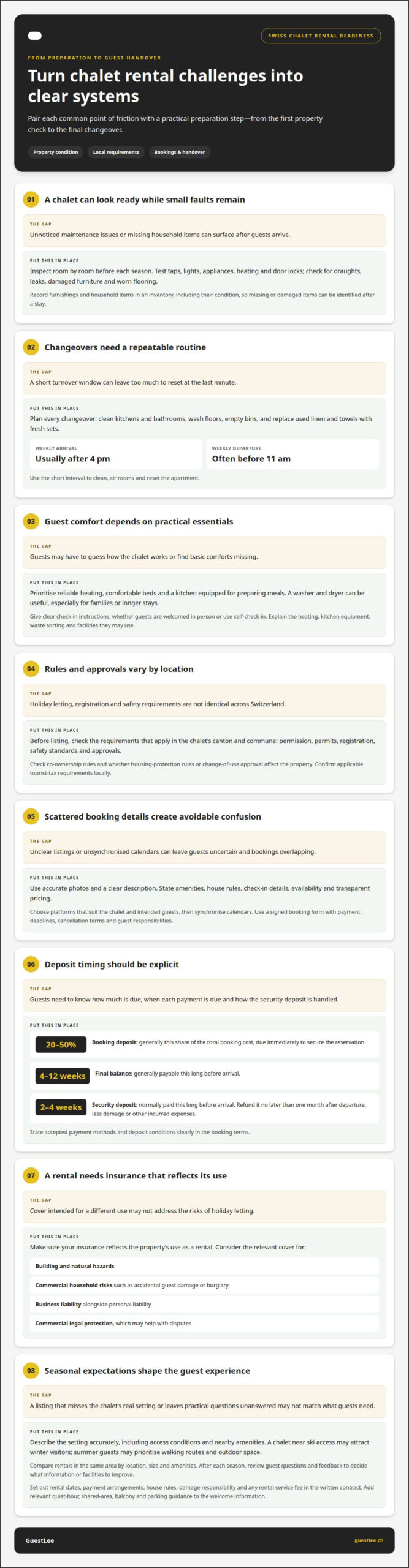
Before each season, inspect the chalet room by room and complete repairs before guests arrive. Test taps, lights, appliances, heating and door locks; check for draughts, leaks, damaged furniture and worn flooring. Record furnishings and household items in an inventory, noting their condition so you can identify anything missing or damaged after a stay. Holiday accommodation should be clean, maintained and self-contained, with basic furniture and household items. There is no strict furnishing list for every rental.
Plan a changeover routine for every booking. Clean kitchens and bathrooms, wash floors, empty bins, and replace used bed linen and towels with fresh sets. In a mountain chalet, efficient heating, comfortable bedding and a fully equipped kitchen are practical essentials. Provide clear check-in instructions, whether you welcome guests in person or arrange self-check-in. For weekly stays, arrivals are usually after 4 pm and departures often before 11 am, leaving a short window for cleaning, airing rooms and resetting the apartment.
Fire, gas and electrical safety requirements vary by location in Switzerland, so follow the local standards that apply to the property. Check that smoke detectors are present and working, and arrange appropriate inspections of gas appliances and electrical systems before guests arrive.
How much does it cost to furnish and prepare a chalet for holiday guests? There is no single preparation cost: your budget depends on the chalet’s condition and size, existing furnishings, chosen quality, and any repairs or equipment needed. List essentials first, then price furnishings, kitchen items, linens, towels and maintenance work according to the property’s actual needs.
What amenities do holidaymakers expect in a Swiss chalet rental? Prioritise reliable heating, comfortable beds and a kitchen equipped for preparing meals. A washer and dryer can be useful, especially for families or longer stays. Decide whether cleaning is provided during the stay or only at departure, and state this clearly in the listing. Fresh linen, towels, working appliances and clear arrival instructions make the chalet easier to use from the first evening.
2. How to rent out a holiday rental?
First confirm that holiday letting is permitted for your chalet. Swiss rules vary by canton and commune, so check local requirements for permits, registration, safety standards and approvals. Co-ownership regulations may also restrict holiday rentals. Housing-protection rules or restrictions on misuse can prevent approval in some locations, so establish whether change-of-use approval applies before listing.
To list on Airbnb, Booking.com or another platform, prepare accurate photos and a clear description. Specify amenities, house rules, check-in details, availability and transparent pricing. Choose platforms that suit your chalet and intended guests, then synchronise calendars to prevent overlapping bookings. A specialist agency can also handle reservations. Either way, use a signed booking form with clear terms and conditions, including payment deadlines, cancellation terms and guest responsibilities.
For ski chalet bookings, the deposit is generally 20 to 50% of the total booking cost and is due immediately to secure the reservation. The final balance is generally payable 4 to 12 weeks before arrival. A separate security deposit is normally paid 2 to 4 weeks before arrival, then refunded no later than one month after departure, less costs for damage or other incurred expenses. State accepted payment methods and deposit conditions clearly in the booking terms.
Make sure your insurance reflects the property’s use as a rental. Consider building and natural-hazard cover, commercial household insurance for risks such as accidental guest damage or burglary, and business liability cover alongside personal liability insurance. Commercial legal-protection insurance may also help with disputes.
For coordinated holiday rental management, keep the listing, calendar and guest terms aligned from the first enquiry.
3. Guest registration and rental contracts
Before accepting bookings, establish which permit, registration, safety and approval requirements apply in the chalet’s canton and commune. Swiss requirements vary by destination, as do tourist-tax rules. Co-ownership regulations may also affect holiday letting. Confirm the applicable local steps before marketing the property, particularly if housing-protection rules may apply.
A written rental contract should set out the stay’s terms, guest rights and responsibilities. Include the rental dates, payment arrangements, house rules, responsibility for damage and any rental service fee. State check-in and check-out times clearly. Weekly chalet arrivals are usually after 4 pm, while departures are often before 11 am. These details help guests plan travel and give the changeover team a clear schedule.
Make guest information specific to the property. Explain how to operate the heating, where to find kitchen equipment, how to sort waste and which facilities guests may use. Add quiet-hour expectations and rules for shared areas, balconies or parking where relevant. A concise welcome guide answers practical questions and helps guests use the chalet without guesswork.
The setting also shapes the facilities and information guests value. A chalet near ski access may attract winter visitors, while summer guests may prioritise walking routes and outdoor space. Describe the setting accurately, including access conditions and nearby amenities, and highlight the property’s real strengths. Compare rentals in the same area by location, size and amenities to guide your positioning. After each season, review guest questions and feedback, then decide what information or facilities to improve.
Registration is only one preparation step. Keep records of bookings and guest communications alongside signed contracts. Clear records help resolve questions about agreed arrival times, house rules or reported damage. Make sure the guide, contract and listing match, so guests receive consistent information before arrival and inside the chalet.
Owner goals and rental management
Start by deciding what you want the chalet to deliver: rental income, personal use, property preservation or a balance. Preparing a chalet for holiday rentals also means setting a calendar that reflects those priorities. Winter and summer are high seasons for mountain rentals, while spring and autumn are quieter. Weekly bookings may suit peak periods; flexible short stays can help fill less busy dates.
Self-management gives you direct control over pricing, availability, guest communication and presentation. It also means coordinating reservations, answering arrival questions, arranging changeovers and handling maintenance issues. Map the tasks across a typical booking, from enquiry to departure, and decide who can respond to property problems when you are away or unavailable.
A property manager can coordinate practical rental tasks, giving owners more time for other priorities. The trade-offs are less direct involvement in daily decisions and a management cost to weigh against the work delegated. Set responsibilities clearly, including listings, guest communication, cleaning coordination, maintenance reporting and owner approvals. Preparing a chalet for holiday rentals is more manageable when every task has a clear owner.
Build an operating plan around your goals. Reserve personal-use dates before opening the calendar, then choose booking lengths to suit the season. Plan for operating expenses and keep consistent records of rental income and costs. Rental income is generally taxable, so thorough records support accurate reporting and discussions with a tax professional.
Review the plan after each season. Compare booking patterns, guest feedback, maintenance needs and owner-use dates, then adjust the next calendar. The right management model depends on how much control and hands-on responsibility you want to retain. Discuss a property management approach that fits your chalet and priorities.
GuestLee: Luxury Villa Rentals
If preparing a chalet feels like more than you want to manage alone, GuestLee’s Property Management Services support owners throughout the rental process, from property setup to guest departure. The service helps coordinate the details behind a well-presented stay.
For owners balancing personal use with holiday bookings, professional management can bring structure to reservations, guest arrangements and property care. GuestLee also offers Luxury Villa Rentals and Real Estate Sales for different property and investment goals. The right service depends on whether you are preparing a property for guests, seeking rental management or considering a real estate transaction.
For a considered conversation about managing your chalet, contact GuestLee.
Set your chalet up for its next chapter
Preparing a chalet for holiday rentals is also an opportunity to decide what role the property should play in your longer-term plans. You might prioritise guest stays, reserve selected dates for family or keep future sale prospects in mind. A clear direction helps you make consistent decisions about how the property is presented and cared for.
Plan beyond the first booking. Keep records of guest feedback, recurring maintenance needs and dates that suit your own use. Over time, these observations can guide a considered approach to the chalet, based on how it performs and what matters to you as its owner.
When you’re ready to explore the next step, contact GuestLee to discuss your chalet. A thoughtful plan can bring your property goals and the guest experience into closer alignment.
Frequently Asked Questions
How to rent out a holiday rental?
To rent out a chalet, confirm local letting requirements, prepare a clear listing and establish reliable booking processes. Use accurate photographs and descriptions, explain house rules and arrival arrangements, and set prices with comparable local accommodation in mind. If you list on multiple platforms, synchronise calendars to prevent double bookings. Keep signed booking terms and income records together so reservation details and financial reporting are easy to follow.
Should you accept short stays?
Short stays may suit quieter periods, but weigh the extra changeovers against likely booking income and the time needed to prepare the chalet. A shorter reservation can fill a gap between longer bookings, while peak winter or summer dates may suit weekly stays. Consider travel patterns, cleaning arrangements and who will handle each arrival before opening additional dates.
What services and amenities must be offered to guests?
There is no strict furnishing list for every holiday rental, but the accommodation should be self-contained, clean and well maintained. For a Swiss mountain stay, prioritise reliable heating, comfortable beds and a kitchen equipped for preparing meals. Guests may also value laundry facilities, particularly on longer trips. Describe exactly what is provided so visitors can plan for personal items or equipment they need to bring.
What taxes must be paid for renting the property as a holiday home?
Rental income from a holiday home is generally taxable in Switzerland. The applicable tax treatment depends on the owner’s income and personal circumstances, so keep organised records of rental income and related costs throughout the year. These records can help distinguish property expenses from private spending and support a tax professional’s assessment. Do not assume occasional letting removes income from tax reporting.
What taxes and tourist taxes apply to holiday chalet rentals in Switzerland?
Tourist-tax requirements vary by destination in Switzerland, so there is no single national rate for every chalet. Find out which local rules apply and how they affect bookings before setting guest-facing prices or payment instructions. Keep a record of stays and any tourist-tax amounts handled for each reservation, then reconcile them with booking records and local requirements.
How should a chalet be cleaned, maintained, and winterised between guest stays?
After each departure, arrange a thorough clean, replace used linens and towels, empty bins, and check kitchens and bathrooms for forgotten items. Walk through the chalet to spot new damage, missing household goods or maintenance issues, and update the inventory. Before colder periods, assess the heating system and exposed areas, secure doors and windows, and arrange appropriate winter preparation for the building.

Article by
Giacomo Esposito