
Rental Property Performance Metrics That Help Protect Returns
A rental property’s performance is best understood by tracking several measures, not occupancy alone. The most useful performance metrics for a rental property include occupancy, rent collection, operating expenses, maintenance response, and tenant satisfaction. Each reveals a different aspect of the property’s financial and day-to-day health.
It’s natural to focus on rental income, but income alone can hide vacancies, late payments, rising costs, or unresolved maintenance issues. Reviewing these indicators together gives you a more balanced view of how the property is being managed and where attention may help protect returns.
This guide explains what each metric shows, how to interpret it in context, and how a change in one measure can affect the others. It also shows how a considered performance review can support confident decisions about a rental property in Switzerland.
Key Takeaways
- Read occupancy alongside rent collection to distinguish a fully let property from one that is reliably earning its rent.
- Track operating costs and cash-on-cash return together to see how expenses affect the income generated by your invested capital.
- Use maintenance response and tenant feedback to spot recurring issues that may undermine satisfaction and retention.
- Review a focused set of indicators over time, since changes across several measures can reveal more than any single figure.
1. How Do Occupancy Rate and Rent Collection Rate Affect Performance?
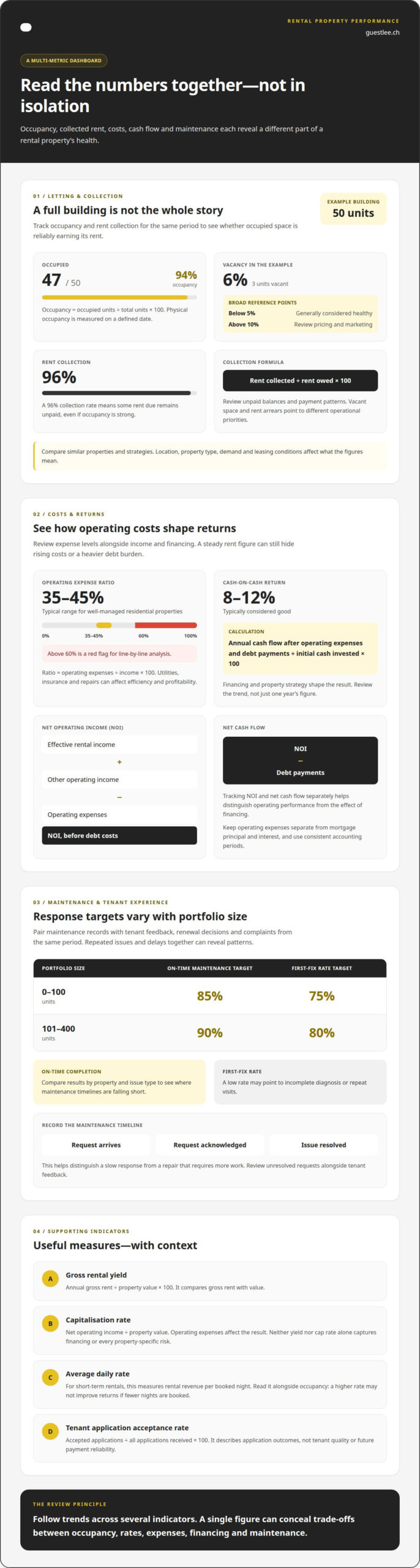
Occupancy shows how much of a property is in use; rent collection shows whether the rent due arrives. Calculate occupancy by dividing occupied units by total units, then multiplying by 100. For a concise view of performance metrics for a rental property, track both measures for the same period and distinguish physical occupancy, measured on a defined date, from vacancy over time.
For example, 47 occupied units in a 50-unit building produce 94% occupancy and a 6% vacancy rate. A vacancy rate below 5% is generally considered healthy in many markets, while a rate above 10% warrants reviewing pricing and marketing. Treat these as broad reference points, not automatic targets: property type, location and leasing conditions shape the appropriate action.
Calculate rent collection by dividing rent collected by rent owed, then multiplying by 100. A collection rate of 96% means some rent due remains unpaid, even if occupancy looks strong. Compare occupancy and collection together, then review unpaid balances and payment patterns; property management can use this distinction to identify whether the priority is leasing vacant space or addressing arrears.
Gross rental yield compares annual gross rent with property value, multiplied by 100. Capitalisation rate instead divides net operating income by property value, so operating expenses affect the result. As value rises while income stays unchanged, yield and cap rate fall; stronger income can offset that effect. Neither measure alone captures financing or every property-specific risk.
For short-term rentals, average daily rate measures rental revenue per booked night. Read it alongside occupancy: a higher rate may not improve returns if fewer nights are booked. Tenant application acceptance rate is accepted applications divided by all applications received, multiplied by 100. It describes application outcomes, not tenant quality or future payment reliability.
Across Swiss regions and property types, these measures are not directly comparable without context. Demand patterns, rental strategy, operating expenses, and property value all influence results. Compare similar properties and strategies, and assess each property’s trend over time. A single metric can conceal trade-offs: high occupancy may coincide with weaker rates, while yield excludes financing and may not reveal maintenance needs.
2. How Can Maintenance Costs and Operating Expenses Reveal Hidden Problems?
Cash-on-cash return shows how effectively invested cash generates income. Divide annual cash flow after operating expenses and debt payments by the initial cash invested, then multiply by 100. A return between 8% and 12% is typically considered good, but financing and property strategy shape the result. Review the trend, not just one year’s figure.
Operating expense ratio reveals how much income goes toward running the property. Divide operating expenses by income, then multiply by 100. Well-managed residential properties typically have ratios between 35% and 45%; above 60% is a red flag for line-by-line analysis. Rising utility, insurance, or repair expenses can reduce efficiency and profitability even when rent remains steady.
Net operating income (NOI) is effective rental income plus other operating income, minus operating expenses. Because it excludes financing payments, NOI shows how the property performs before debt costs. Net cash flow goes further by subtracting debt payments from NOI. Tracking both helps distinguish weak operating performance from a financing burden.
For a Swiss property, record recurring and unexpected costs consistently. Include routine and emergency maintenance, owner-paid utilities, insurance, management, and taxes applicable to the property or ownership. Keep operating expenses separate from mortgage principal and interest, and use consistent accounting periods to make comparisons meaningful.
Mortgage interest and other financing costs affect cash flow after NOI is calculated. Higher interest expenses or greater leverage can leave less income for the owner, while a lower debt burden can improve cash-on-cash return. Compare financing scenarios using the same rental income, expense assumptions, and invested-cash basis.
Rent arrears weaken cash flow because rent owed but not received cannot cover expenses or debt payments. Track unpaid balances by age and compare rent collected with rent due for each period. If arrears persist, distinguish delayed payments from vacancies, since each requires a different operational response.
When expense patterns or repeated repairs need coordinated oversight, a structured property performance review can help connect operational analysis with asset decisions.
3. Tenant satisfaction and maintenance response
Tenant satisfaction shows up in more than survey scores. Compare survey responses or informal feedback with maintenance records, renewal decisions, and complaints from the same period. For example, reports of recurring heating problems carry more weight when work orders also show repeated delays. This context helps owners assess service quality and investment priorities.
Track maintenance response using on-time completion and first-fix rates. For portfolios of 0–100 units, suggested targets are 85% on-time maintenance and a 75% first-fix rate. For portfolios of 101–400 units, the corresponding targets are 90% and 80%. Compare results by property and issue type; a low first-fix rate may point to incomplete diagnosis or repeat visits.
Responsiveness matters to owners as well as tenants. Record when each request arrives, when it is acknowledged, and when it is resolved. This timeline helps distinguish a slow response from a repair that requires more work. Reviewing unresolved requests alongside tenant feedback makes service patterns visible without treating every complaint as the same issue.
Turnover and re-letting time show how satisfaction connects to revenue. An annual tenant turnover rate below 20% is generally considered healthy; above 30% can signal pricing misalignment, property condition issues, or management problems. Calculate turnover by dividing move-outs during a period by the average number of tenants, then multiplying by 100. For small portfolios of 0–100 units, suggested unit turn time is 14 days or less, and leasing time is 21 days or less.
Renewals help limit vacancy periods and the work of preparing a home for a new resident. If 30 of 40 eligible leases renew, the renewal rate is 75%. Track that alongside feedback and turnover to evaluate whether service improvements support retention. Reputation also offers a qualitative signal: recurring concerns in tenant comments can reveal experience issues before they appear in revenue.
Track revenue growth year over year, then review it alongside renewals and turnover. Rising revenue alone does not prove tenant satisfaction. Compare it with retention, payment records, and maintenance outcomes to assess whether income growth is sustainable.
4. Core rental-property performance indicators
A useful scorecard brings together 5 to 10 measures, rather than relying on one headline percentage. Pair operating results with financing, valuation, and lease information. Each measure answers a different question: does rental income cover obligations, is revenue developing, and how much capital is tied to the asset?
Debt service coverage ratio (DSCR) compares net operating income with annual debt payments. A DSCR of 1.25 means income exceeds debt service by 25%; at 1.0, income exactly matches payments, leaving no cushion for repairs or interruptions. A ratio of 1.10 or below is considered high-risk and may complicate refinancing. Track it beside the break-even ratio, which compares combined expenses and loan payments with income. An 80% ratio means 80% of income is needed to meet those costs.
To assess revenue growth, compare rental income year over year using consistent periods. Then compare average rent with similar local properties. A gap may indicate room for a rent review or a need to investigate differences in condition, location, or included services. This is more useful than relying on a market-wide average that combines unlike properties.
Investment measures add a longer view. Equity multiple divides total cash returned by invested equity: a 2.0 multiple over five years means the investor received twice the original equity in total distributions. It doesn’t show when those payments arrived, so pair it with annual cash-flow analysis. WALT or WALE summarizes weighted average lease term across a portfolio, helping reveal how much contracted rental income may come up for renewal soon.
Use these measures as a connected dashboard. A strong DSCR cannot explain weak revenue growth, and a favourable equity multiple does not describe upcoming lease expiries. Review trends together with operating results and tenant satisfaction, then investigate the measure that changed. Discuss a considered property performance review when you want support interpreting the indicators for your Swiss property.
GuestLee: Luxury Villa Rentals
GuestLee provides Property Management Services for owners seeking attentive oversight of a rental property. If occupancy, operating costs, maintenance response, or guest feedback point to an operational challenge, a coordinated review can help identify where management attention is needed. GuestLee supports owners from property setup to guest departure, with attention to the asset and guest experience. Its Luxury Villa Rentals serve travellers seeking a premium stay in Switzerland, while Real Estate Sales can support owners considering a change to their property portfolio. The next step depends on your goal: improving property management, welcoming guests, or considering a transaction. Contact GuestLee to discuss your property and your objectives.
Make Your Next Property Decision With Clarity
A useful review should lead to a decision, not just a fuller spreadsheet. Choose the change that best supports your priorities, whether that means refining day-to-day oversight, preparing for a new rental strategy, or reassessing an asset. Use performance metrics for a rental property as an ongoing decision-making framework, and measure whether each adjustment is moving the property in the intended direction.
Consistency matters more than complexity. Keep records aligned across reporting periods, note the reason for significant changes, and interpret results in light of the property and its goals. This creates a clearer basis for discussions about management and future plans, without mistaking one strong result for lasting performance.
If you’re considering the next step for your Swiss property, speak with GuestLee about your aims and priorities. Contact GuestLee to discuss your property, and move forward with a considered plan for its future.
Frequently Asked Questions
What are KPIs in property management?
KPIs are measurable indicators of whether property management is meeting operational and financial objectives. They can cover payment reliability, open maintenance requests, lease renewals, or tenant disputes. For example, track disputes over a reporting period relative to managed units, then investigate the reasons for any change. A KPI is most useful when its definition, data source, and review period remain consistent.
How Do Occupancy Rate and Rent Collection Rate Affect Performance?
Occupancy indicates whether units are in use, while rent collection shows whether money owed has been received. Read the two measures together to distinguish leasing issues from payment issues: an occupied unit with overdue rent needs a different response from a vacant one. For a simple portfolio view, record both for the same reporting period and note changes in lease status or payment timing.
How Do Rental Income, Yield, and Cash Flow Measure Property Performance?
Rental income records what a property earns, yield relates income to property value, and cash flow shows what remains after relevant outgoings. Each answers a different question. For example, rental income can remain stable while cash flow tightens because financing payments or operating costs have risen. Keep the valuation date and accounting period consistent when comparing yield over time.
How Can Maintenance Costs and Operating Expenses Reveal Hidden Problems?
Cost patterns can show whether a repair is isolated or part of a recurring failure. Group invoices by property, system, and repair type, then compare repeat callouts with planned upkeep. Emergency repairs can cost two to three times more than scheduled upkeep, so repeated faults may warrant assessing preventative maintenance or replacement. Separate one-off work from recurring expenses to make trends easier to see.
How to Monitor Critical Performance Metrics for Rental Properties?
Use a consistent reporting routine based on rent records, invoices, work orders, lease dates, and tenant feedback. Match each metric to its source, and note unusual events, such as a major repair or lease ending, alongside the result. A monthly review helps distinguish a lasting change from a single-period fluctuation and gives owners a clearer basis for follow-up decisions.
What Are the Key Performance Indicators KPIs You Should Track?
Choose indicators that reflect both income and service delivery: occupancy, rent collection, operating expenses, cash flow, maintenance resolution, and tenant retention. For a short-term rental, average daily rate can add context; for leased units, renewal and turnover measures may be more relevant. Pair related indicators so a favourable result in one area does not conceal pressure elsewhere.

Article by
Giacomo Esposito