Second Home Management Services in Switzerland for Owners
A second home can feel effortless to arrive at, but keeping it ready between visits takes more than holding a key. Second home management services in Switzerland typically bring together keyholding, arrival preparation, concierge support, seasonal inspections and preventative maintenance, while letting options depend on the property’s licence and classification. Swiss second homes may account for no more than 20% of a municipality’s housing stock, making local restrictions important when rental use is part of the plan.
Owners want the reassurance that their property is cared for without losing the pleasure of having a home of their own. This guide explains how letting restrictions shape management, what keyholding and pre-arrival preparation involve, and how inspections and maintenance help keep a home ready between stays. It also explains how professional second home management services in Switzerland can support your priorities as an owner.
Key Takeaways
- Letting options depend on a Swiss property’s licence and classification, so understand the applicable restrictions before planning guest stays.
- Coordinate keyholding, arrival preparation and concierge support around how the home is used and who needs access.
- Seasonal inspections can help identify maintenance needs early; after a major weather event, an inspection within 24-48 hours is recommended.
- Compare management arrangements by their coverage of keys, inspections, cleaning and maintenance, then consider whether professional property management fits your ownership plans.
Keyholding, pre-arrival preparation, and concierge support
Keyholding gives a designated property manager controlled access for planned visits, guest arrivals and maintenance appointments. A clear key register records who holds each key, which doors it opens and when it is returned. For example, a manager can arrange for a cleaner to enter before an owner arrives, then confirm the home is secured afterward. This keeps access to a private residence organised while the owner is away.
Pre-arrival preparation turns an empty property into a welcoming home. A manager can check that agreed rooms are ready, coordinate cleaning, air the rooms and arrange for heating to be adjusted to the owner’s preferences. For a family arriving after a journey, fresh linens and a clear entrance can make those first moments more comfortable. Concierge support can also coordinate practical arrival details and other services according to the owner’s instructions.
Letting plans need separate attention. Swiss second homes may account for no more than 20% of a municipality’s housing stock. In municipalities above that threshold, new second homes face strict conditions. For non-residents, annual letting may be restricted or prohibited according to the property’s licence and classification. Some holiday homes must be offered for tourist accommodation, while others may be let seasonally. Keyholding and guest preparation should follow the property’s permitted use.
Ownership matters can shape management arrangements, but they are distinct from day-to-day access. A buyer’s permit, financing, tax position or planned construction does not determine a manager’s keyholding routine. The property’s registered details and approved use matter more when making letting decisions. Before arranging guest stays, management procedures should reflect those details and applicable local requirements. Keeping these issues separate helps protect private use while ensuring permitted guest access is orderly.
Seasonal inspections and preventative maintenance
An unoccupied Swiss home can develop moisture, leak or heating problems before its owner returns. Seasonal inspections and planned maintenance help identify visible changes before they disrupt a stay.
Seasonal Inspection Routines
Seasonal inspections are planned visits to assess a home as the weather and occupancy patterns change. A manager can review windows, visible plumbing, ventilation and signs of damp, then record any findings for follow-up. For an owner living abroad, consistent inspection records help distinguish a new concern from an issue noted earlier. The routine can be tailored to the property’s setting and use.
Preventative Maintenance
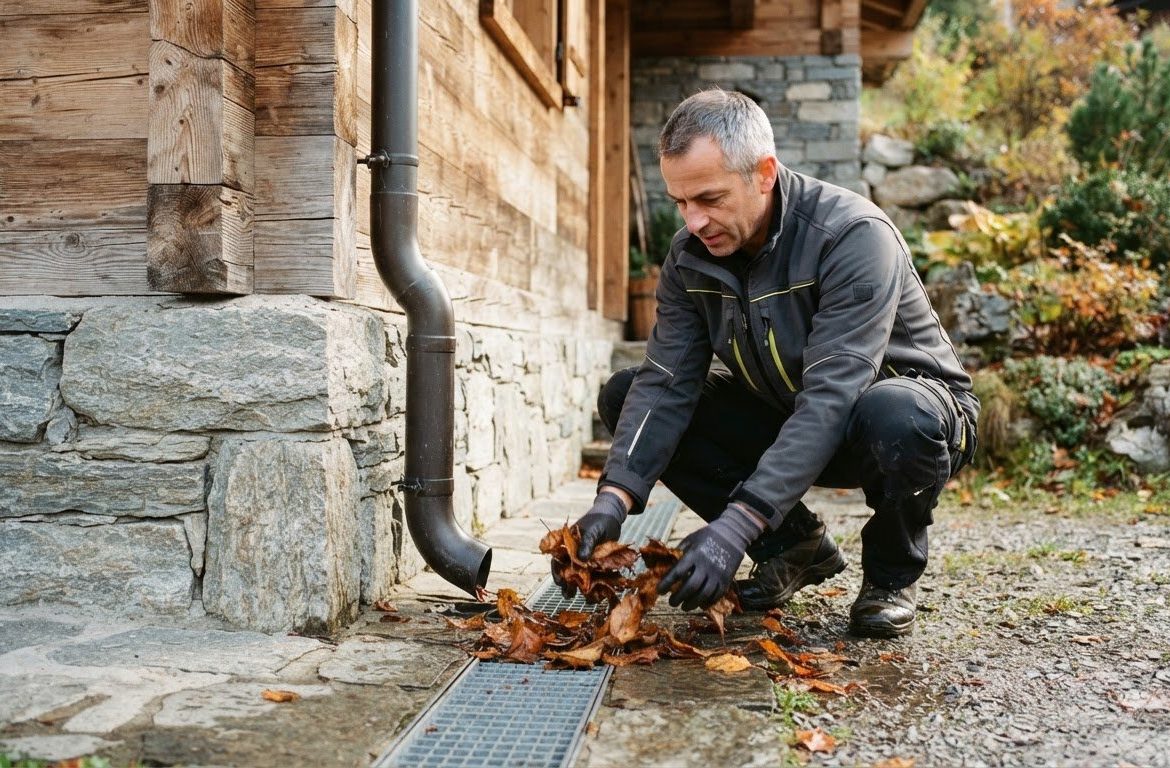
Preventative maintenance addresses wear or small faults before they disrupt a stay. In an unoccupied Swiss home, maintaining background heating at 8-12 °C can help prevent humidity and mould problems. A manager can also note a dripping tap, blocked drain, or worn seal, then coordinate suitable maintenance. Addressing these examples early can help prevent a minor defect from spreading or compromising the home.
Risks of Leaving a Home Unoccupied
Leaving a Swiss second home unattended can allow leaks, damp, mould or heating faults to go unnoticed as the weather changes. This matters especially when an owner lives abroad and cannot quickly check the property in person. Regular upkeep helps identify visible concerns before they lead to more extensive repairs, while repeat visits make it easier to track changes over time.
Reducing Unoccupied-Home Risks
Risk reduction combines routine inspections with a clear response process. Arrange an inspection within 24-48 hours after a major weather event. At each visit, record visible concerns and their locations. If a manager finds a leak or damp patch, the finding can be documented and repair arranged promptly. Where seasonal letting is permitted, maintenance should reflect the property’s classification and approved use.
How do Swiss property managers handle keyholding, inspections, cleaning, and maintenance?
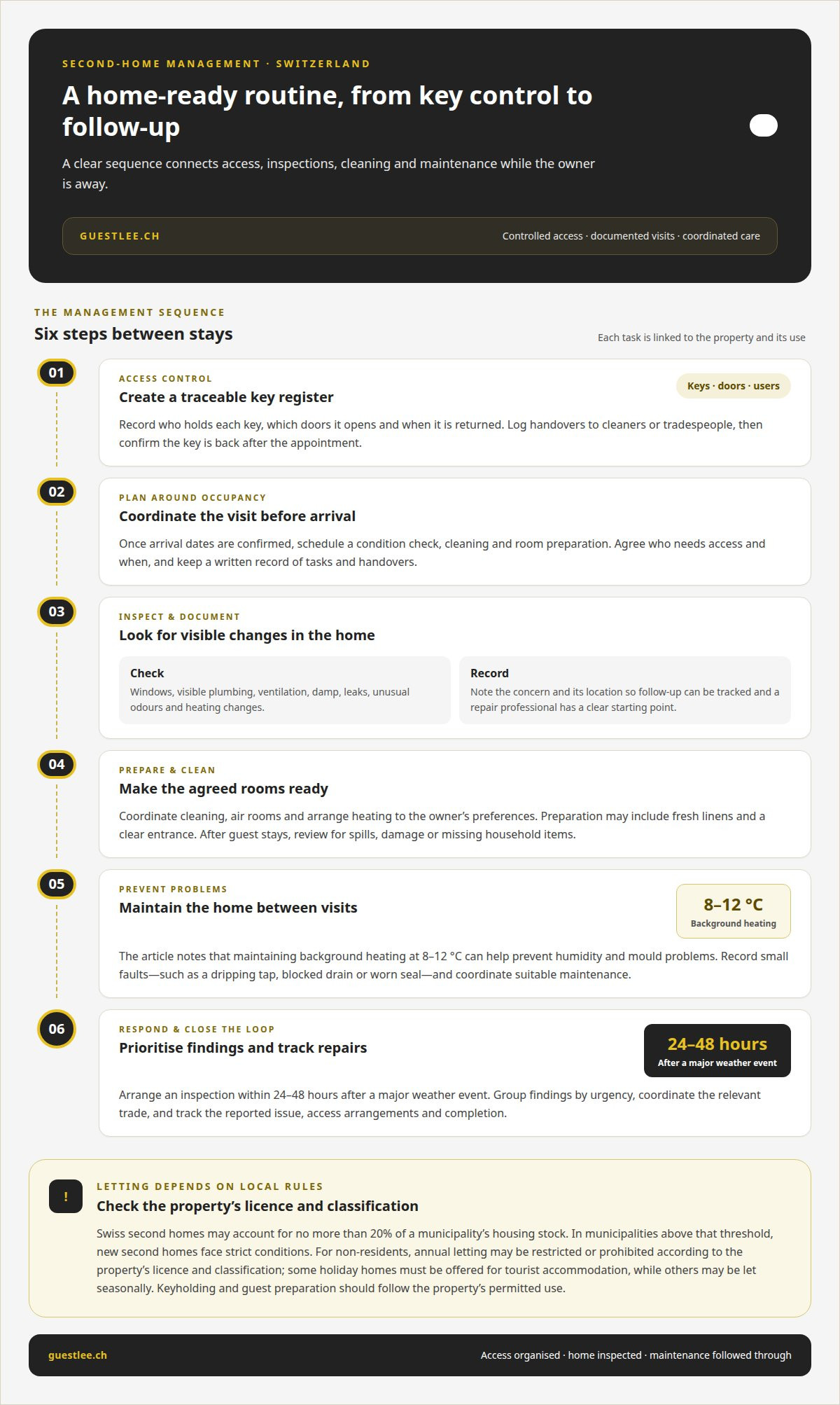
A manager coordinates access, visits, cleaning and repairs through a routine tailored to the property. Once an owner confirms arrival dates, for example, the manager can schedule a condition check, prepare rooms and arrange cleaning before the visit. A written record links each task to the property and clarifies handovers when several people need access.
Keyholding begins with a controlled register of keys, access points and authorised users. The manager records when a key is issued to a cleaner or tradesperson and confirms its return after the appointment. If a lock or entry system needs attention, the issue can be recorded and maintenance arranged. This keeps access traceable instead of relying on informal arrangements.
During inspections, the manager follows a consistent checklist suited to the home. They can look for visible leaks, unusual odours, window damage and changes in heating or ventilation. Findings are recorded with their location and a suggested next step. A note such as “damp mark below the upstairs window” gives a repair professional a clear starting point.
Cleaning is coordinated around occupancy rather than treated as a standalone task. Before a stay, a manager can arrange cleaning and check that agreed rooms are presentable. After guests leave, the property can be reviewed for spills, damage or missing household items. These observations help distinguish routine cleaning from work that needs a separate repair appointment.
For maintenance, the manager groups findings by urgency and coordinates the relevant trade. A loose handle may need a straightforward repair, while a persistent leak calls for prompt attention. The manager tracks the reported issue, access arrangements and completion. This joined-up process gives owners a clear view of work across the home and distinguishes inspection findings from completed repairs.
How can I compare second-home management providers in Switzerland?
Compare the work covered, not just the service label. One arrangement may include keyholding and inspections, while another also coordinates cleaning, guest preparation and repairs. A sample visit report that records a leak’s location, includes a photograph and outlines the next step makes the difference tangible. Clear task boundaries also show whether routine checks and specialist repairs are handled separately.
Look for a process that fits how the property is used. An owner who visits privately needs reliable arrival preparation; a home offered to guests also needs turnover coordination. In Switzerland, letting may depend on the property’s licence and classification, so management routines should reflect its permitted use. An explanation of how owner stays, guest access and cleaning are handled helps show whether the approach suits the home.
Reporting is another useful point of comparison. A practical update records the inspection date, rooms checked, findings and any work arranged. For example, “bathroom tap leaking, plumber appointment coordinated” is more useful than “maintenance reviewed.” Consistent records help owners follow open tasks and understand what changed between visits, particularly when they live abroad.
Finally, assess how access, cleaning and maintenance fit together. A clear handover explains who receives the keys, how their return is recorded and how the property is secured after an appointment. Before a winter arrival, for instance, cleaning and a condition check can be scheduled ahead of the owner’s stay. The right arrangement is the one whose responsibilities, reporting and property-use procedures match the owner’s priorities.
Budget planning can also matter: many Swiss banks often require buyers financing a second home to provide 50% equity or more. The general provisions for road vehicles and watercraft apply to vehicles left at a holiday home in Switzerland.
GuestLee: Property Management Services
GuestLee provides Property Management Services for owners who want a considered approach to managing a Swiss second home. Its management work spans property setup through guest departure, bringing the rental process into a coordinated framework. For owners planning guest stays, this can connect preparation, occupancy planning, and care of the asset within one management relationship. The focus is a well-presented home and a smooth experience for both owners and guests.
Second home management services in Switzerland can be a natural next step if you live abroad, visit seasonally or want to make your property available to holiday guests. An initial discussion can establish how you use the home, whether guest letting is part of your plans and what matters most during owner stays. These priorities help shape an arrangement around the property rather than a generic checklist.
Letting plans should reflect the home’s licence and classification under Swiss rules. Where permitted use allows tourist stays, management can support the rental process and guest experience. If the home is primarily for private use, the focus can instead be on your ownership goals and how property management supports them. Clear priorities help align the approach with the property’s role.
Owners can bring practical details to the conversation: how often they visit, whether they plan guest stays and which aspects of property care need coordination. A home prepared for personal arrivals may have different priorities from a villa used for short-term guests. GuestLee’s Property Management Services support owners across the rental process, from property setup to guest departure, while keeping the owner’s aims central.
For owners ready to discuss their property and management priorities, contact GuestLee.
Frequently Asked Questions
What services do second-home management companies in Switzerland provide?
Professional second home management services in Switzerland can coordinate property care with an owner’s letting objectives. Depending on the arrangement, support may include marketing, guest communication, maintenance coordination and assistance throughout the rental process. For example, an owner preparing a home for seasonal guest stays may want enquiries managed alongside property upkeep. The service scope should reflect the property’s permitted use and the owner’s priorities.
Which Swiss companies offer second-home management services, and where do they operate?
GuestLee provides Property Management Services across Switzerland, including marketing, guest communication and maintenance coordination. Owners considering second home management services in Switzerland can explore this support as part of the rental process. GuestLee also offers Luxury Villa Rentals and Real Estate Sales. These are distinct services: property management supports owners, while villa rentals serve holiday guests. The right next step depends on whether you want help managing a property, booking a luxury villa or selling a property.
What are the rules for renting out a second home in Switzerland?
Letting depends on the home’s licence, classification, and applicable local restrictions. Under Switzerland’s Federal Act on Second Homes, second homes may account for no more than 20% of a municipality’s housing stock; municipalities above that threshold may authorise new second homes only under strictly defined conditions. Some holiday homes must be let for tourist accommodation, while others may be let seasonally. The property’s permitted use determines which letting arrangement is appropriate.
What steps are involved in hiring a second-home manager in Switzerland?
When choosing second home management services in Switzerland, compare how keyholding, inspections, cleaning, guest preparation and maintenance are handled. Ensure the routines fit the property’s licence and permitted use, and agree on access records, reporting, and how visits and repairs will be coordinated.

Article by
Giacomo Esposito