
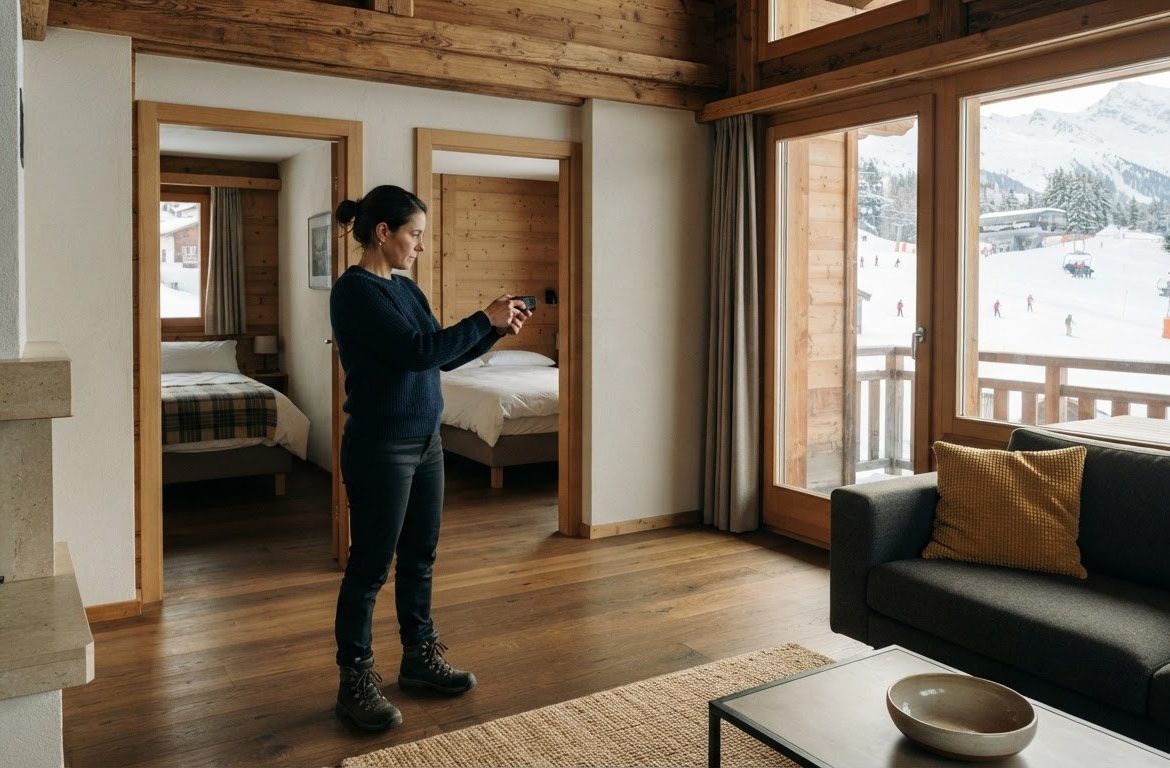
Setting Swiss Alps Rental Prices by Apartment Size and Season
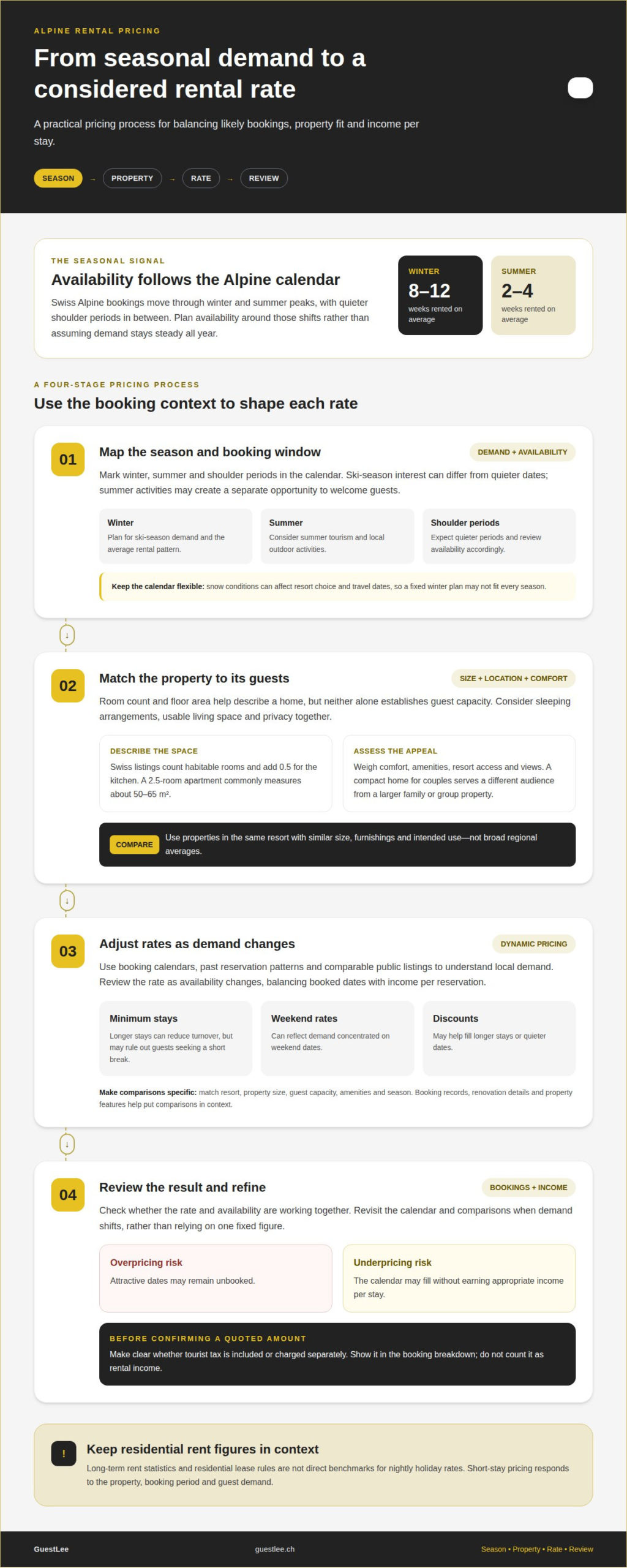
In the Swiss Alps, rental prices and availability shift with the seasons: alpine chalets are rented for an average of 8 to 12 weeks in winter and 2 to 4 weeks in summer. Setting the right rental price in the Swiss Alps means accounting for that seasonal rhythm, as well as the property’s size and location.
It makes sense to expect stronger demand when guests visit the mountains during a particular season. But the right price also depends on the property’s size, comfort, amenities and proximity to resort attractions.
This article explains how property size, seasonal demand, dynamic pricing and resort location influence rental rates and availability. You’ll learn how to weigh these factors when setting prices, planning occupancy and assessing income per booking.
Key Takeaways
- Use Swiss room-counting conventions alongside floor area to describe an apartment’s size accurately.
- Account for winter, summer and shoulder-season demand when setting rates and planning availability.
- Adjust pricing to balance occupancy with income per booking as demand changes.
- Factor in resort location, access, views and amenities when assessing a property’s rental appeal.
Rent by apartment size and Swiss room-counting conventions
In Switzerland, listings count habitable rooms and add 0.5 for the kitchen. A 2.5-room apartment commonly measures about 50-65 m², but room count alone doesn’t establish guest capacity. For a holiday property, sleeping arrangements, usable living space and privacy also shape its appeal. A compact apartment designed for couples serves a different audience from a larger home suited to families or groups. Assessing these features together gives a more useful basis for seasonal pricing than floor area alone. It also helps describe the property clearly to prospective guests.
Long-term rent figures offer regional context, not direct nightly-rate benchmarks. The recommended minimum gross annual salary is CHF 43,200 for the former regional group and CHF 48,600 for the latter. These figures illustrate how location affects housing costs, but a holiday rental’s rate also responds to season and guest demand.
Rental prices can differ substantially between Swiss cantons, cities and rural areas. Geneva and other sought-after locations are not direct comparables for a quieter Alpine village. For conventional residential rent, a general affordability guideline is to keep rent at or below a third of gross income. That is useful background, not a formula for short-stay pricing. Compare a Swiss holiday rental with properties in the same resort that are similar in size, furnishings and intended use.
Mortgage rules also concern conventional rent adjustments, rather than seasonal holiday pricing. Switzerland’s reference interest rate is based on banks’ average mortgage rate and rounded to the nearest quarter of a percent. If it rises by 0.25 percentage points and remains below 5%, landlords may increase rent by 3%. A falling reference rate may also support a tenant’s request for a reduction. Keep this distinction clear: reference-rate changes inform residential leases, while short-term rental prices respond to the property’s market and booking period.
Winter, summer and shoulder-season demand
Swiss Alpine bookings follow distinct winter and summer cycles, with quieter shoulder periods in between. These shifts affect both achievable rates and the dates a property is likely to remain available.
For a Swiss holiday rental, make clear whether tourist tax is included or charged separately. The applicable arrangements depend on the destination, so show the tax clearly in the booking breakdown rather than counting it as rental income.
Seasonal Demand and Rental Availability
Seasonal demand describes how guest interest changes across winter, summer and the periods between. In Swiss resort towns, availability closely follows ski-season and summer-tourism cycles. Alpine chalets are rented for an average of 8 to 12 weeks in winter and 2 to 4 weeks in summer. This pattern helps owners shape an annual calendar around likely booking periods, instead of assuming steady demand throughout the year.
Ski-Property Rental Demand
Demand for ski properties reflects travellers’ interest in winter stays near mountain activities. A resort home may attract bookings during ski season, while the same dates can be quieter outside that period. Grindelwald, for example, also offers hiking routes from the village and access to further trails by cableway, train or bus. Summer appeal can therefore support a separate availability plan, instead of leaving the property open only to winter guests.
Climate change adds uncertainty to seasonal planning, as snow conditions can affect guests’ choice of resort and travel dates. A fixed winter calendar may not suit every property or season. Review booking patterns and adjust availability and rates as demand changes. Clear information on booking websites, including any separate tourist-tax charge, helps guests understand the total cost before reserving.
For owners balancing seasonal pricing with booking coordination, property management services can bring those considerations together.
Dynamic pricing to balance occupancy and income per booking
Dynamic pricing adjusts rates as demand and availability change. Setting the right rental price in the Swiss Alps means balancing booked dates against income from each reservation.
Stay Lengths, Weekend Rates, and Discounts
Minimum stays, weekend rates and discounts influence both the bookings a property attracts and the income each stay generates. A longer minimum stay can reduce turnover but may rule out guests looking for a short break. Weekend pricing can reflect concentrated demand, while discounts may help fill longer stays or quieter dates. The right mix depends on the booking calendar and the owner’s priorities.
Pricing Tools and Local Demand Data
Property managers use booking calendars, past reservation patterns and comparable public listings to track local demand. Comparisons are most useful when they match the resort, property size, guest capacity, amenities and season, rather than relying on a broad European average. Owners can share availability, booking records, renovation details and relevant property features. This context helps distinguish a genuine market shift from a misleading comparison.
The Federal Statistical Office reported average net rent across existing Swiss leases of CHF 1,485 per month in 2024. That figure describes residential housing, not nightly holiday rates, so it shouldn’t guide short-stay pricing directly. German-speaking listings can inform local comparisons when the property serves similar guests and dates.
Risks of Overpricing and Underpricing
Overpricing can leave attractive dates unbooked, while underpricing can fill the calendar without earning appropriate income per stay. Outdated comparisons, overlooked seasonal demand or treating a recently renovated home as equivalent to a different property can distort the rate. Clear payment details matter too: guests should understand what the quoted amount covers before booking.
Setting the right rental price in the Swiss Alps calls for reviewing these signals together and adjusting rates as availability changes, rather than relying on one fixed figure. For owners seeking consistent oversight of calendars and pricing, professional rental management can support that work.
Rental prices in Alpine resort towns
For a Swiss Alpine rental, comparable properties and the full guest-facing cost provide a stronger pricing reference than a broad national average. A professional assessment considers location, property features and booking expenses together.
Comparing Similar Alpine Rentals
Comparing similar rentals means matching properties by resort, season, size, furnishing and guest capacity. This matters because a broad regional average can obscure meaningful differences between homes. A property near the 4 Vallées lifts in Nendaz or Verbier may command more than one farther from ski access. Views, parking, renovation history and distance from shops or the station also shape its appeal.
Furnished Swiss apartments typically cost 20-50% more than unfurnished equivalents, but this is context, not a holiday-rate formula. The comparison should reflect the same type of stay and region. A tenant’s long-term housing reference and a landlord’s short-stay rate answer different questions.
Including Fees in the Total Price
The total price shows guests what they will pay for their stay; the owner’s net proceeds account for operating and distribution costs. Clearly identify whether cleaning, utilities and tourist taxes are included or charged separately. Guests booking Swiss holiday apartments should check whether Wi-Fi, bed linen, tourist tax and cleaning cost extra.
Include platform commission in the owner’s revenue calculation by subtracting the applicable commission from booking revenue, rather than treating it as guest accommodation income. Show any cleaning charge separately from the nightly rate in the listing breakdown. Swiss rental listings generally advertise net rent excluding ancillary costs, so distinguish that convention from how a furnished holiday stay is presented.
For a reliable comparison, match the property, location, dates and included services before assessing a rate. This helps prevent residential rent, extra charges and holiday rental prices from being mistaken for equivalent figures.
GuestLee: Luxury Villa Rentals
GuestLee provides property management for Swiss Alps owners seeking professional oversight of short-term rentals. Its Property Management Services cover marketing, guest communication and maintenance, supporting day-to-day operations and rental income goals. This can help when seasonal availability, guest expectations and pricing decisions need consistent attention.
For travellers, GuestLee’s Luxury Villa Rentals offer a way to plan an Alpine stay. Owners considering a property transaction can also explore its Real Estate Sales services.
Contact GuestLee to discuss your property or rental plans.
Shape Your Rental’s Next Season
Treat pricing as an ongoing decision, not a figure to set once and leave untouched. A considered approach to setting the right rental price in the Swiss Alps can support the stays you want to welcome while respecting your property’s character and long-term priorities.
Start by defining what success means for your property. You might prioritize a carefully managed calendar, a particular guest experience or a balance between personal use and rental activity. These priorities give a property manager a clearer basis for tailoring the approach, rather than treating every Alpine home alike.
With that direction in mind, you can move from general market considerations to a rental plan shaped around your property and ownership goals. Contact GuestLee about your rental to discuss the next step, and give your Alpine property a thoughtful path forward.
Frequently Asked Questions
Do rental prices and availability change at different times of year in Switzerland?
Yes. Swiss Alpine availability and rates shift as ski and summer travel shape demand. For owners, the practical question is how to position dates for different guests: winter can appeal to ski visitors, while summer can attract hikers and other mountain travellers. Quieter periods may call for more flexible arrival dates or stay lengths to appeal to guests considering an Alpine break.
How much does it cost to rent?
The cost depends on the property, destination, dates, stay length and what the booking includes. There is no single standard price for a Swiss Alps holiday rental. To compare options, look at the full cost for your planned stay, not just the nightly rate. A longer booking may offer different overall value from a shorter one, even when advertised nightly rates appear similar.
Rental yield in the Alps: How much does a chalet earn per year?
This is an estimate, not a guaranteed return or a net figure for every property. Actual proceeds depend on booked nights, seasonal rates, operating costs and management.
What factors determine rental prices for holiday homes in the Swiss Alps?
Rates depend on the resort and a home’s appeal to its intended guests. Sleeping capacity, comfort, season and management strategy all affect potential rental income. Properties in the same resort can also differ in access to lifts or trails, parking, views, renovation condition and amenities. A sound comparison asks whether the property’s features and guest experience match those of genuinely similar homes.
What are typical nightly and weekly rental prices by Swiss Alpine region and property type?
There is no typical nightly or weekly rate across all Alpine regions and property types. A chalet, apartment and larger group property differ in capacity, comfort, furnishings and location; dates and stay length matter too. For a useful estimate, compare properties in the same resort for similar dates, then consider the full stay cost and included features, not just the headline nightly rate.
How do prices vary between peak ski season, summer, shoulder season, and off-season?
Rates respond to why guests visit each resort and how many comparable homes are available. Peak ski dates and summer holidays can attract different demand, while shoulder and off-season periods may call for more flexible booking conditions. For owners, compare similar properties and dates, rather than treating a peak-week rate and a quieter period’s price as equivalent.

Article by
Giacomo Esposito