
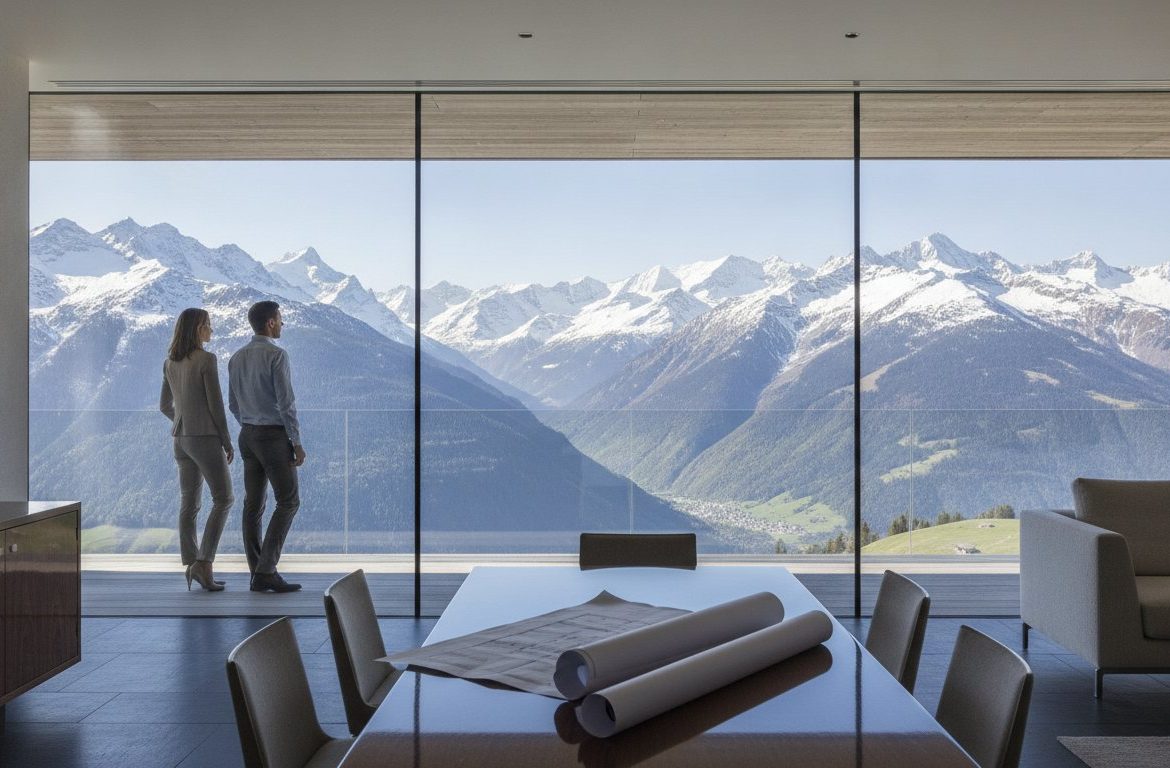
Swiss Property Laws: 2026 Guide for Foreign Investors
The most secure investment in the world isn’t a currency or a commodity, but a piece of the Swiss landscape. While the intricacies of swiss property laws foreign buyers must navigate can seem daunting, these regulations actually serve as a golden seal of quality, protecting the long-term value of your asset. You likely recognize that the prestige of owning a home here comes with a unique set of legislative hurdles, from the strictly controlled Lex Koller permits to the 20 percent second-home cap mandated by Lex Weber.
This 2026 guide provides a professional framework to transform those complexities into a clear, reassuring roadmap for your acquisition. You’ll gain a sophisticated understanding of the 1,500 annual holiday home quota and the precise differences between B and C residence permits. We’ve curated this journey with four essential visual guides to help you visualize the acquisition path. You’ll finish with the confidence to secure a legacy property that adheres to national standards of excellence, paired with a strategy for managing your home with the meticulous attention to detail it deserves.
Key Takeaways
- Understand how Lex Koller and Lex Weber create a stable, high-value market by limiting supply and ensuring long-term asset security.
- Identify the specific purchasing rights associated with different residency permits to determine your most efficient path to ownership.
- Gain clarity on the spatial restrictions for holiday homes, ensuring your choice complies with the 200-square-meter net living area limit.
- Follow a structured roadmap for the Swiss acquisition process, from the initial reservation contract to the final transfer of ownership.
- Discover how professional property management preserves your asset’s prestige while ensuring full compliance with the swiss property laws foreign buyers must follow.
Understanding Lex Koller and Lex Weber: The Pillars of Swiss Real Estate Law
The enduring allure of the Swiss landscape is anchored by a legal system that values longevity over short-term speculation. For the international investor, the swiss property laws foreign buyers must navigate are not barriers but rather a sophisticated protective shell. These laws, specifically Lex Koller and Lex Weber, are the twin pillars that maintain the market’s legendary stability. Managed with surgical precision by the Federal Office of Justice, these regulations ensure that every transaction contributes to a balanced and exclusive real estate environment. This high-level oversight provides a sense of security that is rare in the global market, positioning your investment as a legacy asset rather than a mere line item on a balance sheet.
The Lex Koller Framework for Non-Residents
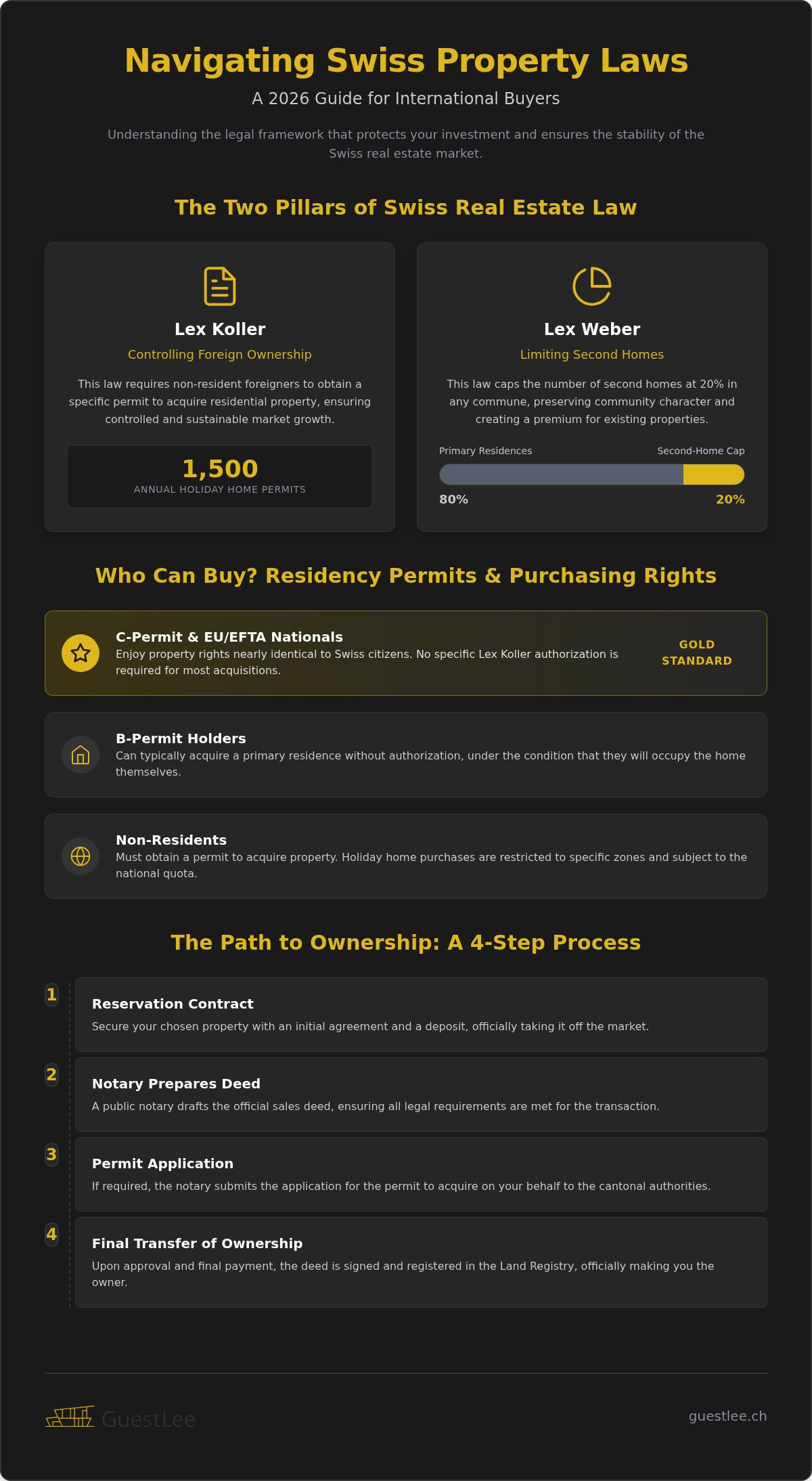
Lex Koller is the cornerstone of Swiss property sovereignty. It establishes a clear requirement for non-resident foreigners to obtain a “permit to acquire” before purchasing residential property. This system ensures that the annual national quota of 1,500 holiday home permits is managed with meticulous accuracy across the country. However, the path is often smoother for those with residency ties. For example, individuals holding a B residence permit can typically acquire a primary residence without seeking additional authorization, provided they intend to occupy the home. By restricting speculative foreign investment, the law creates an environment of quiet confidence where property values are shielded from the volatility often found in other luxury hubs. It’s a professional framework that rewards those who view Swiss real estate as a long-term commitment to quality.
Lex Weber and the Second-Home Limitation
If Lex Koller manages the buyer, Lex Weber manages the inventory. This law imposes a strict 20% cap on second-home residences within any single commune. In 2026, this regulation remains a defining factor for the luxury market, as many high-demand tourist areas have already reached or exceeded their second-home quotas. This scarcity creates a natural premium for existing properties, making them highly sought-after assets. For investors, this means that while new-build opportunities are limited, the financial performance of established villas remains exceptionally strong due to the lack of new competition. It’s a system that prioritizes the character of the region and the preservation of its natural beauty, ensuring that your home remains part of a vibrant community rather than an empty resort. Understanding these quotas is essential for identifying properties that hold both emotional appeal and robust resale potential.
Guidance for Image 1: A sophisticated graphic illustrating the 20% cap concept, showing a balanced ratio of primary residences to limited second-home allocations.
By adhering to these national standards of excellence, the Lex Koller and Lex Weber frameworks ensure that the Swiss real estate market remains one of the most stable and prestigious in the world. As you begin your journey, recognizing these laws as the guardians of your property’s value is the first step toward a successful acquisition.
Residency Permits and Purchasing Rights: Who Can Buy Property?
In the Swiss real estate market, your residency status is the primary filter that determines the breadth of your investment opportunities. It’s the essential framework within the swiss property laws foreign buyers must understand before viewing their first villa. The system is designed to reward integration, offering the most seamless experience to those who’ve established a permanent base within the country. For the international investor, identifying which permit category you inhabit is the first step toward a secure and compliant acquisition.
EU/EFTA Nationals and C-Permit Holders
For EU/EFTA nationals and those holding a C Permit, often referred to as the gold standard of residency, the process is remarkably straightforward. These individuals enjoy property rights that are nearly identical to Swiss citizens. They can generally acquire residential property, whether as a primary home, a secondary residence, or a pure investment asset, without seeking specific Lex Koller authorization. This level of freedom allows for an agile investment strategy that mirrors the local market’s pace. Once you’ve secured such an asset, partnering with GuestLee Switzerland for professional management ensures your property maintains its prestige and market value while you enjoy the effortless lifestyle it provides.
Non-EU Nationals and the B-Permit Path
The path for “Third State” nationals, such as those from the UK, USA, or Asia, holding a B Permit is more strictly defined. Under current 2026 regulations, these residents can purchase a primary residence without a permit, provided they occupy the home themselves. However, a significant restriction applies: the property cannot be rented out, even partially. It must remain a dedicated personal residence. It’s also vital to monitor the legislative consultation period ending in mid-July 2026. Proposed changes may soon require non-EU nationals to obtain a permit even for primary residences and could include a mandatory sale clause if the owner leaves Switzerland. Consulting the official government guidance is essential to navigate these evolving national standards with precision.
Guidance for Image 2: A refined lifestyle shot of a luxury Swiss residence, capturing the quiet elegance and security of a well-managed home.
Those holding a G Permit for cross-border commuting face different parameters. While they can acquire a second home in the region of their employment, the property cannot be rented out to third parties. These nuances highlight why a professional perspective is non-negotiable. Whether you’re an EU national seeking a holiday retreat or a Third State resident establishing a family legacy, aligning your permit status with the correct property type is the foundation of a successful Swiss investment. If you’re looking to transition from a buyer to a rental owner, our real estate sales expertise can help you identify properties that meet both your lifestyle needs and future financial goals.
Strategic Restrictions: Square Meterage, Usage, and Quotas
The swiss property laws foreign buyers encounter are defined by a commitment to balance, ensuring that high-end development never compromises the natural serenity of the landscape. When you acquire a holiday home as a non-resident, the legal framework imposes precise physical boundaries to preserve market exclusivity. Two primary figures dominate this landscape: a limit of 200 square meters of net living space and a maximum plot size of 1,000 square meters. These metrics aren’t merely suggestions; they’re national standards that maintain the architectural integrity of the regions we serve. Additionally, Lex Koller enforces a “one property per family” rule, which applies to spouses and minor children, preventing the concentration of secondary residences within a single household.
Calculating Net Living Space in Switzerland
Understanding how Swiss authorities measure your home is vital for ensuring compliance. The 200-square-meter limit refers specifically to net living space. This definition is quite favorable for the discerning buyer, as it excludes non-habitable areas such as balconies, terraces, cellars, attics, and garages. If your family requires more room, it’s possible to apply for an “excess size” permit, which can extend the limit to 250 square meters for larger households. For a deeper look at how these dimensions translate into high-end living, explore our Luxury Real Estate Switzerland: The 2026 Guide to Exclusive Property Investment. This professional oversight ensures your home feels expansive while remaining strictly within the legal framework.
Designated Tourist Zones and Quotas
Non-resident buyers aren’t permitted to purchase holiday homes anywhere they choose. Instead, acquisitions are limited to designated “tourist zones” identified by the individual cantons. This strategic zoning ensures that the hospitality infrastructure remains robust and that holiday homes contribute to the local economy. Each year, the Swiss government issues a national quota of 1,500 permits for foreign buyers, which are then distributed among the tourist-heavy cantons. These permits are highly coveted, making early consultation a key part of your investment strategy. Once a permit is secured and the purchase complete, owners of holiday homes generally have the right to rent their property to third parties on a short-term basis, provided the home isn’t left vacant for the entire year.
Guidance for Image 3: A high-quality architectural detail of a Swiss luxury home, highlighting the precision of the construction and the refined materials used in high-end regional design.
Managing these spatial and usage restrictions requires a partner who understands the nuances of the 2026 market. By aligning your purchase with these national standards, you aren’t just buying a home; you’re securing a compliant, high-performing asset. Our role is to act as the guardian of that value, ensuring every detail of your property’s usage and physical footprint adheres to the meticulous standards the world expects from Switzerland.
Navigating the Transaction: The Swiss Property Acquisition Process
The journey from identifying a luxury villa to holding the keys is a choreographed sequence of legal and financial milestones. In the context of swiss property laws foreign buyers must follow, the transaction is designed to be transparent and secure. It begins with the selection of a property and a formal offer made through a professional agent. Once the offer is accepted, both parties sign a reservation contract. At this stage, you’ll pay a deposit into a secure escrow account, signaling your commitment to the purchase while the legal framework is prepared.
The Role of the Swiss Notary Public
The Notary Public is a central figure in any Swiss real estate transaction. Unlike other jurisdictions, the notary acts as a neutral officer representing both the buyer and the seller with equal diligence. It’s the notary’s duty to ensure all legal prerequisites are met before the sale proceeds. This includes drafting the “Public Deed” and managing the application for the necessary Lex Koller permits. You should anticipate a timeframe of typically 4 to 12 weeks for the permit to be issued by the cantonal authorities. This period allows for meticulous verification of the property’s compliance with national standards.
Closing Costs and Financing for International Buyers
A sophisticated investment requires clear foresight into the total capital commitment. Beyond the purchase price, you should budget for closing costs that include notary fees, land registry fees, and transfer taxes. These taxes vary by canton, typically ranging from 0.2% to 3.5%. Financing for non-residents is also subject to specific parameters. Swiss banks generally cap mortgages for international buyers at 60% to 70% of the property’s value. This conservative approach reinforces the market’s stability, ensuring that every owner has a significant equity stake in their asset.
Guidance for Image 4: A professional setting representing a Swiss business or legal environment, such as a refined office in a historic district or a modern boardroom overlooking the mountains.
The final stage involves the completion of the sale and the formal registration of your ownership in the Land Registry, known locally as the Grundbuch. This entry provides the ultimate legal protection of your title. To ensure your acquisition is handled with the precision it deserves, our team provides expert guidance through every stage of real estate sales, from the initial offer to the final handover.
Beyond the Purchase: Optimising Your Swiss Property as a Luxury Asset
Once the final registration in the Land Registry is complete, your focus naturally shifts from the mechanics of acquisition to the art of preservation. Owning a piece of the Swiss landscape is a significant achievement, yet it demands a level of care that matches its prestige. The complex swiss property laws foreign buyers navigate during the purchase phase don’t simply disappear; they transition into operational requirements regarding usage, maintenance, and residency compliance. For the discerning international investor, professional oversight is the primary tool for maintaining both the physical allure and the financial integrity of the home. It’s about ensuring that your investment remains a sanctuary of value in a changing global market.
Professional Asset Management and Maintenance
GuestLee approaches property care with meticulous regional standards of accuracy, positioning itself as the dedicated guardian of your property value. We understand that a luxury villa is more than just real estate; it’s a curated environment that requires constant, expert attention. Our full-service management provides a “luxury concierge” style of oversight, ensuring that every detail, from precision landscaping to advanced technical maintenance, is handled with Swiss excellence. This level of service is essential for absentee owners who need the peace of mind that their home is being managed by a partner who commands respect and provides a reassuring presence on the ground. You can explore our specific frameworks in The Definitive Guide to Property Management Services in Switzerland for 2026.
Maximising Yield Through Curated Guest Experiences
A strategic approach to ownership involves transforming your villa into a high-performing asset within the luxury short-term rental market. This strategy allows you to offset significant running costs, insurance, and local taxes while the property remains available for your personal use. We manage the entire lifecycle of the rental process, from high-end marketing and guest screening to handling the 8.1% VAT compliance and local tourism obligations. This seamless transition from buyer to profitable owner ensures that your investment adheres to national standards of excellence without becoming a logistical burden. By curating exceptional guest experiences, we protect your home’s reputation and financial performance simultaneously, allowing you to enjoy the rewards of ownership with quiet confidence.
Your Swiss legacy deserves an attentive partner who handles every complexity behind the scenes so you don’t have to. Contact GuestLee to discuss your Swiss property management needs and experience the gold standard of regional asset management and hospitality.
Securing Your Legacy in the Swiss Alps
Navigating the swiss property laws foreign buyers face in 2026 requires a blend of legal precision and strategic foresight. You’ve seen how Lex Koller and Lex Weber act as guardians of market stability, ensuring that every acquisition remains an exclusive asset. From understanding residency permit nuances to mastering the 200-square-meter living space limit, ownership is a journey of meticulous details. These regulations don’t just restrict; they define the national standards of excellence that make Swiss real estate a global gold standard for security.
The transition from a successful purchase to a high-performing luxury asset is where true value is realized. Since 2016, GuestLee has set the benchmark for Swiss hospitality and asset management, handling everything from comprehensive marketing to technical maintenance with a signature concierge touch. We invite you to Explore GuestLee’s Premier Property Management Services to ensure your home is managed with the same level of care that went into its selection. Your investment deserves a partner who protects its prestige while you enjoy the effortless lifestyle it provides. We look forward to welcoming you home.
Frequently Asked Questions
Can a foreigner buy property in Switzerland without living there?
Yes, non-residents may acquire residential property specifically designated as a holiday home within recognized tourist zones. These acquisitions are governed by the swiss property laws foreign buyers must navigate, including a national quota of 1,500 permits annually. While you don’t need to live in Switzerland, the property must remain a secondary residence. This framework ensures that high-end assets remain exclusive and well-integrated into the local hospitality infrastructure.
What is the Lex Koller law and how does it affect buyers?
Lex Koller is the primary federal legislation that regulates the acquisition of Swiss real estate by persons abroad. It requires non-resident foreigners to obtain a specific permit before purchasing residential property. This law protects the national market from over-speculation and ensures that housing remains available for residents. For the international investor, it means the purchase process involves an additional layer of administrative verification, typically managed by a neutral Notary Public.
How much deposit do I need to buy a house in Switzerland as a foreigner?
Non-resident buyers generally require a higher down payment compared to local residents, typically ranging from 35% to 50% of the purchase price. Swiss financial institutions usually cap mortgage lending for international clients at 60% to 70% of the property’s appraised value. This conservative lending environment reinforces the legendary stability of the Swiss market, ensuring that every owner possesses significant equity in their luxury asset from the day of completion.
Can I rent out my Swiss property if I am a non-resident?
Non-residents who purchase a holiday home within a tourist zone are generally permitted to rent their property to third parties on a short-term basis. This is a core component of luxury asset optimization, allowing owners to offset running costs. However, properties purchased by non-EU B-permit holders as primary residences are strictly prohibited from being rented out. Professional management ensures your rental activity remains fully compliant with both local tax and national standards.
Are there restrictions on the size of the property a foreigner can buy?
Yes, the Swiss government imposes specific spatial limitations on holiday homes purchased by non-residents. The net living area is generally capped at 200 square meters, while the total plot size cannot exceed 1,000 square meters. It’s important to note that net living area excludes non-habitable spaces like balconies, garages, and cellars. For families with documented needs, an “excess size” permit may sometimes be granted to increase the living area to 250 square meters.
What is the difference between a B and C residency permit for property buyers?
A C permit, or Permanent Residence, grants the holder property rights identical to those of a Swiss citizen, allowing for unrestricted acquisition. In contrast, a B permit is a residence permit with more specific conditions. While EU/EFTA B-permit holders enjoy broad rights, non-EU B-permit holders are typically restricted to purchasing a single primary residence which they must occupy personally. They are also generally prohibited from renting out such properties to third parties.
How long does the process of buying a house in Switzerland take?
The acquisition process typically spans several months from the initial offer to the final registration. A significant portion of this timeline is dedicated to obtaining the Lex Koller permit, which usually takes between 4 and 12 weeks depending on the canton. Once the permit is secured, the final deed can be signed and the transfer registered in the Land Registry. This deliberate pace reflects the meticulous regional standards of accuracy found across the country.
Can a foreign-owned company buy residential property in Switzerland?
Generally, foreign-controlled companies are prohibited from acquiring residential real estate in Switzerland under Lex Koller regulations. Residential property must typically be held in the name of a natural person. However, foreign entities are permitted to purchase commercial real estate, such as offices or production facilities, without a permit. If you are considering a residential purchase, it’s essential to structure the acquisition in compliance with these strict federal standards to ensure long-term security.

Article by
Giacomo Esposito