Swiss Real Estate Investment: The 2026 Guide to Stability and Yield
In a global economy where volatility feels like the only constant, the Swiss Franc has appreciated by over 10% against major currencies since 2019, yet many international buyers feel locked out by the intricate web of Lex Koller regulations. You likely recognize that a swiss real estate investment represents the pinnacle of wealth preservation, even if the high entry costs and opaque local laws seem like an impenetrable barrier from abroad. It’s a common frustration to desire the security of the Alps while fearing the management burden that comes with distance.
This 2026 guide reveals how to navigate these prestigious markets to secure your capital and unlock optimized rental yields through a meticulous, hands-off approach. We’ll explore the latest market shifts, specific regulatory pathways for non-residents, and the seamless management strategies that transform a premium property into both a high-yielding asset and a curated holiday retreat. By the end, you’ll understand how a bespoke strategy can turn Swiss precision into your most reliable financial anchor.
Key Takeaways
- Understand why the Swiss Franc (CHF) remains the ultimate safeguard for your capital and how 2026 interest rate stability positions the market as a premier global safe haven.
- Demystify the complexities of Lex Koller and Lex Weber to confidently navigate foreign ownership regulations and secure your legacy in the most prestigious cantons.
- Learn how to evaluate the ROI profiles of luxury lakeside villas versus alpine chalets to ensure your swiss real estate investment delivers optimized, dual-season yields.
- Discover the “Hospitality-Led Investment” model that leverages bespoke management to offset holding costs and maximize returns with meticulous Swiss precision.
The 2026 Swiss Real Estate Market: A Safe Haven in a Shifting Global Economy
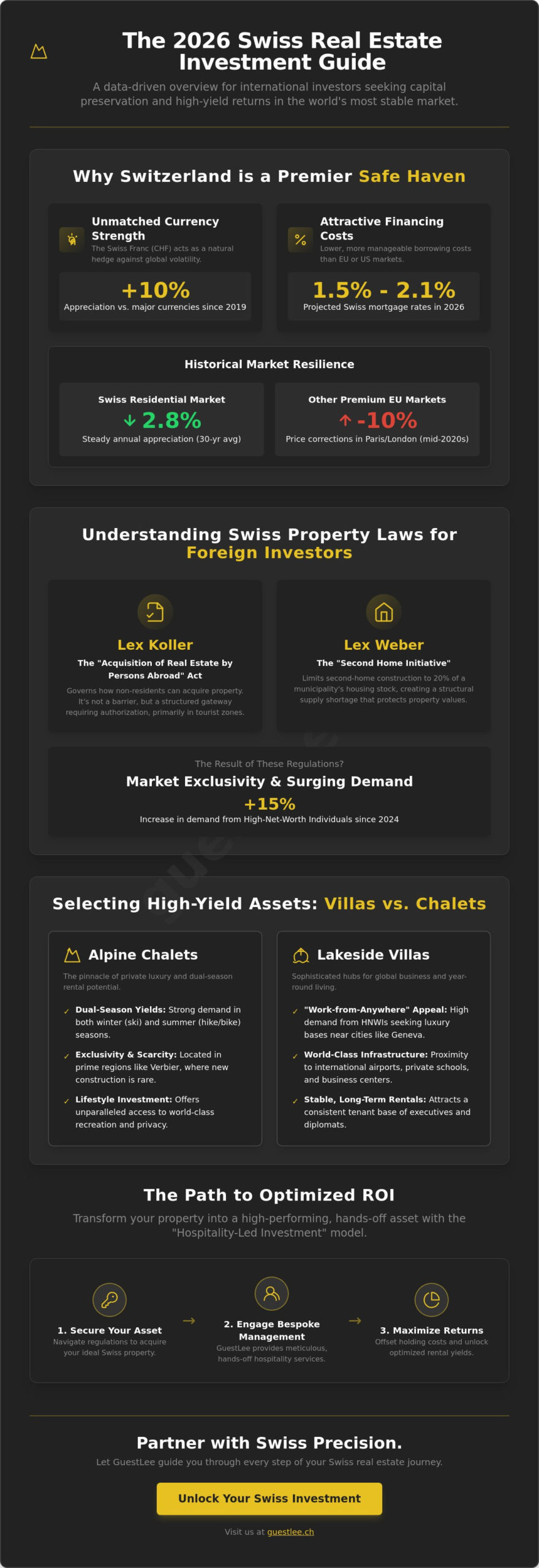
The Swiss Franc (CHF) continues to stand as the ultimate fortress for international wealth preservation. As we move through 2026, the currency’s strength remains a primary catalyst for those seeking a swiss real estate investment. Unlike the Euro or the US Dollar, which have faced significant inflationary pressures and fiscal adjustments over the last three years, the CHF provides a level of purchasing power stability that is virtually unmatched. This currency advantage doesn’t just protect the initial capital; it acts as a natural hedge against the volatility seen in other major global markets.
Interest rate trajectories in 2026 further distinguish the Swiss Confederation from its neighbors. While the European Central Bank and the US Federal Reserve have struggled to balance growth with restrictive rates, the Swiss National Bank (SNB) has maintained its tradition of lower, more manageable borrowing costs. With Swiss mortgage rates projected to sit between 1.5% and 2.1% in 2026, the cost of financing remains attractive. This environment allows investors to secure long-term yields without the aggressive debt-service burdens found in London or New York.
To better understand the nuances of this market, watch this helpful video:
Economic Stability and Capital Preservation
Swiss Precision in economic policy functions as a silent engine for capital growth, where rigorous fiscal discipline creates a predictable environment for every high-end property acquisition. The nation’s inflation rate, which stayed remarkably low at 1.2% in 2024 while other nations hit 5% or higher, ensures that the real value of property doesn’t erode. When you contrast this with premium European markets, the difference is stark. While Paris and London saw price corrections of up to 10% during the mid-2020s, Swiss residential indices have shown a steady appreciation of 2.8% annually over the last three decades, proving their “Safe Haven” status is a matter of historical record rather than speculation.
Supply and Demand Dynamics in 2026
The 2026 landscape is defined by a persistent and structural supply shortage. In prime alpine regions like Verbier and lakeside hubs like Geneva, strict zoning laws and the 2012 Weber Initiative, which limits second-home construction to 20% of a municipality’s inventory, have made new developments rare. This scarcity is a deliberate feature of the market. It ensures that a swiss real estate investment maintains its value through exclusivity.
Navigating these regulations requires understanding the Lex Koller legislation, which governs how non-residents can acquire property. Despite these hurdles, demand from global High-Net-Worth Individuals (HNWIs) has surged by 15% since 2024. These buyers aren’t just looking for assets; they’re seeking “work-from-anywhere” luxury bases that offer safety and world-class infrastructure. For owners looking to optimize these assets, Guestlee provides the bespoke management necessary to turn these high-demand properties into high-yielding investments while maintaining the meticulous standards expected in the Swiss luxury sector.
Navigating the Legal Landscape: Lex Koller, Lex Weber, and Foreign Ownership
International investors often ask if Swiss property is an attainable asset or a closed fortress. The answer lies in understanding the precise regulatory framework that preserves the nation’s exclusivity. While Switzerland maintains strict rules, they’re designed to prevent market bubbles, ensuring your swiss real estate investment remains a resilient store of value. Success requires a meticulous approach to two primary federal laws: Lex Koller and Lex Weber.
The perception that foreigners can’t buy in Switzerland is a common misconception. In reality, the legal landscape is a structured gateway. By following established protocols, non-residents can secure premium assets that benefit from Swiss real estate market stability, a factor consistently highlighted in recent IMF economic reviews. Whether you’re looking for a commercial yield or a private alpine retreat, the process is transparent and highly regulated to protect your capital.
The Lex Koller Framework for International Investors
Lex Koller, established in 1983, governs the acquisition of property by persons abroad. You don’t always need a permit. Foreigners can purchase commercial real estate, such as offices, warehouses, or retail spaces, without any prior authorization. If you reside in Switzerland and hold a Permit B (for EU/EFTA nationals) or a Permit C (permanent residency), you can acquire a primary residence under the same conditions as a Swiss citizen. For non-resident investors, the focus shifts to the “Holiday Home” exception. These properties are located in specific tourist zones and are subject to annual quotas, typically limited to 1,500 permits nationwide. Navigating these federal laws requires local notary expertise to ensure a seamless transfer of title and adherence to cantonal regulations.
Lex Weber and the 20% Rule
The Weber Decree, enacted after a 2012 referendum, transformed the market by capping second homes at 20% of the total housing stock in any given municipality. This restriction has made existing luxury inventory in popular resorts incredibly rare. In 2026, “pre-Weber” properties carry a significant valuation premium because they aren’t subject to the same restrictive usage rules as newer developments. Investors today prioritize purchasing existing premium assets over new builds to bypass these strict quotas and secure immediate rental potential. For those seeking to optimize their portfolio, bespoke property management ensures these high-value assets are maintained to the highest Swiss standards while maximizing seasonal occupancy.
Ultimately, the permit you hold dictates your level of freedom. A Permit B allows for a single primary residence, while a Permit C removes almost all barriers to residential swiss real estate investment. Even without residency, the “Holiday Home” permit remains a viable path for those targeting the luxury short-term rental market. It’s a curated journey that rewards those who value precision and long-term security over rapid, speculative gains.
Selecting High-Yield Assets: Luxury Villas vs. Alpine Chalets
Strategic portfolio growth within a swiss real estate investment framework requires a nuanced understanding of how geography dictates yield. Investors generally choose between the capital preservation of lakeside estates and the dynamic income potential of mountain retreats. While a villa on Lake Geneva offers a prestigious, low-volatility hold, high-altitude chalets in destinations like Verbier or Zermatt often provide superior gross rental yields, typically ranging from 4% to 6% during peak periods. The market has evolved to reward “Wellness-First” properties; homes featuring private hammams, yoga studios, and advanced air purification systems now command a 12% rental premium compared to standard luxury builds.
A defining characteristic of the current market is the legendary “Swiss Quality” in construction. Rigorous building standards, such as the Minergie-P certification, ensure that properties remain exceptionally energy-efficient. This meticulous attention to detail reduces long-term maintenance liabilities by approximately 15% over a ten-year cycle. It transforms the property into a seamless asset that retains its value through technical precision rather than just aesthetic appeal. The dual-seasonality factor further enhances this stability, as the traditional winter peak is now balanced by a robust summer season driven by mountain biking and wellness tourism.
- Lakeside ROI: High capital appreciation, lower rental turnover, and immense corporate demand.
- Alpine ROI: High short-term rental yields, significant seasonal peaks, and tax advantages in specific cantons.
- The Wellness Shift: 2026 travelers prioritize integrated health facilities and biophilic design.
The Alpine Advantage: Year-Round Rental Potential
The Swiss Alps have successfully transitioned into a 365-day luxury destination. High-altitude resorts now see nearly 40% of their annual booking revenue generated during the summer months. To maximize your swiss real estate investment, prioritize properties with “Ski-in/Ski-out” access, which carries a 25% price premium. Proximity to private aviation hubs like Samedan or Sion is essential for attracting the ultra-high-net-worth demographic that values bespoke privacy and immediate mountain access.
Lakeside Elegance: The Ultimate Lifestyle Asset
Scarcity is the primary engine of value for waterfront estates in Switzerland. Strict zoning regulations mean that new lakeside developments are almost non-existent, making existing properties highly coveted by the diplomatic and corporate sectors. These estates serve as a secure hedge against global market volatility. For a sophisticated analysis of these premier locations, consult our Luxury Real Estate Switzerland: The 2026 Guide to Exclusive Property Investment to understand how scarcity drives long-term appreciation.
Optimizing ROI through Bespoke Hospitality Management
Maximizing the potential of a Swiss real estate investment requires moving beyond traditional buy-and-hold strategies. In 2026, the most successful owners are adopting a hospitality-led approach to transform secondary residences into high-performing assets. This shift isn’t merely about property rentals; it’s about curating a premium experience that justifies top-tier yields. By utilizing professional management, investors effectively offset the “Empty Home” taxes and recurring maintenance costs that can otherwise diminish annual returns.
GuestLee acts as a dedicated guardian, ensuring every luxury asset maintains its prestige while generating consistent revenue. We focus on meticulous property care and a rigorous guest curation process. This ensures that only the most respectful, high-net-worth travelers enter your home. Our digital marketing strategies leverage global reach and data-driven insights to maintain high occupancy rates, even during the shoulder seasons in the Swiss Alps and lakeside cities.
Yield Optimization Strategies
Transitioning a private villa into a high-yield rental involves a sophisticated, step-by-step methodology. Owners begin with a bespoke property audit to identify premium upgrades that command higher nightly rates. We then manage the removal of personal effects and the installation of hotel-standard amenities. This creates a seamless transition where the property is ready for a guest arrival within hours of the owner’s departure. To understand the full scope of these operations, investors should consult A Guide to Property Management Services in Switzerland. This structured approach ensures your home remains a personal sanctuary while functioning as a professional-grade investment vehicle.
- Luxury Audit: Aligning property features with 2026 traveler expectations.
- Dynamic Pricing: Adjusting rates in real-time based on local Swiss events and seasonal demand.
- Guest Curation: Protecting the asset through a multi-stage vetting process.
The “Invisible Expert” in Property Care
Meticulous maintenance is the cornerstone of preserving long-term resale value in the Swiss market. Our role as the “Invisible Expert” means we handle the complexities of guest communications, emergency repairs, and logistics behind the scenes. Owners enjoy total peace of mind, knowing that every detail is managed with Swiss precision. This local expertise is vital for navigating the specificities of Swiss tax laws and municipal regulations, such as cantonal visitor taxes or local fire safety codes. We ensure your Swiss real estate investment remains fully compliant and flawlessly presented at all times. Our boots-on-the-ground presence means we anticipate issues before they arise, from winterizing pipes in Verbier to managing garden aesthetics in Geneva.
Ready to transform your property into a high-yield asset? Discover how GuestLee optimizes your Swiss investment today.
The Path to Ownership: Partnering with GuestLee for Swiss Success
Swiss real estate is a marriage between a world-class asset and expert local stewardship. Entering this market in 2026 requires a partner who understands that high-net-worth investing is about more than just square footage. GuestLee provides a bespoke service model that treats every property as a unique business entity. We act as your “Invisible Expert,” managing the delicate details so you don’t have to. This approach ensures that your swiss real estate investment remains a source of pride and profit rather than a logistical burden.
From Acquisition to Optimization
Our involvement starts long before the first guest arrives. We assist clients during the acquisition phase, identifying properties that align with the rigorous standards of a successful swiss real estate investment. In regions like the Lake Geneva basin, where vacancy rates hovered around 1.05 percent in late 2023, the competition for high-quality rentals is fierce. Once the keys are in hand, our property setup service takes over. We handle everything from interior design to administrative compliance for international owners. This meticulous preparation ensures your home is ready to perform from day one.
You can discover our full range of expertise at GuestLee Switzerland: The Premier Standard in Luxury Property Management & Rentals. Our dual-focus narrative balances your need for yield with the guest’s desire for a curated experience. This synergy is what drives premium returns in a market where quality is the only currency that matters. Our “Bespoke” model isn’t a one-size-fits-all solution; it’s a tailored strategy that considers the specific tax implications and maintenance needs of each Swiss canton, from the peaks of Valais to the shores of Vaud.
Securing Your Swiss Legacy
Choosing to invest in Switzerland means prioritizing long-term security over short-term speculation. The strength of the CHF and the country’s political neutrality offer a level of financial sanctuary that is increasingly rare. By choosing GuestLee, you’re not just hiring a manager; you’re securing a legacy. We apply Swiss precision to every aspect of property care, ensuring your asset appreciates while providing a seamless income stream. With the Swiss National Bank maintaining a focus on price stability, your capital is shielded from the volatility seen in other European markets.
Investors looking to enter the market in 2026 should begin by identifying their target canton. Local regulations regarding secondary residences, such as the Lex Weber, require careful navigation. Consult with our team to evaluate current listings and management projections to find the perfect match for your portfolio. We handle the complexities of local regulations and guest relations so you can enjoy the rewards of ownership without the operational stress. Your legacy deserves a partner who values quality as much as you do.
Securing Your Legacy in the Swiss Alps and Beyond
Entering the 2026 market requires a sharp understanding of Lex Koller regulations and a strategic focus on high-yield assets like Alpine chalets. While global volatility persists, a swiss real estate investment remains a premier safe haven for capital preservation. Success hinges on navigating the 20% second-home cap set by Lex Weber while identifying properties that command premium rental returns in CHF. It’s not just about buying a property; it’s about mastering the legal and logistical nuances that define the Swiss market.
GuestLee has delivered Swiss precision in luxury property management since 2016. We provide investors with exclusive access to off-market opportunities that never reach the public eye. Our end-to-end service manages everything from the initial acquisition to meticulous rental optimization. We ensure your asset performs at its peak so you don’t have to worry about the complexities of daily operations. You’ve worked hard to build your wealth, and we’re here to protect and grow it with the care it deserves.
Discover Bespoke Swiss Property Management with GuestLee
Your journey toward a seamless and profitable Swiss portfolio starts with a partner who values excellence as much as you do.
Frequently Asked Questions
Can a non-resident buy property in Switzerland in 2026?
Yes, non-residents can purchase property in 2026, though specific restrictions apply under the Lex Koller legislation. You’re generally limited to buying holiday homes in designated tourist zones or hotel-serviced apartments. Switzerland issues roughly 1,500 purchase permits annually to non-residents across all cantons. This system ensures market stability while allowing international buyers to secure a premium foothold in the most desirable alpine or lakeside locations.
What is the average rental yield for a luxury villa in Switzerland?
Luxury villas in Switzerland typically generate net rental yields between 2% and 3.5% depending on the location and management strategy. Prime urban markets like Geneva often see yields at the lower end of this range due to high capital values. However, curated holiday rentals in high-demand resorts often achieve higher returns. These figures reflect the meticulous balance between steady income and the long-term capital preservation inherent in the Swiss market.
How does the Lex Koller law affect foreign real estate investors?
The Lex Koller law, established in 1983, restricts the purchase of residential real estate by persons abroad to prevent domestic market saturation. It requires non-residents to obtain a specific permit from cantonal authorities before a sale can be finalized. Investors often focus on commercial properties or holiday homes in specific cantons like Valais or Vaud, where regulations are more accommodating for international buyers seeking a secure asset.
What are the annual taxes and running costs for Swiss property owners?
Property owners should expect annual running costs and taxes to range from 1% to 1.5% of the property’s market value. This includes the cantonal wealth tax, which varies between 0.1% and 0.5%, and communal property taxes often set around 0.2%. Maintenance, insurance, and utility costs are handled with Swiss precision to ensure the asset’s longevity. These expenses are a small price for the peace of mind that comes with owning a stable asset.
Is it better to invest in a Swiss alpine chalet or a lakeside villa?
Choosing between an alpine chalet and a lakeside villa depends on whether you prioritize seasonal rental peaks or year-round capital growth. Alpine chalets in resorts like Verbier saw price increases of 4% in 2023 and offer high yields during the winter months. Lakeside villas in regions like Montreux provide a more consistent demand profile. Both options represent a sophisticated swiss real estate investment that benefits from the country’s limited land supply and robust legal framework.
How does GuestLee maximize rental income for property owners?
GuestLee maximizes your rental income through a combination of dynamic pricing algorithms and bespoke guest experiences that command premium rates. By providing a seamless, end-to-end management service, we often increase net yields by 20% compared to traditional rental models. Our meticulous attention to detail ensures your home remains in pristine condition while we handle the complexities of guest relations. This approach transforms your swiss real estate investment into a high-performing, hassle-free asset.
What is the “Weber Decree” and how does it impact property prices?
The Weber Decree, passed in 2012, prohibits the construction of new second homes in municipalities where they already exceed 20% of the total housing stock. This legislation has created a significant scarcity of “second home” status properties in popular tourist destinations. As a result, prices for existing homes with this legal status have risen by more than 15% in certain communes, making them highly prized assets for international investors seeking exclusivity and growth.
Do I need a Swiss bank account to purchase real estate in Switzerland?
You’ll definitely need a Swiss bank account to facilitate the purchase and ongoing management of your property. Swiss banks typically require a minimum down payment of 20% for residents and up to 40% for non-resident investors. Having a local account ensures that mortgage payments, taxes, and utility bills are settled with the efficiency and reliability the Swiss banking system is famous for. It’s a fundamental step in securing your financial legacy in Switzerland.

Article by
Giacomo Esposito