What to Look for When Buying a Luxury Chalet: 2026 Guide
What if the chalet with the most memorable view isn’t the one that makes the best purchase? Knowing what to look for when buying a luxury chalet means looking beyond the setting and polished interiors. The building’s condition, how comfortably it suits your life, and the practical demands of ownership matter just as much. In Switzerland, your nationality, intended use and the property’s circumstances can also affect what needs to be verified before you proceed.
It’s natural to picture peaceful stays with family or the possibility of welcoming guests when you’re away. Weigh those ambitions against upkeep, seasonal usability and long-term management needs. This guide offers a framework for comparing properties, assessing their condition and suitability, and identifying ownership requirements to review with appropriate legal and tax advisers. You’ll also learn how to think realistically about personal use and rental potential, so your decision is considered not only on viewing day but throughout the years of ownership.
Key Takeaways
- Assess a chalet by how well its layout, privacy, access and comfort support your plans, not by its views alone.
- Use viewings to record visible condition and maintenance questions, then arrange qualified inspections before making a decision.
- Compare properties against the same criteria to evaluate differences in suitability and ongoing management more clearly.
- Knowing what to look for when buying a luxury chalet includes reviewing how Swiss ownership rules may apply to your nationality and intended use.
- If rental use is part of your plan, factor marketing, guest communication and maintenance into your ownership approach from the start.
What to Look for When Buying a Luxury Chalet Beyond the Views
Start with the central decision: how do you intend to use the chalet? A private retreat, a rental-oriented property and a home that serves both purposes can call for different layouts, levels of privacy and day-to-day arrangements. The right choice is the one that supports your plans in practice, not simply the one that makes the strongest first impression.
Separate lasting suitability from visual appeal. A dramatic outlook and carefully styled interior may delight you, but consider whether the rooms work for your household, whether guests can enjoy their own space, and whether access is practical for the times of year you plan to visit. For context on how chalet design has developed, explore the history and architecture of chalets, then assess each property on its own merits.
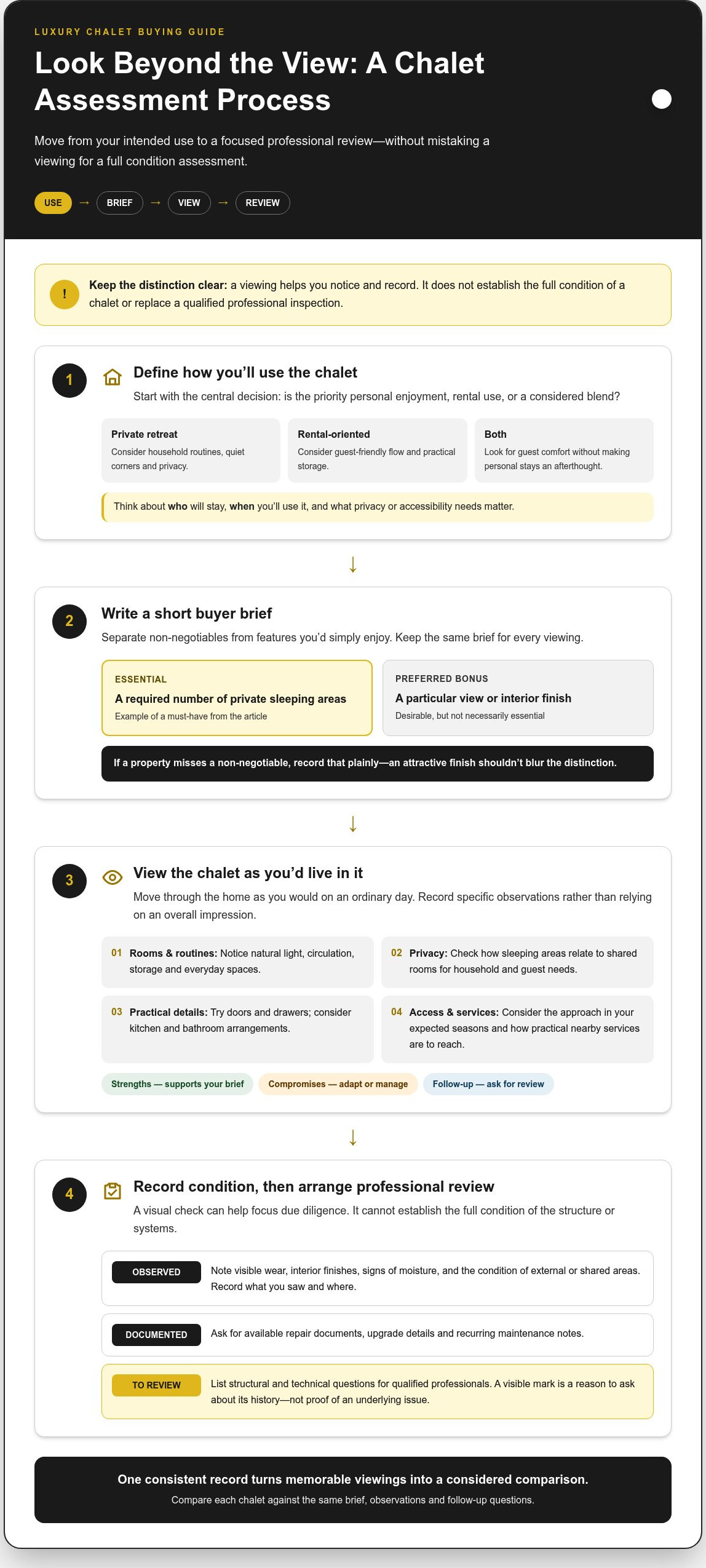
Before arranging viewings, write a short buyer brief. Rank your non-negotiables separately from features you’d simply enjoy. For example, distinguish a required number of private sleeping areas from a preferred view or interior finish. This makes it easier to compare properties when a beautifully presented chalet makes every feature seem essential.
Define how you will use the chalet
Consider who will stay, how often, and in which seasons. A family retreat might prioritise familiar routines and quiet corners; a rental property may need a guest-friendly flow and practical storage. If you’re planning both, look for a layout that welcomes guests comfortably without making personal stays feel like an afterthought.
- Users: Who will stay, and what privacy or accessibility needs matter?
- Seasons: When will you use the chalet, and what should feel comfortable beyond peak periods?
- Use: Is the priority personal enjoyment, rental use, or a considered blend?
- Priorities: Which features are essential, and which are appealing bonuses?
Keep the brief concise enough to use at every viewing. If a property misses a non-negotiable, record that plainly rather than allowing an attractive finish to blur the distinction.
Look beyond first impressions during a viewing
Move through the home as you would on an ordinary day. Notice how natural light changes between rooms, whether circulation feels easy, and whether storage and everyday spaces suit your routines. Check how sleeping areas relate to shared rooms, and whether the arrangement offers the privacy you expect for family or guests. Try doors and drawers, and note whether the kitchen and bathrooms are arranged in a way that works for the people who will use them.
Access and nearby services also shape how effortless a stay feels. Consider the approach to the property in the seasons you expect to use it, and how practical it is to reach the services that matter to you. Avoid relying on a single overall impression; record specific observations while they’re fresh.
- Strengths: Note features that directly support your brief.
- Compromises: Record what you’d need to adapt to or manage.
- Follow-up: Write down questions for later professional review.
Use the same notes for every chalet. A consistent record turns a series of memorable viewings into a considered comparison, helping you choose a home that fits the way you intend to own and enjoy it.
Assess a Luxury Chalet’s Structure, Systems and Year-Round Suitability
A viewing can reveal how a chalet feels, but it can’t establish the full condition of its structure or systems. Treat it as an initial assessment: note what you can see, gather available maintenance history, and arrange qualified professional inspections before relying on assumptions. This distinction is central to what to look for when buying a luxury chalet, particularly when an elegant finish could draw attention away from questions that need closer review.
Keep observations specific and factual. Rather than writing “needs work,” note the location and nature of what caught your attention, then record what you’d like assessed. A visible mark, for example, is a reason to ask about its history, not proof of a particular underlying issue.
Inspect the building and its maintenance history
During the viewing, look over interior finishes, visible wear and any signs of moisture. Take note of the condition of external and shared areas too, since these can shape both day-to-day enjoyment and the upkeep involved in ownership. Avoid drawing technical conclusions from a visual check; record concerns for professional review.
Ask for available records that help establish how the property has been cared for. Repair documents, upgrade details and recurring maintenance notes can give useful context, especially where an issue appears to have been addressed more than once. Keep a simple record for each chalet:
- Observed: What did you see, and where?
- Documented: What repairs, upgrades or recurring tasks appear in the available records?
- To review: Which structural or technical questions need assessment by qualified professionals?
This process won’t replace an inspection. It helps make that review more focused and gives you a clearer account of the property’s visible condition and care history.
Check comfort, access and energy considerations
Year-round suitability depends on more than a chalet’s appearance in one season. Consider whether the layout and facilities support the way you expect to use the home throughout the year. Review available information about heating, insulation and ventilation, and note how comfortable different rooms feel during your visit. A viewing offers only a snapshot, so have property-specific concerns assessed rather than inferring performance from a brief stay.
Think through the approach to the property in the seasons you plan to visit. Consider arrival, parking, carrying belongings inside and accessing the spaces you’ll use most. If rental use is part of your plans, guest comfort and straightforward arrival also belong in the assessment.
Review any available energy documentation and ask qualified professionals to explain what it indicates for this particular chalet. Swiss standards and labels can be relevant, but don’t assume that a label applies or that it tells the whole story. Verify which requirements and interpretations are current for the property and its circumstances.
Condition and comfort also inform the practical plan for ownership. If rental use is under consideration, property management in Switzerland can be part of that wider conversation, alongside maintenance and guest operations.
Compare Luxury Chalets by Intended Use, Setting and Ownership Model
A useful comparison starts with your intended use, then applies the same criteria to every shortlisted property. A feature isn’t automatically an advantage: secluded surroundings may suit a private retreat but make arrival less convenient for some guests. This property-by-property framework turns the question of what to look for when buying a luxury chalet into a decision grounded in your priorities rather than a polished presentation.
Compare private-use and rental-oriented priorities
For a private retreat, give weight to personal comfort, privacy and a layout that supports your routines. For rental use, consider guest suitability, practical arrival and the effort involved in ongoing upkeep. A chalet intended for both needs a deliberate balance: for instance, owner storage may be valuable to you, while guests may benefit from accessible, uncluttered space.
| Criterion | Private retreat | Rental-oriented | Mixed use |
|---|---|---|---|
| Intended use | Does it suit how you want to spend time there? | Does it make a comfortable, coherent guest stay? | Can owner stays and guest periods coexist? |
| Layout | Does the arrangement fit your habits and preferred spaces? | Are shared and private areas practical for guests? | Can personal preferences fit without compromising guest comfort? |
| Access | Does arrival work for your visit patterns? | Can guests reach and use the property conveniently? | Is access workable for both owners and visitors? |
| Condition | Does the visible state fit your appetite for upkeep? | Can maintenance needs be planned around guest use? | Can the property remain comfortable while care is arranged? |
| Privacy | Does the setting offer the seclusion you value? | Will guests have the privacy their stay requires? | Can owner and guest expectations both be respected? |
| Management needs | What care is needed while you’re away? | What support will rental operations require? | How will care adapt between personal and guest use? |
Use a weighted shortlist rather than a perfect-property test
Before comparing, mark each criterion essential, desirable or flexible. An essential is a condition the property must meet; a desirable adds value; a flexible point can be traded for a stronger fit elsewhere. This keeps a striking but unsuitable feature from outweighing a genuine requirement.
Then use one simple rating scale for every chalet, such as one to five, and note the evidence behind each rating. A strong score for privacy might reflect the layout and setting you observed; a low access score should include the practical concern that affected it. Separate confirmed observations from questions still needing review.
Finally, compare the compromises, not just the totals. Your financial assessment should account for the overall ownership plan without assuming a particular feature guarantees rental performance. If rental use is part of your shortlist, property management support can help you consider operational needs alongside the property itself.
Complete Swiss Chalet Due Diligence Before Making an Offer
Before making an offer, bring your viewing notes together with the documents, ownership context, condition findings and intended use. In Switzerland, the checks that matter can depend on the buyer’s nationality, the property type and whether it’s intended as a primary residence, second home or rental property. Treat due diligence as a staged review, not a single final formality. The question of what to look for when buying a luxury chalet includes confirming that the property’s legal and practical context aligns with your plans.
Review ownership, use and relevant Swiss requirements
Begin by organising the available property and ownership records. Identify what they say about ownership, boundaries, any shared areas or obligations, and the property’s permitted use. Then write down what remains unclear. Marketing descriptions can help you understand how a chalet is presented, but they aren’t a substitute for reviewing authoritative documents and applicable restrictions.
Two areas warrant particular attention: Lex Koller, concerning the acquisition of Swiss property by persons abroad, and legislation governing second homes. Their application can be case-specific, so don’t rely on a general summary or assume that one buyer’s circumstances apply to another. Consult current guidance from the Swiss Federal Office of Justice on property acquisition by persons abroad, and have the implications for your nationality, intended use and specific property reviewed by a qualified Swiss legal adviser before committing.
Organise financial and professional reviews
Once the ownership questions are clear, align the physical and financial reviews with your plans. Arrange qualified assessments of structural or technical concerns, and review available records of repairs, upgrades and recurring maintenance. If you’re considering changes, establish what work is contemplated and include it in your financial assessment rather than treating it as an incidental detail.
Build a due-diligence file that keeps each strand visible. A clear sequence helps you see what’s established, what needs expert interpretation and what could affect your decision:
- Documents: Gather ownership records and available property, maintenance and energy documentation.
- Ownership and use: Record questions about permitted use, applicable restrictions and your intended plans.
- Condition: Share viewing observations with qualified professionals for property-specific review.
- Finances: Revisit purchase assumptions, ongoing upkeep and any planned works with appropriate advisers.
- Decision: Track outstanding documents, assigned reviews and relevant deadlines before proceeding.
Keep written notes of advice received and distinguish confirmed findings from open questions. If rental use is part of your plan, include future maintenance and operating needs in that review. For buyers considering a chalet as a property investment or personal retreat, explore GuestLee’s Swiss real estate opportunities as part of the purchase journey.
Plan Chalet Ownership and Management for a Seamless Experience
A purchase decision should account for what happens after completion. The care a chalet needs, the way it will be presented and the responsibilities involved in using it all shape the ownership experience. Translate your plans into a practical operating approach before you buy, especially if you expect to welcome guests as well as enjoy the property yourself.
Decide how the property will be cared for
Map the work involved in preparing and maintaining the chalet, from routine upkeep to responding to issues that could affect its condition or presentation. Clarify which responsibilities you’ll manage personally and which would benefit from professional support. A clear division helps prevent important tasks from being overlooked while you’re away.
For rental use, marketing, guest communication and maintenance are connected parts of the experience. Thoughtful marketing helps present the home to suitable guests; clear communication supports their stay; and consistent property care helps keep the chalet ready for future bookings and personal visits. Consider how these activities will fit around your own use, rather than treating them as separate decisions after purchase.
Professional management can bring these operational needs into one considered plan. For a broader view of how this support fits into ownership, explore GuestLee’s Swiss property management services, including marketing, guest communication and maintenance for luxury short-term rentals.
Make the next step fit your ownership plans
Before settling on an approach, bring together your intended use, the findings from your property reviews and the ownership responsibilities you’re prepared to take on. A private retreat may call for a light-touch care plan while you’re absent. A rental-oriented property needs a more deliberate approach to guest operations, presentation and upkeep. If you’re planning both, decide how personal stays and guest periods will fit within the same plan.
- Personal use: Identify who will oversee the chalet when you’re away and how routine care will be handled.
- Rental use: Plan for marketing, guest communication, property presentation and maintenance as ongoing responsibilities.
- Mixed use: Set out how the home will move between owner stays and guest use, including the care needed at each transition.
GuestLee supports luxury short-term rentals and property management in Switzerland, helping owners plan the practical work involved in welcoming guests and caring for a property. As you consider what to look for when buying a luxury chalet, include that operating model alongside the home’s features and your own priorities. A well-matched property is one you can enjoy and care for in a way that suits your plans.
Explore GuestLee’s Swiss property services as you shape the next step in your chalet ownership plans.
Make Your Chalet Plans Work Beyond the Purchase
Before taking the next step, turn your preferred ownership model into a clear plan for the period after completion. Decide who will oversee the practical arrangements, set priorities for preparing the chalet for use, and choose a point to review whether the home is working as you intended. Keep the plan flexible enough to evolve as you learn more about the property and your routines. It can become a useful reference for decisions, rather than a document that ends its purpose at purchase.
Ultimately, what to look for when buying a luxury chalet is not only what suits you today, but what can continue to support the experience you want to create. GuestLee was founded in 2016 and provides luxury short-term rentals and property management in Switzerland. Explore GuestLee’s luxury property services to discuss how professional support can fit your chalet ownership plans.
Frequently Asked Questions
Can foreign nationals buy a luxury chalet in Switzerland?
There isn’t one answer that applies to every foreign buyer. Eligibility and conditions can depend on nationality and residence circumstances, the property type and whether it’s intended for personal use, rental or another purpose. Lex Koller is among the rules that may be relevant, but its application requires current, case-specific legal review. Assess these factors early, and obtain advice from a qualified Swiss legal professional before committing to a particular property.
What documents should I review before buying a chalet?
The relevant documents depend on the property and transaction, so treat any general list as a starting point, not a complete legal checklist. Available ownership information, property records, maintenance history and technical assessments can help you understand what’s documented. For example, compare a claimed upgrade with the records available for it, and note gaps or inconsistencies. Ask qualified advisers which missing details are material, then resolve them before making a final commitment.
Is a luxury chalet a good investment?
It can’t be judged as a reliable investment from its luxury features alone. The outcome depends on your purchase assumptions, intended use, ongoing upkeep, rental suitability and time horizon. Consider whether the chalet makes sense as a place you want to stay as well as an asset, then test your financial assumptions under different scenarios, including periods without rental income. Neither bookings nor returns are guaranteed, so seek independent financial and legal advice.
What should I look for during a chalet viewing?
Look at how the home functions as well as how it presents: notice room flow, natural light, privacy, practical comfort, access and visible condition. For example, consider whether the entrance and shared spaces would work for the people you expect to host. Take notes using the same criteria at each property, and record questions while details are fresh. A viewing is only an initial observation, not a substitute for qualified structural or technical inspections.
How can I tell whether a chalet is suitable for short-term rentals?
Consider whether the property can offer guests a comfortable, practical stay and whether its operation fits your plans. Think about how visitors will arrive, where they’ll keep belongings, how private areas will be protected, and how upkeep can be arranged between stays. Suitability depends on the specific home and ownership model; an attractive setting or a particular feature can’t guarantee bookings or income. Include personal-use plans and applicable requirements in your assessment.
What ongoing responsibilities come with owning a luxury chalet?
Ownership means planning for care and oversight even when you’re not staying at the property. Responsibilities may include monitoring its condition, arranging maintenance and keeping it ready for use. If you rent it out, marketing, guest communication and property care become part of the operating picture too. The right arrangement depends on the home and how you use it, so decide who will oversee routine tasks and how issues will be handled before they arise.

Article by
Giacomo Esposito